
Before Memmo my notes were scattered across PDFs. Now a workspace pulls everything into one place — I see exactly what's still left to study.
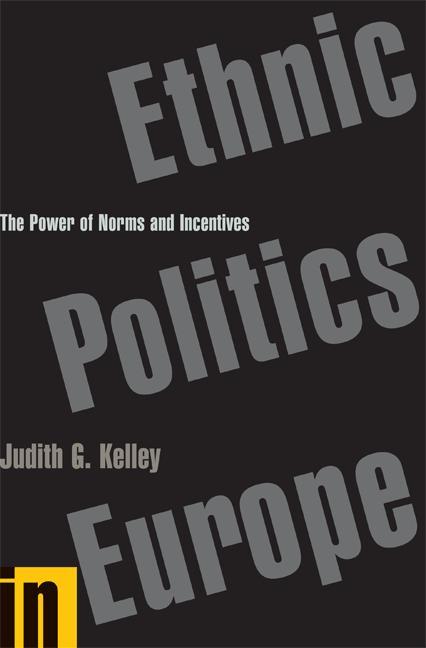
This detailed account of ethnic minority politics explains when and how European institutions successfully used norms and incentives to shape domestic policy toward ethnic minorities and why those measures sometimes failed.
Going beyond traditional analyses, Kelley examines the pivotal engagement by the European Union, the Organization for Security and Cooperation in Europe, and the Council for Europe in the creation of such policies.
Following language, education, and citizenship issues during the 1990s in Latvia, Estonia, Slovakia, and Romania, she shows how the combination of membership conditionality and norm-based diplomacy was surprisingly effective at overcoming even significant domestic opposition. However, she also finds that diplomacy alone, without the offer of membership, was ineffective unless domestic opposition to the proposed policies was quite limited.
As one of the first systematic analyses of political rather than economic conditionality, the book illustrates under what conditions and through what mechanisms institutions influenced domestic policy in the decade, preparing the way for the historic enlargement of the European Union.
This thoughtful and thorough discussion, based on case studies, quantitative analysis, and interviews with nearly one hundred policymakers and experts, tells an important story about how European organizations helped facilitate peaceful solutions to ethnic tensions--in sharp contrast to the ethnic bloodshed that occurred in the former Yugoslavia during this time. This book's simultaneous assessment of soft diplomacy and stricter conditionality advances a long overdue dialogue between proponents rational choice models and social constructivists. As political requirements increasingly become part of conditionality, it also provides keen policy insights for the strategic choices made by actors in international institutions.
Before Memmo my notes were scattered across PDFs. Now a workspace pulls everything into one place — I see exactly what's still left to study.
Memmo's summaries are gold before exams. I don't have to re-read 800 pages two weeks before — just the important parts.
The AI chat has saved me the night before an exam more than once. I just keep asking until I get it — no waiting on a study group to reply.
The quizzes hit exactly what I need to know. Memmo tracks what I get stuck on — so I only practice what's worth it.
Flashcards with spaced repetition are magic. Memmo knows when I'm about to forget something and brings it back.
The AI podcasts are my favorite. I listen on my way to school and get a recap without sitting at a computer.

Handbok i kvalitativa metoder
281 kr

Hållbar utveckling: en introduktion för ingenjörer och andra problemlösare
334 kr

Brymans Samhällsvetenskapliga metoder
390 kr

Projektledning
491 kr

Den orättvisa hälsan: om socioekonomiska skillnader i hälsa och livslängd
326 kr

Vetenskapsteori för nybörjare
196 kr

Organizational Leadership
429 kr

På väg mot läraryrket
172 kr

Det sociala livet i skolan: Socialpsykologiska perspektiv
253 kr

Betygsättningens didaktik
151 kr

Personality
402 kr

Studying Leadership
404 kr

Managing Innovation
477 kr

Introduktion till samhällsvetenskaplig metod
347 kr

The Psychology of Sex and Gender
698 kr

Evidens och kunskap för socialt arbete
207 kr

Introduction to Leadership
605 kr