
Before Memmo my notes were scattered across PDFs. Now a workspace pulls everything into one place — I see exactly what's still left to study.
How nations move from war to peace
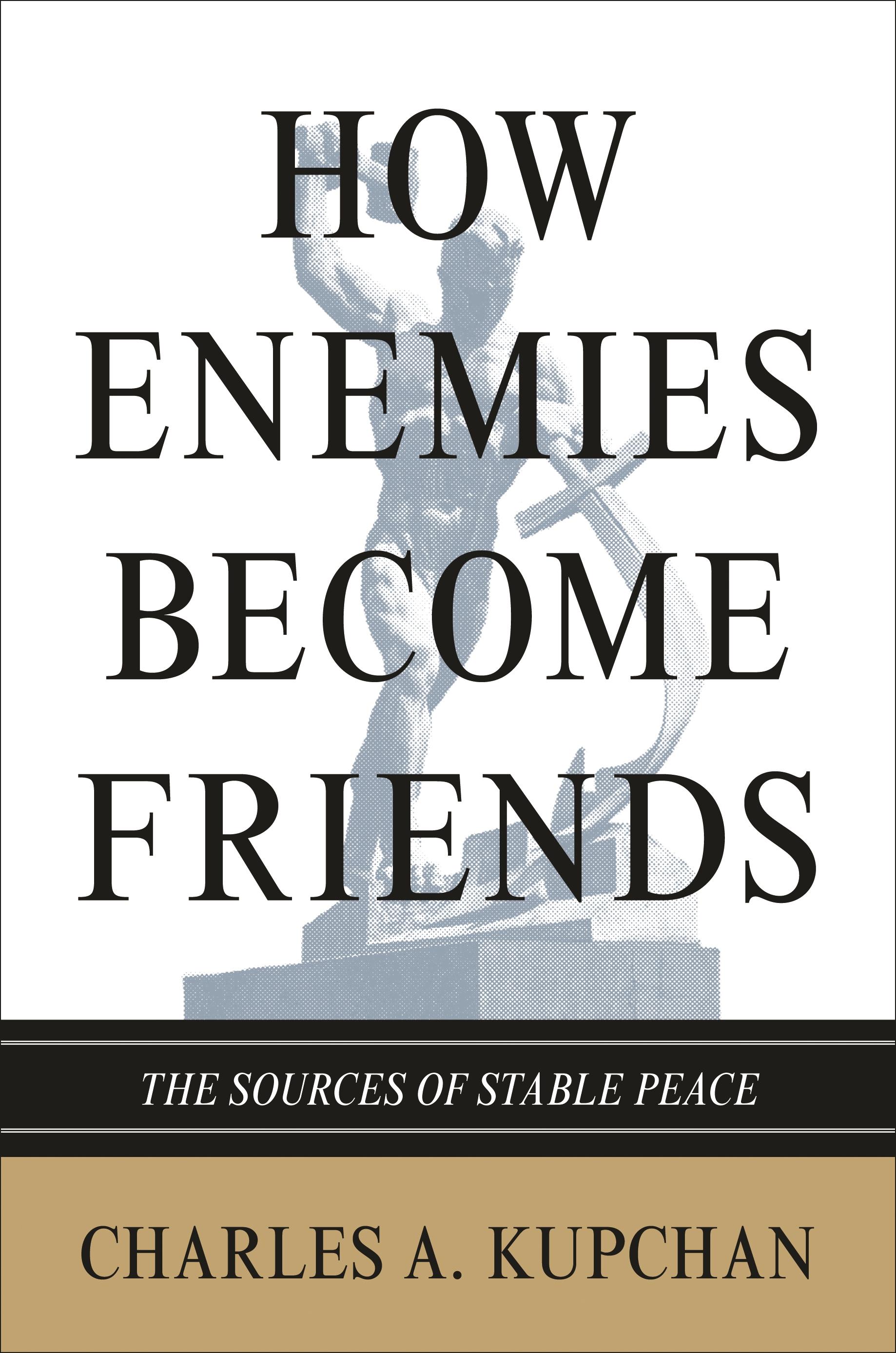
Is the world destined to suffer endless cycles of conflict and war? Can rival nations become partners and establish a lasting and stable peace? How Enemies Become Friends provides a bold and innovative account of how nations escape geopolitical competition and replace hostility with friendship. Through compelling analysis and rich historical examples that span the globe and range from the thirteenth century through the present, foreign policy expert Charles Kupchan explores how adversaries can transform enmity into amity—and he exposes prevalent myths about the causes of peace.
Kupchan contends that diplomatic engagement with rivals, far from being appeasement, is critical to rapprochement between adversaries. Diplomacy, not economic interdependence, is the currency of peace; concessions and strategic accommodation promote the mutual trust needed to build an international society. The nature of regimes matters much less than commonly thought: countries, including the United States, should deal with other states based on their foreign policy behavior rather than on whether they are democracies. Kupchan demonstrates that similar social orders and similar ethnicities, races, or religions help nations achieve stable peace. He considers many historical successes and failures, including the onset of friendship between the United States and Great Britain in the early twentieth century, the Concert of Europe, which preserved peace after 1815 but collapsed following revolutions in 1848, and the remarkably close partnership of the Soviet Union and China in the 1950s, which descended into open rivalry by the 1960s.
In a world where conflict among nations seems inescapable, How Enemies Become Friends offers critical insights for building lasting peace.
Before Memmo my notes were scattered across PDFs. Now a workspace pulls everything into one place — I see exactly what's still left to study.
Memmo's summaries are gold before exams. I don't have to re-read 800 pages two weeks before — just the important parts.
The AI chat has saved me the night before an exam more than once. I just keep asking until I get it — no waiting on a study group to reply.
The quizzes hit exactly what I need to know. Memmo tracks what I get stuck on — so I only practice what's worth it.
Flashcards with spaced repetition are magic. Memmo knows when I'm about to forget something and brings it back.
The AI podcasts are my favorite. I listen on my way to school and get a recap without sitting at a computer.

Handbok i kvalitativa metoder
281 kr

Hållbar utveckling: en introduktion för ingenjörer och andra problemlösare
334 kr

Brymans Samhällsvetenskapliga metoder
390 kr

Projektledning
491 kr

Den orättvisa hälsan: om socioekonomiska skillnader i hälsa och livslängd
326 kr

Organizational Leadership
429 kr

Vetenskapsteori för nybörjare
196 kr

På väg mot läraryrket
172 kr

Det sociala livet i skolan: Socialpsykologiska perspektiv
253 kr

Betygsättningens didaktik
151 kr

Personality
402 kr

Studying Leadership
404 kr

Managing Innovation
477 kr

Introduktion till samhällsvetenskaplig metod
347 kr

The Psychology of Sex and Gender
698 kr

Evidens och kunskap för socialt arbete
207 kr

Introduction to Leadership
605 kr