
Before Memmo my notes were scattered across PDFs. Now a workspace pulls everything into one place — I see exactly what's still left to study.
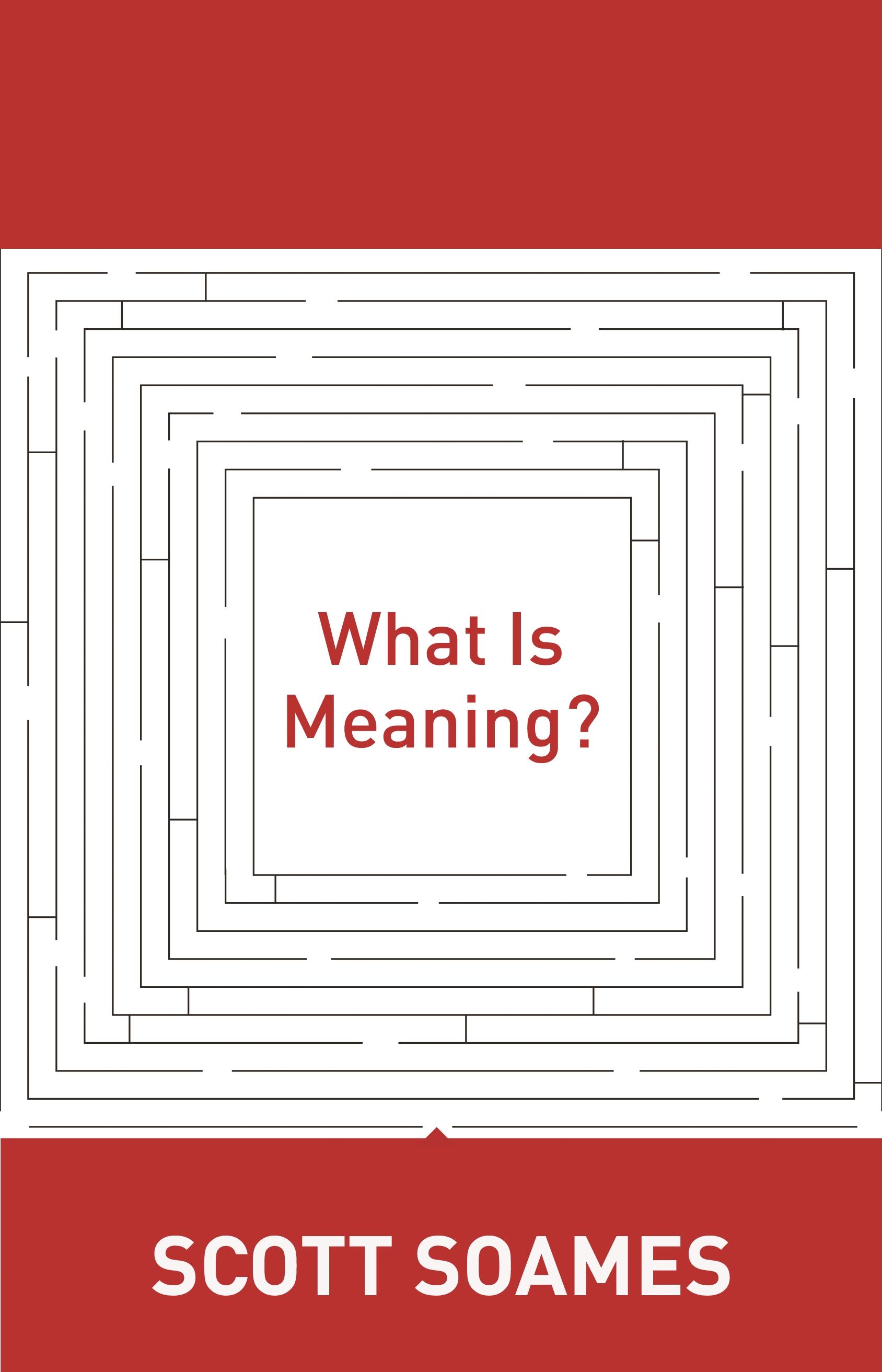
The tradition descending from Frege and Russell has typically treated theories of meaning either as theories of meanings (propositions expressed), or as theories of truth conditions. However, propositions of the classical sort don't exist, and truth conditions can't provide all the information required by a theory of meaning. In this book, one of the world's leading philosophers of language offers a way out of this dilemma.
Traditionally conceived, propositions are denizens of a "third realm" beyond mind and matter, "grasped" by mysterious Platonic intuition. As conceived here, they are cognitive-event types in which agents predicate properties and relations of things--in using language, in perception, and in nonlinguistic thought. Because of this, one's acquaintance with, and knowledge of, propositions is acquaintance with, and knowledge of, events of one's cognitive life. This view also solves the problem of "the unity of the proposition" by explaining how propositions can be genuinely representational, and therefore bearers of truth. The problem, in the traditional conception, is that sentences, utterances, and mental states are representational because of the relations they bear to inherently representational Platonic complexes of universals and particulars. Since we have no way of understanding how such structures can be representational, independent of interpretations placed on them by agents, the problem is unsolvable when so conceived. However, when propositions are taken to be cognitive-event types, the order of explanation is reversed and a natural solution emerges. Propositions are representational because they are constitutively related to inherently representational cognitive acts.
Strikingly original, What Is Meaning? is a major advance.
Before Memmo my notes were scattered across PDFs. Now a workspace pulls everything into one place — I see exactly what's still left to study.
Memmo's summaries are gold before exams. I don't have to re-read 800 pages two weeks before — just the important parts.
The AI chat has saved me the night before an exam more than once. I just keep asking until I get it — no waiting on a study group to reply.
The quizzes hit exactly what I need to know. Memmo tracks what I get stuck on — so I only practice what's worth it.
Flashcards with spaced repetition are magic. Memmo knows when I'm about to forget something and brings it back.
The AI podcasts are my favorite. I listen on my way to school and get a recap without sitting at a computer.

Handbok i kvalitativa metoder
281 kr

Hållbar utveckling: en introduktion för ingenjörer och andra problemlösare
334 kr

Brymans Samhällsvetenskapliga metoder
390 kr

Projektledning
491 kr

Den orättvisa hälsan: om socioekonomiska skillnader i hälsa och livslängd
326 kr

Organizational Leadership
429 kr

Vetenskapsteori för nybörjare
196 kr

På väg mot läraryrket
172 kr

Det sociala livet i skolan: Socialpsykologiska perspektiv
253 kr

Betygsättningens didaktik
151 kr

Personality
402 kr

Studying Leadership
404 kr

Managing Innovation
477 kr

Introduktion till samhällsvetenskaplig metod
347 kr

The Psychology of Sex and Gender
698 kr

Evidens och kunskap för socialt arbete
207 kr

Introduction to Leadership
605 kr