
Before Memmo my notes were scattered across PDFs. Now a workspace pulls everything into one place — I see exactly what's still left to study.
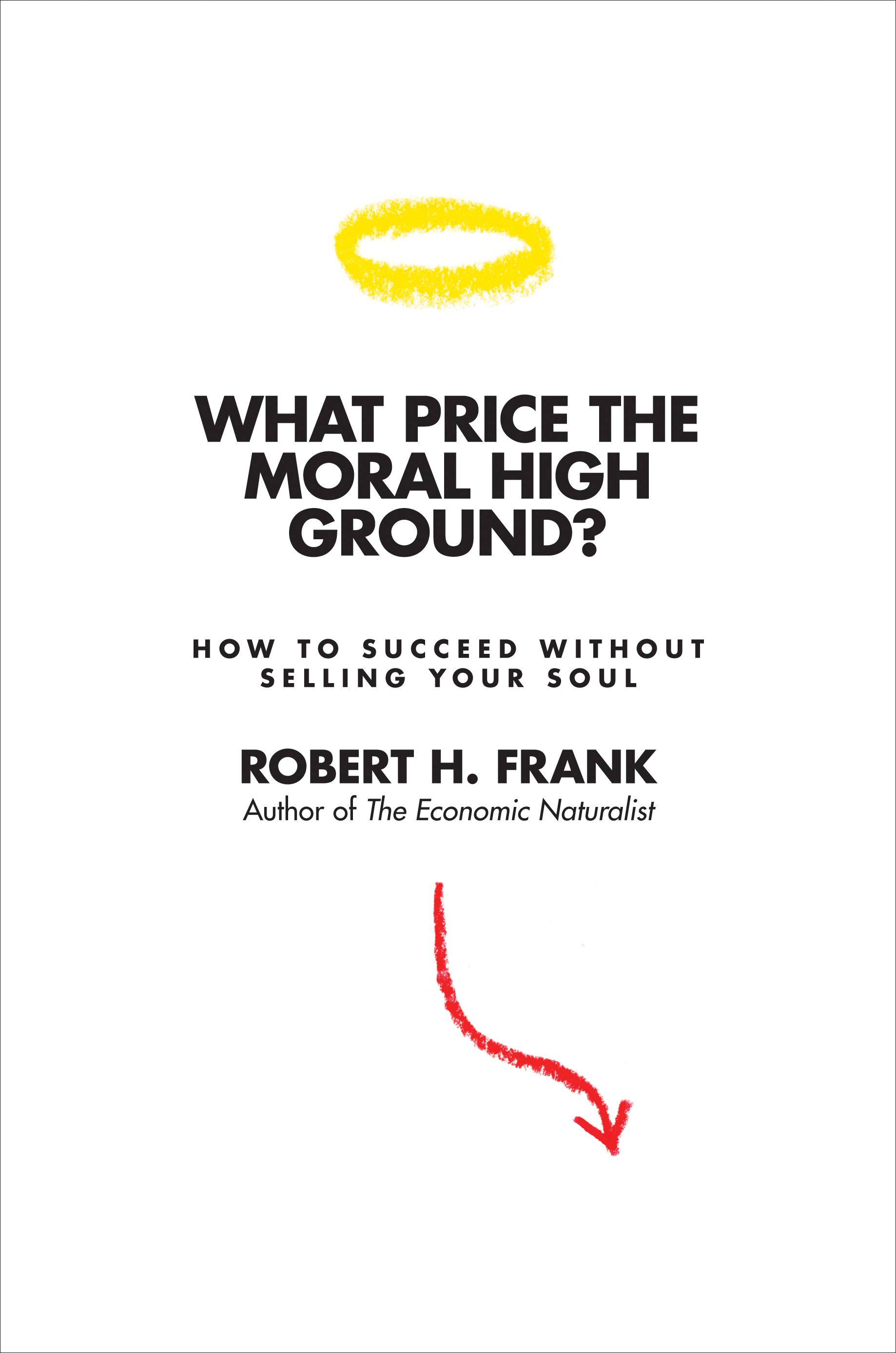
Financial disasters--and stories of the greedy bankers who precipitated them--seem to underscore the idea that self-interest will always trump concerns for the greater good. Indeed, this idea is supported by the prevailing theories in both economics and evolutionary biology. But is it valid?
In What Price the Moral High Ground?, economist and social critic Robert Frank challenges the notion that doing well is accomplished only at the expense of doing good. Frank explores exciting new work in economics, psychology, and biology to argue that honest individuals often succeed, even in highly competitive environments, because their commitment to principle makes them more attractive as trading partners.
Drawing on research he has conducted and published over the past decade, Frank challenges the familiar homo economicus stereotype by describing how people create bonds that sustain cooperation in one-shot prisoner's dilemmas. He goes on to describe how people often choose modestly paid positions in the public and nonprofit sectors over comparable, higher-paying jobs in the for-profit sector; how studying economics appears to inhibit cooperation; how social norms often deter opportunistic behavior; how a given charitable organization manages to appeal to donors with seemingly incompatible motives; how concerns about status and fairness affect salaries in organizations; and how socially responsible firms often prosper despite the higher costs associated with their business practices.
Frank's arguments have important implications for the conduct of leaders in private as well as public life. Tossing aside the model of the self-interested homo economicus, Frank provides a tool for understanding how to better structure organizations, public policies, and even our own lives.
Before Memmo my notes were scattered across PDFs. Now a workspace pulls everything into one place — I see exactly what's still left to study.
Memmo's summaries are gold before exams. I don't have to re-read 800 pages two weeks before — just the important parts.
The AI chat has saved me the night before an exam more than once. I just keep asking until I get it — no waiting on a study group to reply.
The quizzes hit exactly what I need to know. Memmo tracks what I get stuck on — so I only practice what's worth it.
Flashcards with spaced repetition are magic. Memmo knows when I'm about to forget something and brings it back.
The AI podcasts are my favorite. I listen on my way to school and get a recap without sitting at a computer.

Handbok i kvalitativa metoder
281 kr

Hållbar utveckling: en introduktion för ingenjörer och andra problemlösare
334 kr

Brymans Samhällsvetenskapliga metoder
390 kr

Projektledning
491 kr

Den orättvisa hälsan: om socioekonomiska skillnader i hälsa och livslängd
326 kr

Organizational Leadership
429 kr

Vetenskapsteori för nybörjare
196 kr

På väg mot läraryrket
172 kr

Det sociala livet i skolan: Socialpsykologiska perspektiv
253 kr

Betygsättningens didaktik
151 kr

Personality
402 kr

Studying Leadership
404 kr

Managing Innovation
477 kr

Introduktion till samhällsvetenskaplig metod
347 kr

The Psychology of Sex and Gender
698 kr

Evidens och kunskap för socialt arbete
207 kr

Introduction to Leadership
605 kr