
Before Memmo my notes were scattered across PDFs. Now a workspace pulls everything into one place — I see exactly what's still left to study.
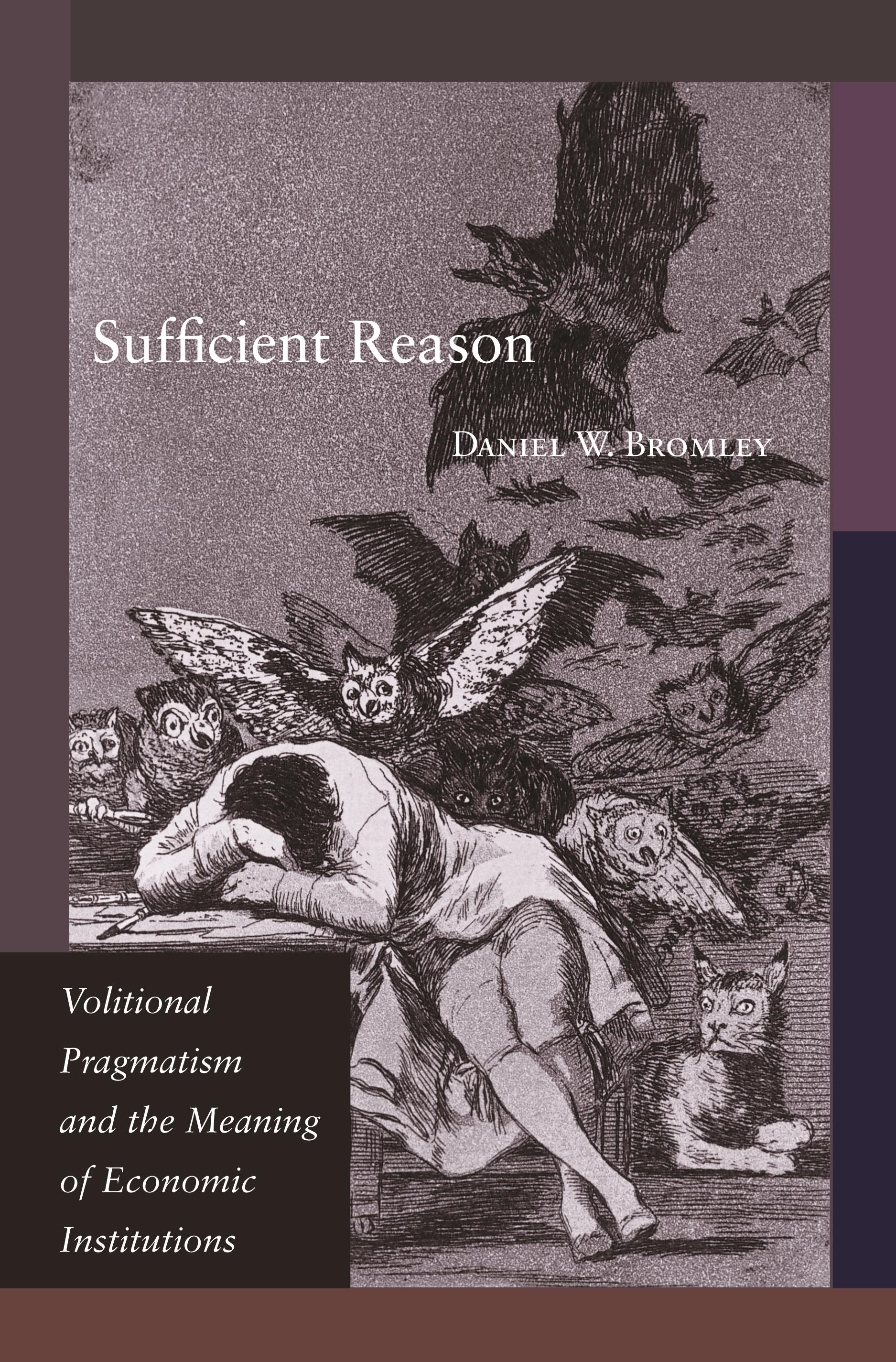
In the standard analysis of economic institutions--which include social conventions, the working rules of an economy, and entitlement regimes (property relations)--economists invoke the same theories they use when analyzing individual behavior. In this profoundly innovative book, Daniel Bromley challenges these theories, arguing instead for "volitional pragmatism" as a plausible way of thinking about the evolution of economic institutions. Economies are always in the process of becoming. Here is a theory of how they become.
Bromley argues that standard economic accounts see institutions as mere constraints on otherwise autonomous individual action. Some approaches to institutional economics--particularly the "new" institutional economics--suggest that economic institutions emerge spontaneously from the voluntary interaction of economic agents as they go about pursuing their best advantage. He suggests that this approach misses the central fact that economic institutions are the explicit and intended result of authoritative agents--legislators, judges, administrative officers, heads of states, village leaders--who volitionally decide upon working rules and entitlement regimes whose very purpose is to induce behaviors (and hence plausible outcomes) that constitute the sufficient reasons for the institutional arrangements they create.
Bromley's approach avoids the prescriptive consequentialism of contemporary economics and asks, instead, that we see these emergent and evolving institutions as the reasons for the individual and aggregate behavior their very adoption anticipates. These hoped-for outcomes comprise sufficient reasons for new laws, judicial decrees, and administrative rulings, which then become instrumental to the realization of desired individual behaviors and thus aggregate outcomes.
Before Memmo my notes were scattered across PDFs. Now a workspace pulls everything into one place — I see exactly what's still left to study.
Memmo's summaries are gold before exams. I don't have to re-read 800 pages two weeks before — just the important parts.
The AI chat has saved me the night before an exam more than once. I just keep asking until I get it — no waiting on a study group to reply.
The quizzes hit exactly what I need to know. Memmo tracks what I get stuck on — so I only practice what's worth it.
Flashcards with spaced repetition are magic. Memmo knows when I'm about to forget something and brings it back.
The AI podcasts are my favorite. I listen on my way to school and get a recap without sitting at a computer.

Handbok i kvalitativa metoder
281 kr

Hållbar utveckling: en introduktion för ingenjörer och andra problemlösare
334 kr

Brymans Samhällsvetenskapliga metoder
390 kr

Projektledning
491 kr

Den orättvisa hälsan: om socioekonomiska skillnader i hälsa och livslängd
326 kr

Vetenskapsteori för nybörjare
196 kr

Organizational Leadership
429 kr

På väg mot läraryrket
172 kr

Det sociala livet i skolan: Socialpsykologiska perspektiv
253 kr

Betygsättningens didaktik
151 kr

Personality
402 kr

Studying Leadership
404 kr

Managing Innovation
477 kr

Introduktion till samhällsvetenskaplig metod
347 kr

The Psychology of Sex and Gender
698 kr

Evidens och kunskap för socialt arbete
207 kr

Introduction to Leadership
605 kr