
Before Memmo my notes were scattered across PDFs. Now a workspace pulls everything into one place — I see exactly what's still left to study.
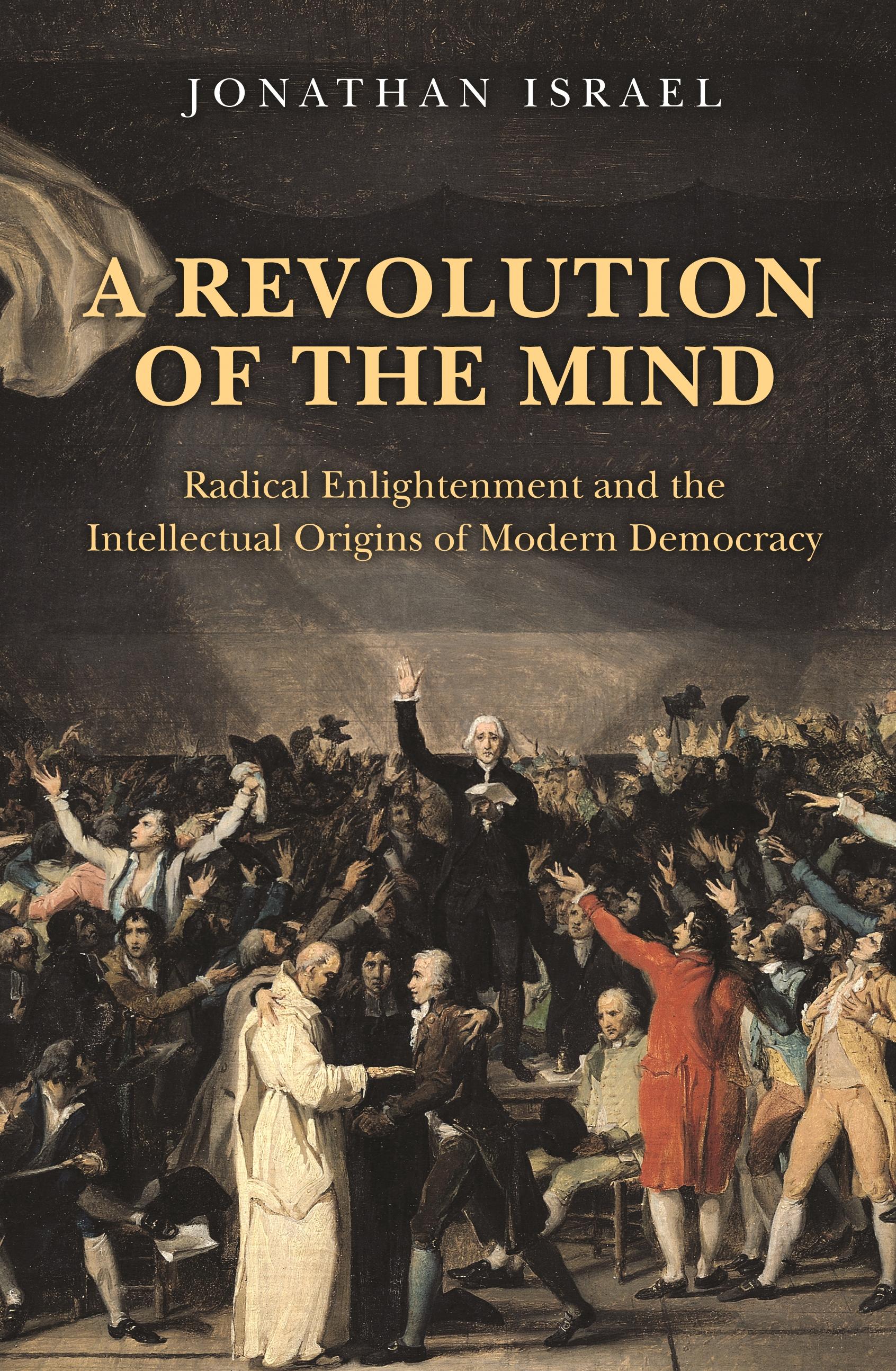
A leading historian reveals the radical origins of humanity's most cherished secular values
Democracy, free thought and expression, religious tolerance, individual liberty, political self-determination of peoples, sexual and racial equality—these values have firmly entered the mainstream in the decades since they were enshrined in the 1948 U.N. Declaration of Human Rights. But if these ideals no longer seem radical today, their origin was very radical indeed—far more so than most historians have been willing to recognize. In A Revolution of the Mind, Jonathan Israel, one of the world's leading historians of the Enlightenment, traces the philosophical roots of these ideas to what were the least respectable strata of Enlightenment thought—what he calls the Radical Enlightenment.
Originating as a clandestine movement of ideas that was almost entirely hidden from public view during its earliest phase, the Radical Enlightenment matured in opposition to the moderate mainstream Enlightenment dominant in Europe and America in the eighteenth century. During the revolutionary decades of the 1770s, 1780s, and 1790s, the Radical Enlightenment burst into the open, only to provoke a long and bitter backlash. A Revolution of the Mind shows that this vigorous opposition was mainly due to the powerful impulses in society to defend the principles of monarchy, aristocracy, empire, and racial hierarchy—principles linked to the upholding of censorship, church authority, social inequality, racial segregation, religious discrimination, and far-reaching privilege for ruling groups.
In telling this fascinating history, A Revolution of the Mind reveals the surprising origin of our most cherished values—and helps explain why in certain circles they are frequently disapproved of and attacked even today.
Before Memmo my notes were scattered across PDFs. Now a workspace pulls everything into one place — I see exactly what's still left to study.
Memmo's summaries are gold before exams. I don't have to re-read 800 pages two weeks before — just the important parts.
The AI chat has saved me the night before an exam more than once. I just keep asking until I get it — no waiting on a study group to reply.
The quizzes hit exactly what I need to know. Memmo tracks what I get stuck on — so I only practice what's worth it.
Flashcards with spaced repetition are magic. Memmo knows when I'm about to forget something and brings it back.
The AI podcasts are my favorite. I listen on my way to school and get a recap without sitting at a computer.

Handbok i kvalitativa metoder
281 kr

Hållbar utveckling: en introduktion för ingenjörer och andra problemlösare
334 kr

Brymans Samhällsvetenskapliga metoder
390 kr

Projektledning
491 kr

Den orättvisa hälsan: om socioekonomiska skillnader i hälsa och livslängd
326 kr

Organizational Leadership
429 kr

Vetenskapsteori för nybörjare
196 kr

På väg mot läraryrket
172 kr

Det sociala livet i skolan: Socialpsykologiska perspektiv
253 kr

Betygsättningens didaktik
151 kr

Personality
402 kr

Studying Leadership
404 kr

Managing Innovation
477 kr

Introduktion till samhällsvetenskaplig metod
347 kr

The Psychology of Sex and Gender
698 kr

Evidens och kunskap för socialt arbete
207 kr

Introduction to Leadership
605 kr