
Before Memmo my notes were scattered across PDFs. Now a workspace pulls everything into one place — I see exactly what's still left to study.
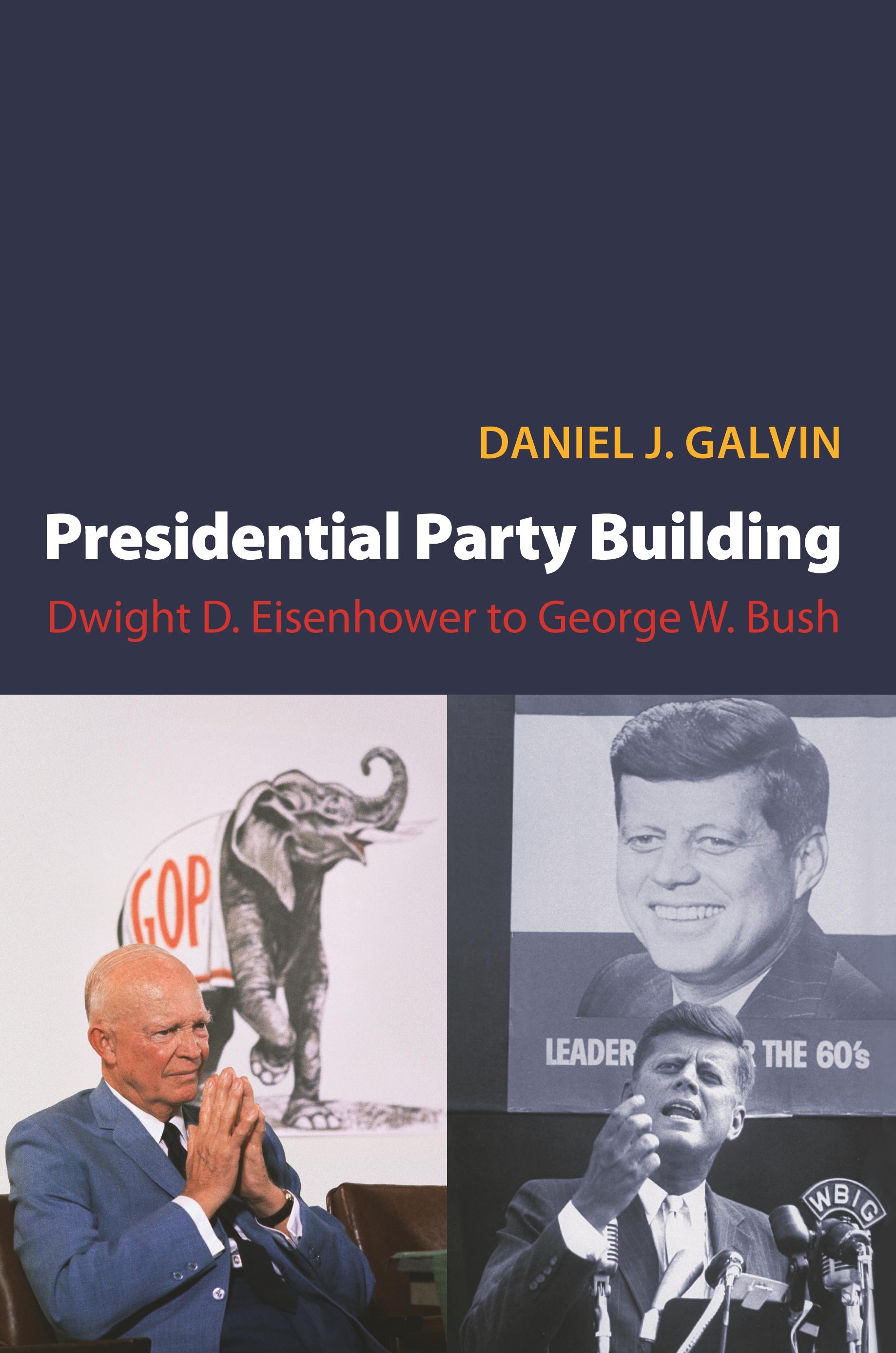
Modern presidents are usually depicted as party "predators" who neglect their parties, exploit them for personal advantage, or undercut their organizational capacities. Challenging this view, Presidential Party Building demonstrates that every Republican president since Dwight D. Eisenhower worked to build his party into a more durable political organization while every Democratic president refused to do the same. Yet whether they supported their party or stood in its way, each president contributed to the distinctive organizational trajectories taken by the two parties in the modern era.
Unearthing new archival evidence, Daniel Galvin reveals that Republican presidents responded to their party's minority status by building its capacities to mobilize voters, recruit candidates, train activists, provide campaign services, and raise funds. From Eisenhower's "Modern Republicanism" to Richard Nixon's "New Majority" to George W. Bush's hopes for a partisan realignment, Republican presidents saw party building as a means of forging a new political majority in their image. Though they usually met with little success, their efforts made important contributions to the GOP's cumulative organizational development. Democratic presidents, in contrast, were primarily interested in exploiting the majority they inherited, not in building a new one. Until their majority disappeared during Bill Clinton's presidency, Democratic presidents eschewed party building and expressed indifference to the long-term effects of their actions.
Bringing these dynamics into sharp relief, Presidential Party Building offers profound new insights into presidential behavior, party organizational change, and modern American political development.
Before Memmo my notes were scattered across PDFs. Now a workspace pulls everything into one place — I see exactly what's still left to study.
Memmo's summaries are gold before exams. I don't have to re-read 800 pages two weeks before — just the important parts.
The AI chat has saved me the night before an exam more than once. I just keep asking until I get it — no waiting on a study group to reply.
The quizzes hit exactly what I need to know. Memmo tracks what I get stuck on — so I only practice what's worth it.
Flashcards with spaced repetition are magic. Memmo knows when I'm about to forget something and brings it back.
The AI podcasts are my favorite. I listen on my way to school and get a recap without sitting at a computer.

Handbok i kvalitativa metoder
281 kr

Hållbar utveckling: en introduktion för ingenjörer och andra problemlösare
334 kr

Brymans Samhällsvetenskapliga metoder
390 kr

Projektledning
491 kr

Den orättvisa hälsan: om socioekonomiska skillnader i hälsa och livslängd
326 kr

Vetenskapsteori för nybörjare
196 kr

Organizational Leadership
429 kr

På väg mot läraryrket
172 kr

Det sociala livet i skolan: Socialpsykologiska perspektiv
253 kr

Betygsättningens didaktik
151 kr

Personality
402 kr

Studying Leadership
404 kr

Managing Innovation
477 kr

Introduktion till samhällsvetenskaplig metod
347 kr

The Psychology of Sex and Gender
698 kr

Evidens och kunskap för socialt arbete
207 kr

Introduction to Leadership
605 kr