
Before Memmo my notes were scattered across PDFs. Now a workspace pulls everything into one place — I see exactly what's still left to study.
“A landmark study."—Robin Wright, The New Yorker
Why every terrorist movement comes to an end—and how this history can help us combat today's terrorist threats
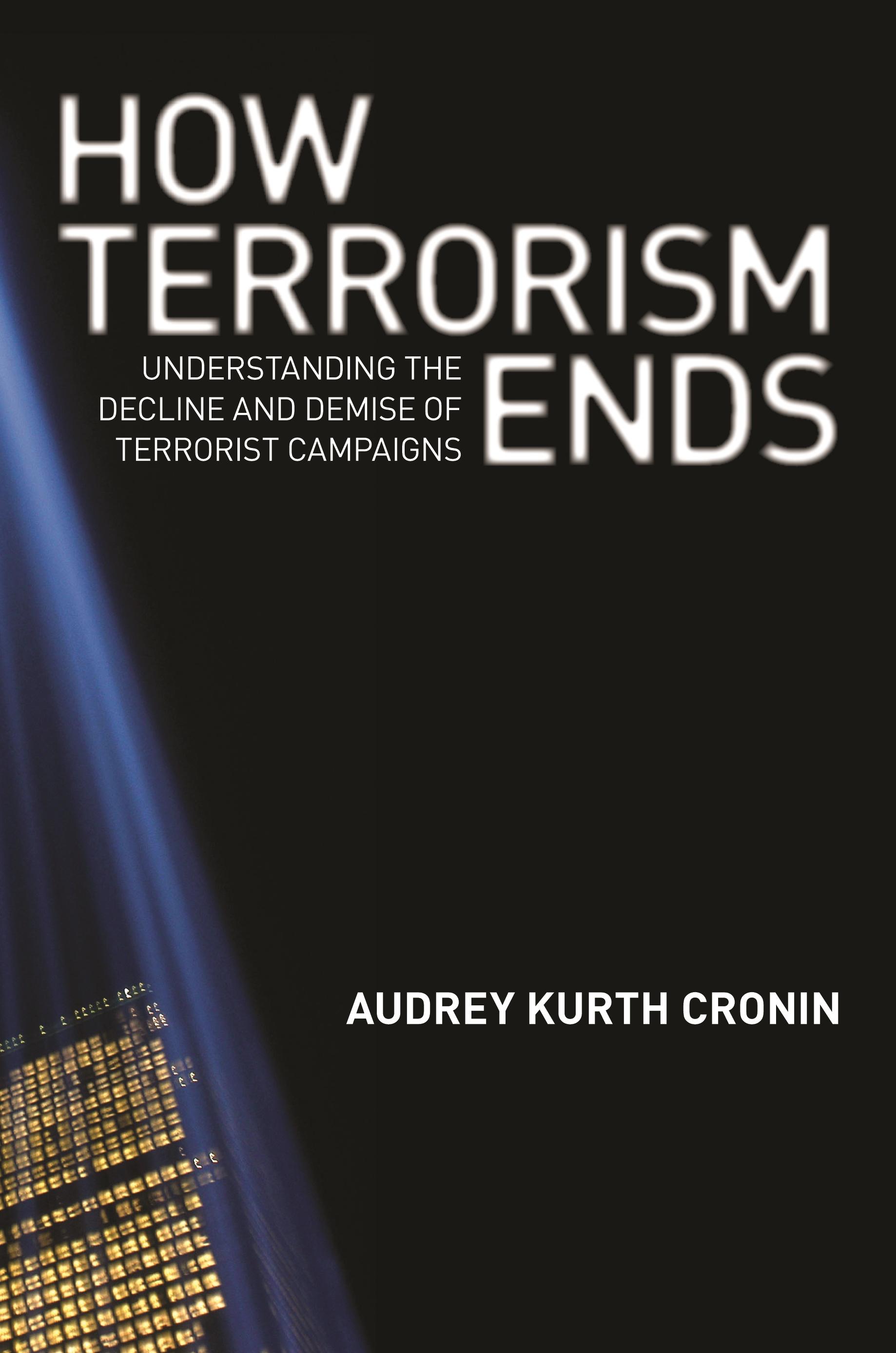
Amid the fear following 9/11 and more recent terror attacks, it is easy to forget the most important fact about terrorist campaigns: they always come to an end—and often far more quickly than expected. Contrary to what many assume, when it comes to dealing with terrorism it may be more important to understand how it ends than how it begins. Only by understanding the common ways in which terrorist movements have died out or been eradicated in the past can we hope to figure out how to speed the decline of today's terrorist groups, while avoiding unnecessary fears and costly overreactions. In How Terrorism Ends, Audrey Kurth Cronin examines how terrorist campaigns have met their demise over the past two centuries, and applies these enduring lessons to outline a new strategy against al-Qaeda.
This book answers questions such as: How long do terrorist campaigns last? When does targeting the leadership finish a group? When do negotiations lead to the end? Under what conditions do groups transition to other forms of violence, such as insurgency or civil war? How and when do they succeed or fail, and then disappear? Examining a wide range of historical examples—including the anti-tsarist Narodnaya Volya, the Provisional IRA, Peru's Shining Path, Japan's Aum Shinrikyo, and various Palestinian groups—Cronin identifies the ways in which almost all terrorist groups die out, including decapitation (catching or killing the leader), negotiation, repression, and implosion.
How Terrorism Ends is the only comprehensive book on its subject and a rarity among all the books on terrorism—at once practical, optimistic, rigorous, and historical.
Before Memmo my notes were scattered across PDFs. Now a workspace pulls everything into one place — I see exactly what's still left to study.
Memmo's summaries are gold before exams. I don't have to re-read 800 pages two weeks before — just the important parts.
The AI chat has saved me the night before an exam more than once. I just keep asking until I get it — no waiting on a study group to reply.
The quizzes hit exactly what I need to know. Memmo tracks what I get stuck on — so I only practice what's worth it.
Flashcards with spaced repetition are magic. Memmo knows when I'm about to forget something and brings it back.
The AI podcasts are my favorite. I listen on my way to school and get a recap without sitting at a computer.

Handbok i kvalitativa metoder
281 kr

Hållbar utveckling: en introduktion för ingenjörer och andra problemlösare
334 kr

Brymans Samhällsvetenskapliga metoder
390 kr

Projektledning
491 kr

Den orättvisa hälsan: om socioekonomiska skillnader i hälsa och livslängd
326 kr

Organizational Leadership
429 kr

Vetenskapsteori för nybörjare
196 kr

På väg mot läraryrket
172 kr

Det sociala livet i skolan: Socialpsykologiska perspektiv
253 kr

Betygsättningens didaktik
151 kr

Personality
402 kr

Studying Leadership
404 kr

Managing Innovation
477 kr

Introduktion till samhällsvetenskaplig metod
347 kr

The Psychology of Sex and Gender
698 kr

Evidens och kunskap för socialt arbete
207 kr

Introduction to Leadership
605 kr