
Before Memmo my notes were scattered across PDFs. Now a workspace pulls everything into one place — I see exactly what's still left to study.
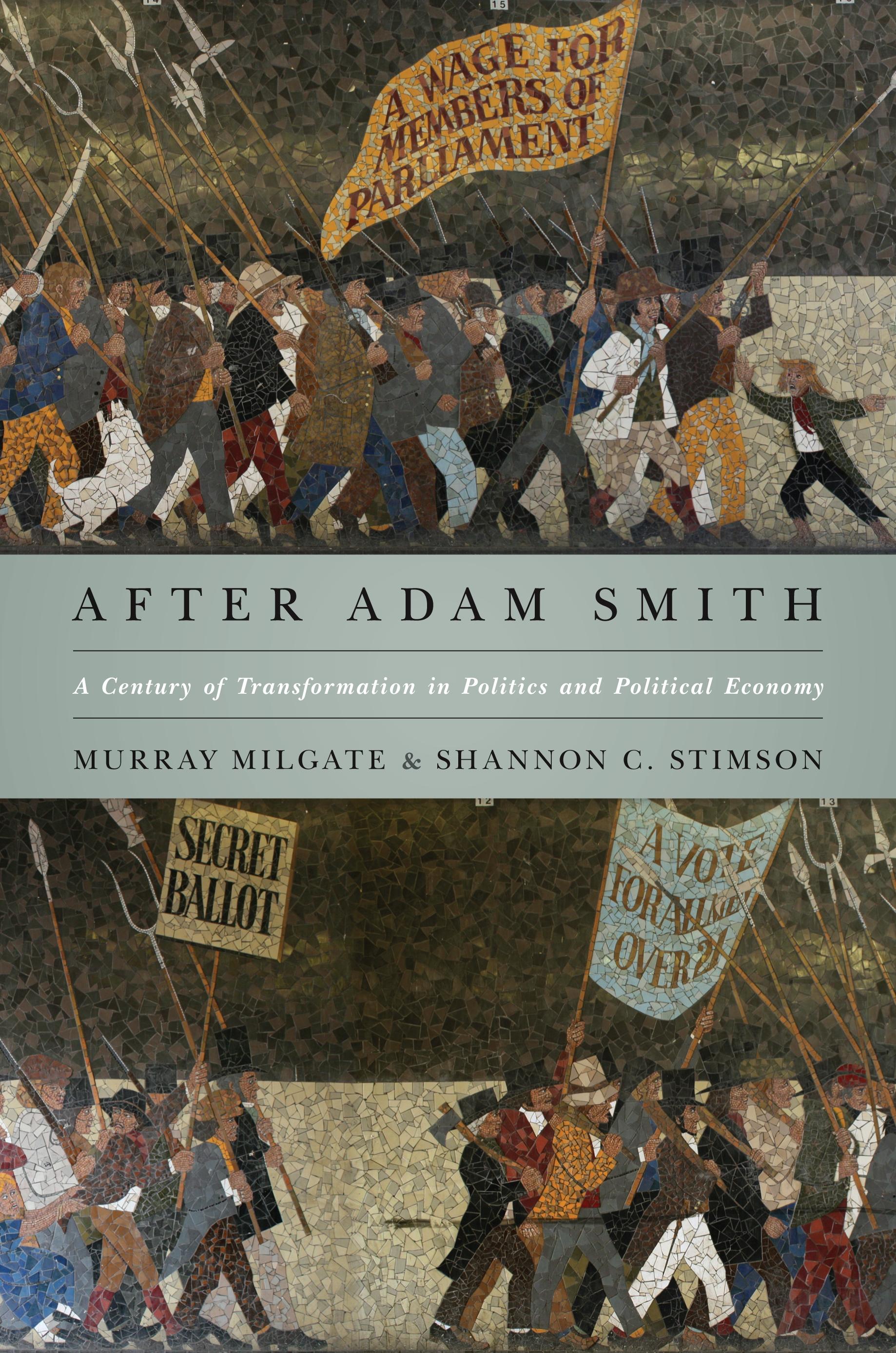
How writers after Adam Smith helped shape our thinking about economics and politics
Few issues are more central to our present predicaments than the relationship between economics and politics. In the century after Adam Smith's Wealth of Nations the British economy was transformed. After Adam Smith looks at how politics and political economy were articulated and altered. It considers how grand ideas about the connections between individual liberty, free markets, and social and economic justice sometimes attributed to Smith are as much the product of gradual modifications and changes wrought by later writers.
Thomas Robert Malthus, David Ricardo, James Mill, John Stuart Mill, and other liberals, radicals, and reformers had a hand in conceptual transformations that culminated in the advent of neoclassical economics. The population problem, the declining importance of agriculture, the consequences of industrialization, the structural characteristics of civil society, the role of the state in economic affairs, and the possible limits to progress were questions that underwent significant readjustments as the thinkers who confronted them in different times and circumstances reworked the framework of ideas advanced by Smith—transforming the dialogue between politics and political economy. By the end of the nineteenth century an industrialized and globalized market economy had firmly established itself. By exploring how questions Smith had originally grappled with were recast as the economy and the principles of political economy altered during the nineteenth century, this book demonstrates that we are as much the heirs of later images of Smith as we are of Smith himself.
Many writers helped shape different ways of thinking about economics and politics after Adam Smith. By ignoring their interventions we risk misreading our past—and also misusing it—when thinking about the choices at the interface of economics and politics that confront us today.
Before Memmo my notes were scattered across PDFs. Now a workspace pulls everything into one place — I see exactly what's still left to study.
Memmo's summaries are gold before exams. I don't have to re-read 800 pages two weeks before — just the important parts.
The AI chat has saved me the night before an exam more than once. I just keep asking until I get it — no waiting on a study group to reply.
The quizzes hit exactly what I need to know. Memmo tracks what I get stuck on — so I only practice what's worth it.
Flashcards with spaced repetition are magic. Memmo knows when I'm about to forget something and brings it back.
The AI podcasts are my favorite. I listen on my way to school and get a recap without sitting at a computer.

Handbok i kvalitativa metoder
281 kr

Hållbar utveckling: en introduktion för ingenjörer och andra problemlösare
334 kr

Brymans Samhällsvetenskapliga metoder
390 kr

Projektledning
491 kr

Den orättvisa hälsan: om socioekonomiska skillnader i hälsa och livslängd
326 kr

Organizational Leadership
429 kr

Vetenskapsteori för nybörjare
196 kr

På väg mot läraryrket
172 kr

Det sociala livet i skolan: Socialpsykologiska perspektiv
253 kr

Betygsättningens didaktik
151 kr

Personality
402 kr

Studying Leadership
404 kr

Managing Innovation
477 kr

Introduktion till samhällsvetenskaplig metod
347 kr

The Psychology of Sex and Gender
698 kr

Evidens och kunskap för socialt arbete
207 kr

Introduction to Leadership
605 kr