
Before Memmo my notes were scattered across PDFs. Now a workspace pulls everything into one place — I see exactly what's still left to study.
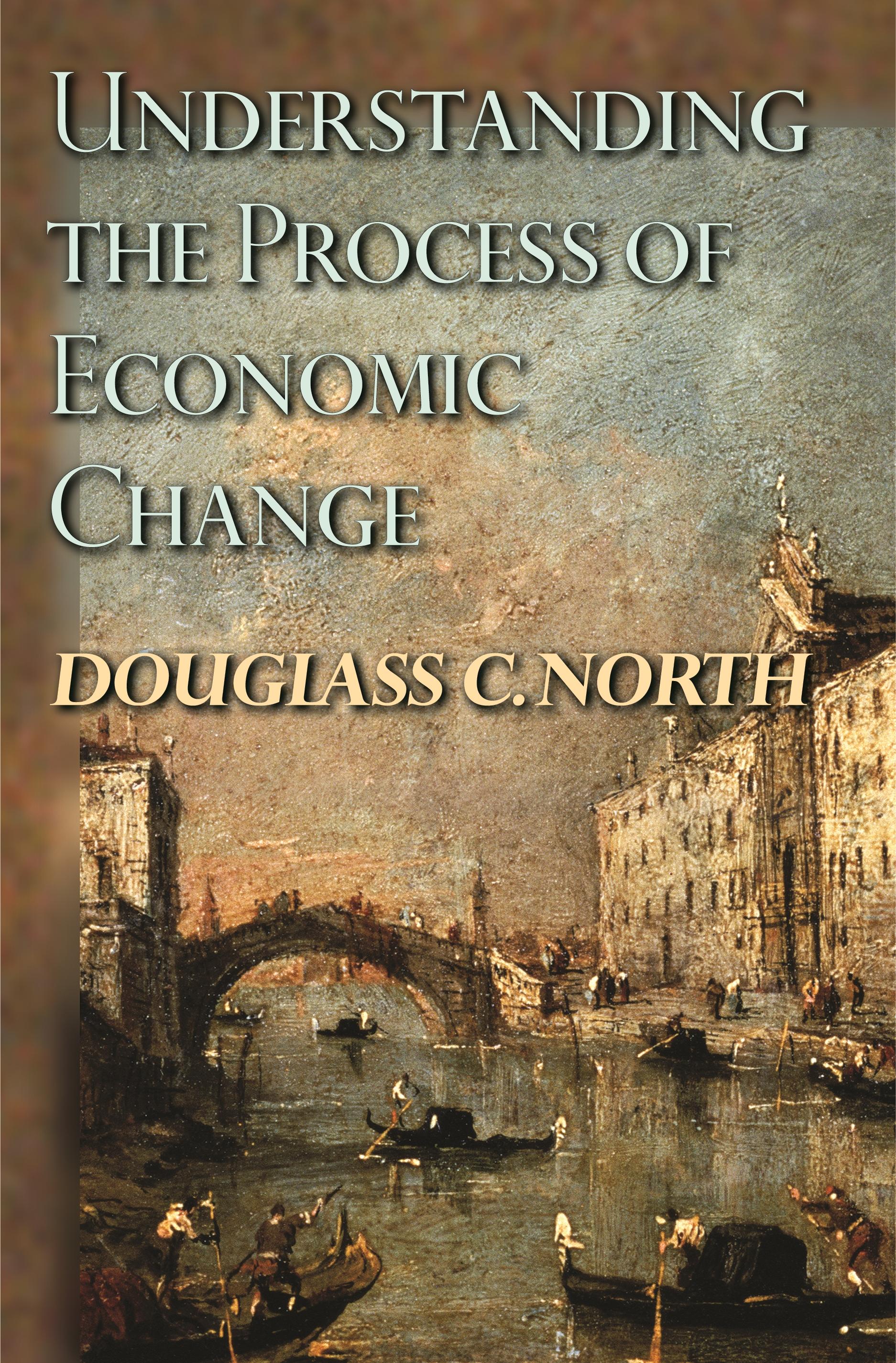
In this landmark work, a Nobel Prize-winning economist develops a new way of understanding the process by which economies change. Douglass North inspired a revolution in economic history a generation ago by demonstrating that economic performance is determined largely by the kind and quality of institutions that support markets. As he showed in two now classic books that inspired the New Institutional Economics (today a subfield of economics), property rights and transaction costs are fundamental determinants. Here, North explains how different societies arrive at the institutional infrastructure that greatly determines their economic trajectories.
North argues that economic change depends largely on "adaptive efficiency," a society's effectiveness in creating institutions that are productive, stable, fair, and broadly accepted--and, importantly, flexible enough to be changed or replaced in response to political and economic feedback. While adhering to his earlier definition of institutions as the formal and informal rules that constrain human economic behavior, he extends his analysis to explore the deeper determinants of how these rules evolve and how economies change. Drawing on recent work by psychologists, he identifies intentionality as the crucial variable and proceeds to demonstrate how intentionality emerges as the product of social learning and how it then shapes the economy's institutional foundations and thus its capacity to adapt to changing circumstances.
Understanding the Process of Economic Change accounts not only for past institutional change but also for the diverse performance of present-day economies. This major work is therefore also an essential guide to improving the performance of developing countries.
Before Memmo my notes were scattered across PDFs. Now a workspace pulls everything into one place — I see exactly what's still left to study.
Memmo's summaries are gold before exams. I don't have to re-read 800 pages two weeks before — just the important parts.
The AI chat has saved me the night before an exam more than once. I just keep asking until I get it — no waiting on a study group to reply.
The quizzes hit exactly what I need to know. Memmo tracks what I get stuck on — so I only practice what's worth it.
Flashcards with spaced repetition are magic. Memmo knows when I'm about to forget something and brings it back.
The AI podcasts are my favorite. I listen on my way to school and get a recap without sitting at a computer.

Handbok i kvalitativa metoder
281 kr

Hållbar utveckling: en introduktion för ingenjörer och andra problemlösare
334 kr

Brymans Samhällsvetenskapliga metoder
390 kr

Projektledning
491 kr

Den orättvisa hälsan: om socioekonomiska skillnader i hälsa och livslängd
326 kr

Organizational Leadership
429 kr

Vetenskapsteori för nybörjare
196 kr

På väg mot läraryrket
172 kr

Det sociala livet i skolan: Socialpsykologiska perspektiv
253 kr

Betygsättningens didaktik
151 kr

Personality
402 kr

Studying Leadership
404 kr

Managing Innovation
477 kr

Introduktion till samhällsvetenskaplig metod
347 kr

The Psychology of Sex and Gender
698 kr

Evidens och kunskap för socialt arbete
207 kr

Introduction to Leadership
605 kr