
Before Memmo my notes were scattered across PDFs. Now a workspace pulls everything into one place — I see exactly what's still left to study.
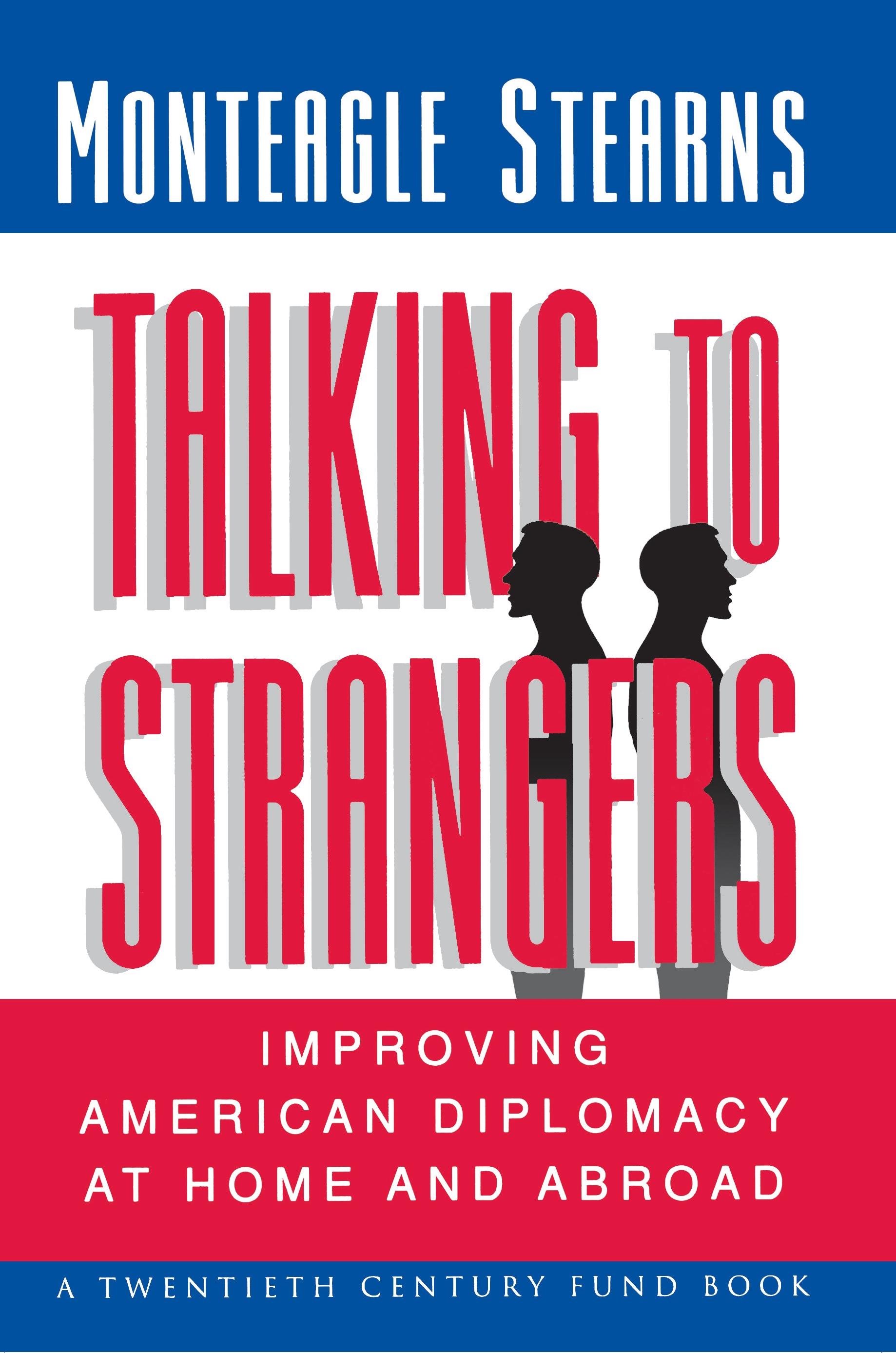
In this discerning book, Monteagle Stearns, a former career diplomat and ambassador, argues that U.S. foreign policymakers do not need a new doctrine, as some commentators have suggested, but rather a new attitude toward international affairs and, most especially, new ways of learning from the Foreign Service. True, the word strangers in his title refers to foreigners. However, it also refers to American foreign policymakers and American diplomats, whose failure to "speak each other's language" deprives American foreign policy of realism and coherence. In a world where regions have become more important than blocs, and ethnic and transnational problems more important than superpower rivalries, American foreign policy must be better informed if it is to be more effective. The insights required will come not from summit meetings or television specials but from the firsthand observations of trained Foreign Service officers.
Stearns has not written an apologia for the American Foreign Service, however. Indeed, his criticism of many of its weaknesses is biting. Ranging from a description of Benjamin Franklin's mission to France to an analysis of the Gulf War and its aftermath, he offers a balanced critique of how American diplomacy developed in reaction to European models and how it needs to be changed to satisfy the demands of the twenty-first century. Full of examples drawn from Stearns's extensive experience, Talking to Strangers addresses the problems that arise not only from an overly politicized foreign policy process but also from excessive bureaucratization and lack of leadership in the Foreign Service itself. Anyone interested in our nation's future will benefit from reading Stearns's pull-no-punches analysis of why improving American diplomacy should be a matter of urgent concern to us all.
Before Memmo my notes were scattered across PDFs. Now a workspace pulls everything into one place — I see exactly what's still left to study.
Memmo's summaries are gold before exams. I don't have to re-read 800 pages two weeks before — just the important parts.
The AI chat has saved me the night before an exam more than once. I just keep asking until I get it — no waiting on a study group to reply.
The quizzes hit exactly what I need to know. Memmo tracks what I get stuck on — so I only practice what's worth it.
Flashcards with spaced repetition are magic. Memmo knows when I'm about to forget something and brings it back.
The AI podcasts are my favorite. I listen on my way to school and get a recap without sitting at a computer.

Handbok i kvalitativa metoder
281 kr

Hållbar utveckling: en introduktion för ingenjörer och andra problemlösare
334 kr

Brymans Samhällsvetenskapliga metoder
390 kr

Projektledning
491 kr

Den orättvisa hälsan: om socioekonomiska skillnader i hälsa och livslängd
326 kr

Vetenskapsteori för nybörjare
196 kr

Organizational Leadership
429 kr

På väg mot läraryrket
172 kr

Det sociala livet i skolan: Socialpsykologiska perspektiv
253 kr

Betygsättningens didaktik
151 kr

Personality
402 kr

Studying Leadership
404 kr

Managing Innovation
477 kr

Introduktion till samhällsvetenskaplig metod
347 kr

The Psychology of Sex and Gender
698 kr

Evidens och kunskap för socialt arbete
207 kr

Introduction to Leadership
605 kr