
Before Memmo my notes were scattered across PDFs. Now a workspace pulls everything into one place — I see exactly what's still left to study.
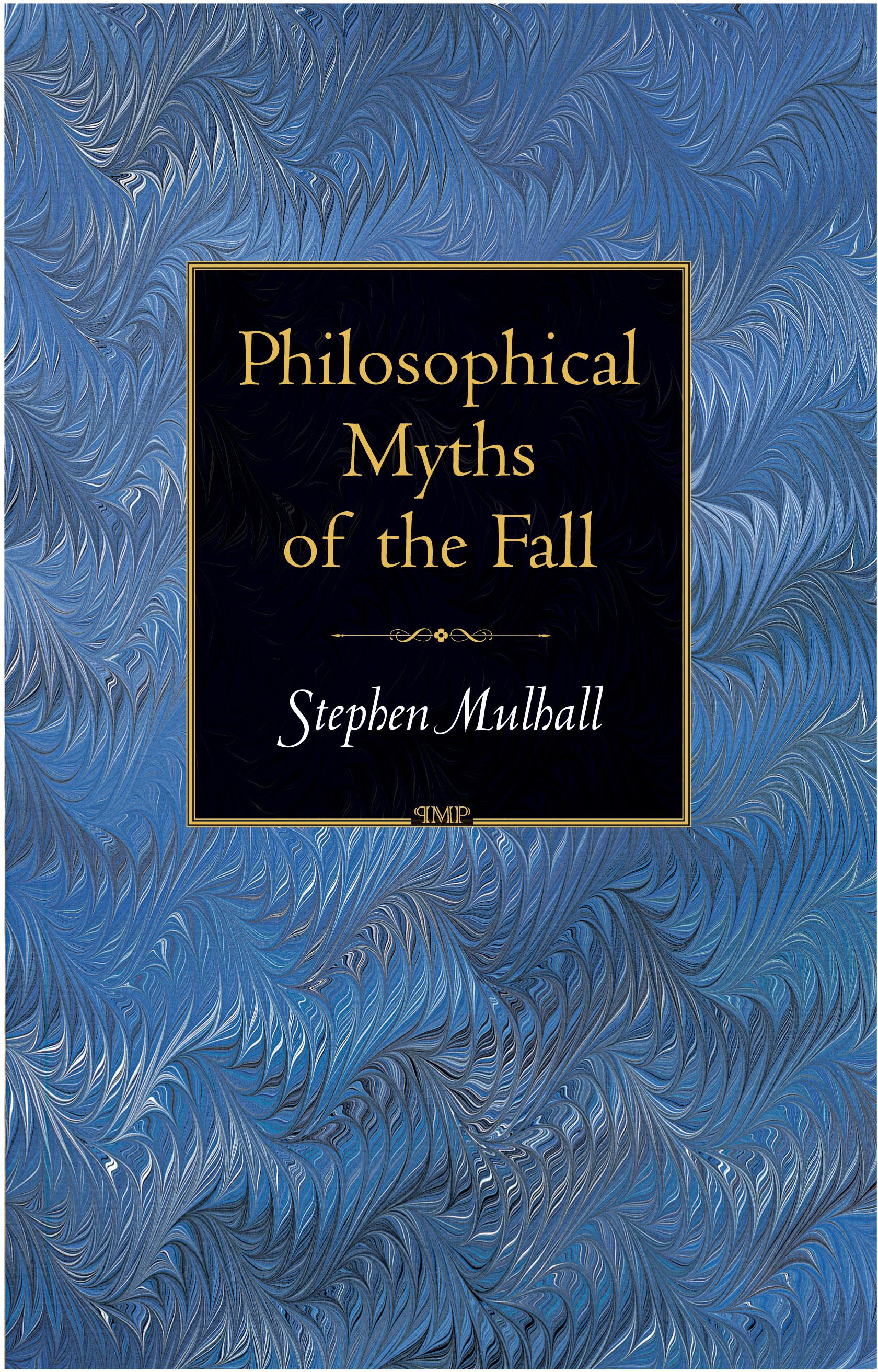
Did post-Enlightenment philosophers reject the idea of original sin and hence the view that life is a quest for redemption from it? In Philosophical Myths of the Fall, Stephen Mulhall identifies and evaluates a surprising ethical-religious dimension in the work of three highly influential philosophers--Nietzsche, Heidegger, and Wittgenstein. He asks: Is the Christian idea of humanity as structurally flawed something that these three thinkers aim simply to criticize? Or do they, rather, end up by reproducing secular variants of the same mythology?
Mulhall argues that each, in different ways, develops a conception of human beings as in need of redemption: in their work, we appear to be not so much capable of or prone to error and fantasy, but instead structurally perverse, living in untruth. In this respect, their work is more closely aligned to the Christian perspective than to the mainstream of the Enlightenment. However, all three thinkers explicitly reject any religious understanding of human perversity; indeed, they regard the very understanding of human beings as originally sinful as central to that from which we must be redeemed. And yet each also reproduces central elements of that understanding in his own thinking; each recounts his own myth of our Fall, and holds out his own image of redemption. The book concludes by asking whether this indebtedness to religion brings these philosophers' thinking closer to, or instead forces it further away from, the truth of the human condition.
Before Memmo my notes were scattered across PDFs. Now a workspace pulls everything into one place — I see exactly what's still left to study.
Memmo's summaries are gold before exams. I don't have to re-read 800 pages two weeks before — just the important parts.
The AI chat has saved me the night before an exam more than once. I just keep asking until I get it — no waiting on a study group to reply.
The quizzes hit exactly what I need to know. Memmo tracks what I get stuck on — so I only practice what's worth it.
Flashcards with spaced repetition are magic. Memmo knows when I'm about to forget something and brings it back.
The AI podcasts are my favorite. I listen on my way to school and get a recap without sitting at a computer.

Handbok i kvalitativa metoder
281 kr

Hållbar utveckling: en introduktion för ingenjörer och andra problemlösare
334 kr

Brymans Samhällsvetenskapliga metoder
390 kr

Projektledning
491 kr

Den orättvisa hälsan: om socioekonomiska skillnader i hälsa och livslängd
326 kr

Vetenskapsteori för nybörjare
196 kr

Organizational Leadership
429 kr

På väg mot läraryrket
172 kr

Det sociala livet i skolan: Socialpsykologiska perspektiv
253 kr

Betygsättningens didaktik
151 kr

Personality
402 kr

Studying Leadership
404 kr

Managing Innovation
477 kr

Introduktion till samhällsvetenskaplig metod
347 kr

The Psychology of Sex and Gender
698 kr

Evidens och kunskap för socialt arbete
207 kr

Introduction to Leadership
605 kr