
Before Memmo my notes were scattered across PDFs. Now a workspace pulls everything into one place — I see exactly what's still left to study.
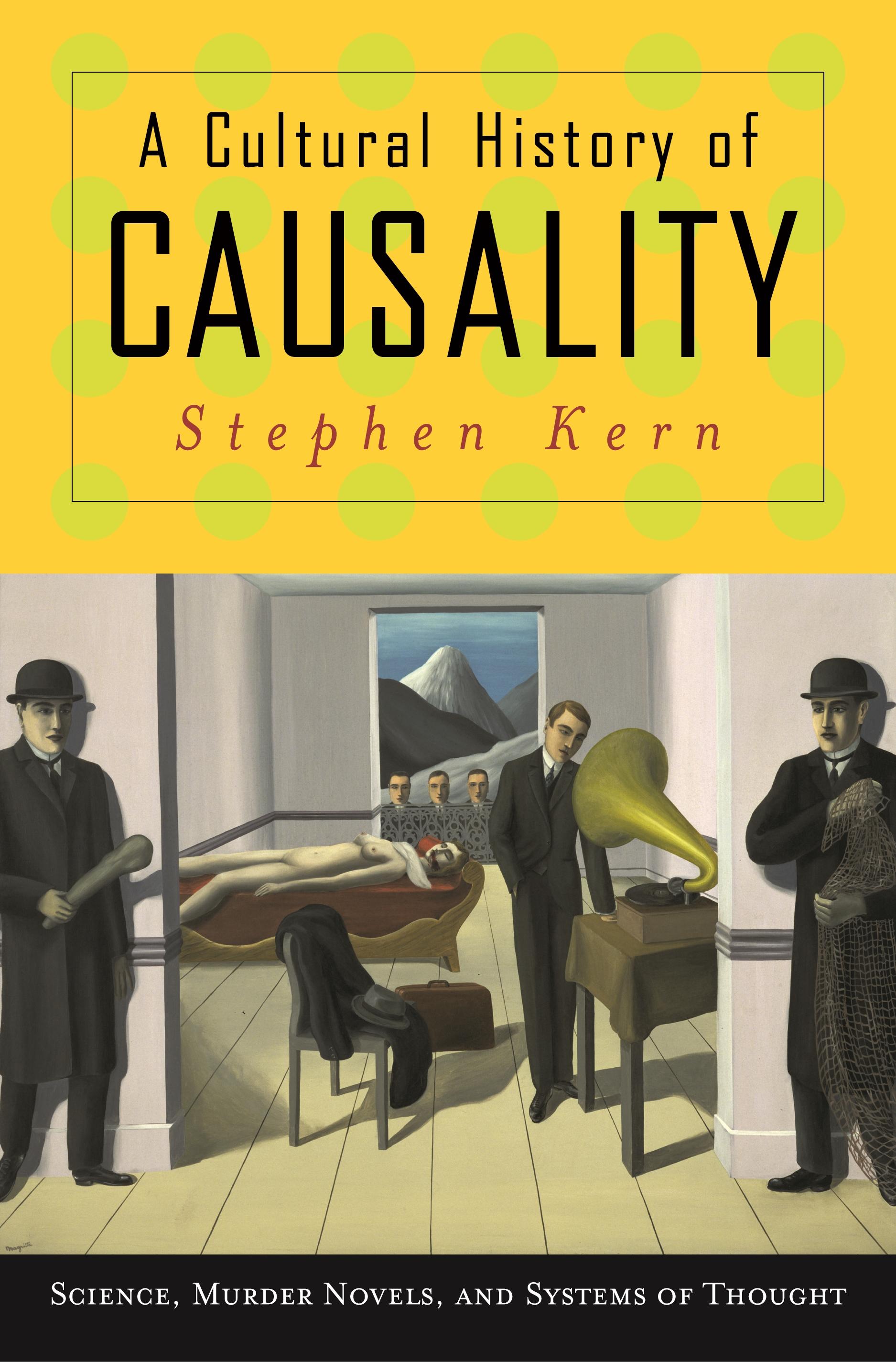
This pioneering work is the first to trace how our understanding of the causes of human behavior has changed radically over the course of European and American cultural history since 1830. Focusing on the act of murder, as documented vividly by more than a hundred novels including Crime and Punishment, An American Tragedy, The Trial, and Lolita, Stephen Kern devotes each chapter of A Cultural History of Causality to examining a specific causal factor or motive for murder--ancestry, childhood, language, sexuality, emotion, mind, society, and ideology. In addition to drawing on particular novels, each chapter considers the sciences (genetics, endocrinology, physiology, neuroscience) and systems of thought (psychoanalysis, linguistics, sociology, forensic psychiatry, and existential philosophy) most germane to each causal factor or motive.
Kern identifies five shifts in thinking about causality, shifts toward increasing specificity, multiplicity, complexity, probability, and uncertainty. He argues that the more researchers learned about the causes of human behavior, the more they realized how much more there was to know and how little they knew about what they thought they knew. The book closes by considering the revolutionary impact of quantum theory, which, though it influenced novelists only marginally, shattered the model of causal understanding that had dominated Western thought since the seventeenth century.
Others have addressed changing ideas about causality in specific areas, but no one has tackled a broad cultural history of this concept as does Stephen Kern in this engagingly written and lucidly argued book.
Before Memmo my notes were scattered across PDFs. Now a workspace pulls everything into one place — I see exactly what's still left to study.
Memmo's summaries are gold before exams. I don't have to re-read 800 pages two weeks before — just the important parts.
The AI chat has saved me the night before an exam more than once. I just keep asking until I get it — no waiting on a study group to reply.
The quizzes hit exactly what I need to know. Memmo tracks what I get stuck on — so I only practice what's worth it.
Flashcards with spaced repetition are magic. Memmo knows when I'm about to forget something and brings it back.
The AI podcasts are my favorite. I listen on my way to school and get a recap without sitting at a computer.

Handbok i kvalitativa metoder
281 kr

Hållbar utveckling: en introduktion för ingenjörer och andra problemlösare
334 kr

Brymans Samhällsvetenskapliga metoder
390 kr

Projektledning
491 kr

Den orättvisa hälsan: om socioekonomiska skillnader i hälsa och livslängd
326 kr

Vetenskapsteori för nybörjare
196 kr

Organizational Leadership
429 kr

På väg mot läraryrket
172 kr

Det sociala livet i skolan: Socialpsykologiska perspektiv
253 kr

Betygsättningens didaktik
151 kr

Personality
402 kr

Studying Leadership
404 kr

Managing Innovation
477 kr

Introduktion till samhällsvetenskaplig metod
347 kr

The Psychology of Sex and Gender
698 kr

Evidens och kunskap för socialt arbete
207 kr

Introduction to Leadership
605 kr