
Before Memmo my notes were scattered across PDFs. Now a workspace pulls everything into one place — I see exactly what's still left to study.
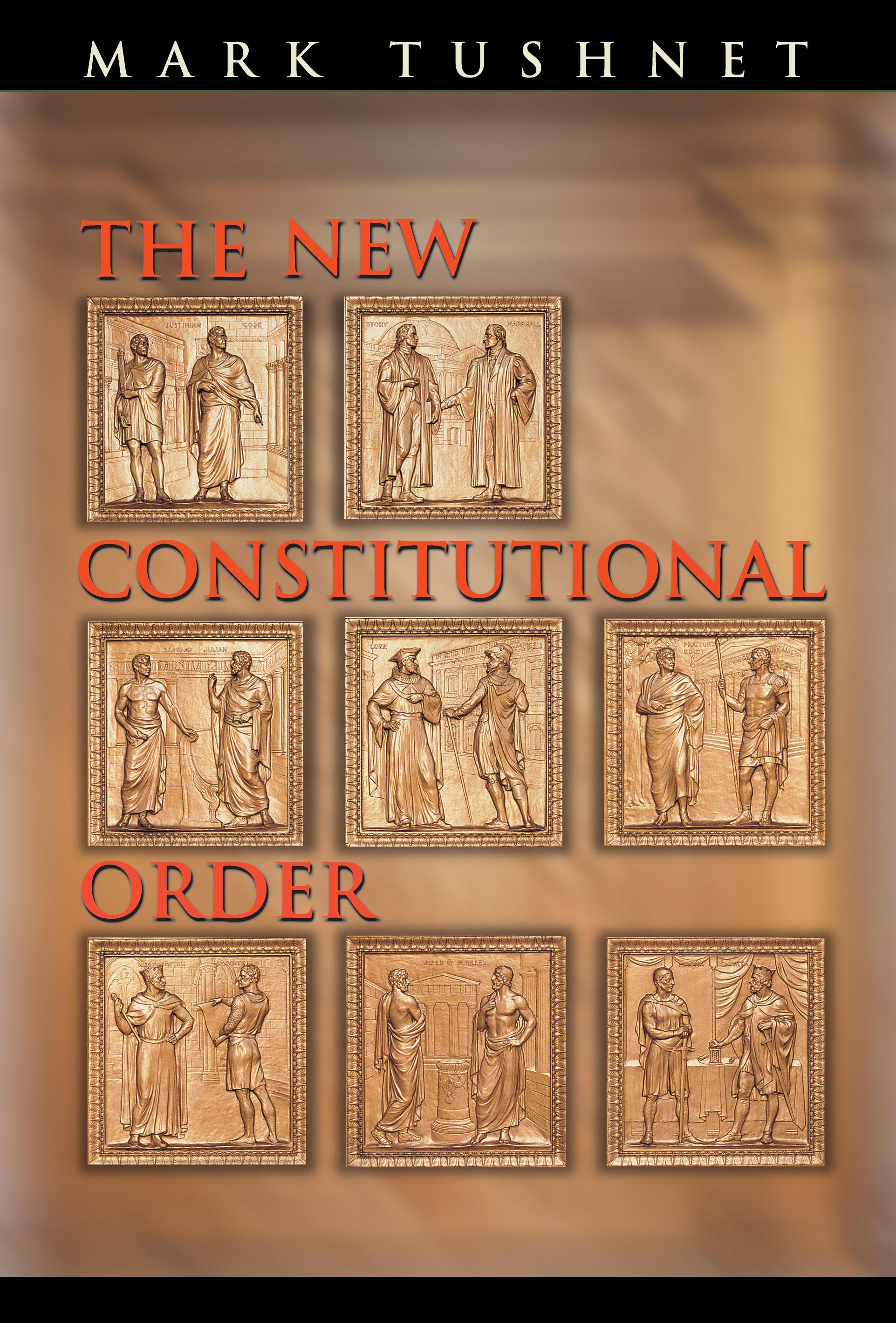
In his 1996 State of the Union Address, President Bill Clinton announced that the "age of big government is over." Some Republicans accused him of cynically appropriating their themes, while many Democrats thought he was betraying the principles of the New Deal and the Great Society. Mark Tushnet argues that Clinton was stating an observed fact: the emergence of a new constitutional order in which the aspiration to achieve justice directly through law has been substantially chastened.
Tushnet argues that the constitutional arrangements that prevailed in the United States from the 1930s to the 1990s have ended. We are now in a new constitutional order--one characterized by divided government, ideologically organized parties, and subdued constitutional ambition. Contrary to arguments that describe a threatened return to a pre-New Deal constitutional order, however, this book presents evidence that our current regime's animating principle is not the old belief that government cannot solve any problems but rather that government cannot solve any more problems.
Tushnet examines the institutional arrangements that support the new constitutional order as well as Supreme Court decisions that reflect it. He also considers recent developments in constitutional scholarship, focusing on the idea of minimalism as appropriate to a regime with chastened ambitions. Tushnet discusses what we know so far about the impact of globalization on domestic constitutional law, particularly in the areas of international human rights and federalism. He concludes with predictions about the type of regulation we can expect from the new order.
This is a major new analysis of the constitutional arrangements in the United States. Though it will not be received without controversy, it offers real explanatory and predictive power and provides important insights to both legal theorists and political scientists.
Before Memmo my notes were scattered across PDFs. Now a workspace pulls everything into one place — I see exactly what's still left to study.
Memmo's summaries are gold before exams. I don't have to re-read 800 pages two weeks before — just the important parts.
The AI chat has saved me the night before an exam more than once. I just keep asking until I get it — no waiting on a study group to reply.
The quizzes hit exactly what I need to know. Memmo tracks what I get stuck on — so I only practice what's worth it.
Flashcards with spaced repetition are magic. Memmo knows when I'm about to forget something and brings it back.
The AI podcasts are my favorite. I listen on my way to school and get a recap without sitting at a computer.

Handbok i kvalitativa metoder
281 kr

Hållbar utveckling: en introduktion för ingenjörer och andra problemlösare
334 kr

Brymans Samhällsvetenskapliga metoder
390 kr

Projektledning
491 kr

Den orättvisa hälsan: om socioekonomiska skillnader i hälsa och livslängd
326 kr

Vetenskapsteori för nybörjare
196 kr

Organizational Leadership
429 kr

På väg mot läraryrket
172 kr

Det sociala livet i skolan: Socialpsykologiska perspektiv
253 kr

Betygsättningens didaktik
151 kr

Personality
402 kr

Studying Leadership
404 kr

Managing Innovation
477 kr

Introduktion till samhällsvetenskaplig metod
347 kr

The Psychology of Sex and Gender
698 kr

Evidens och kunskap för socialt arbete
207 kr

Introduction to Leadership
605 kr