
Before Memmo my notes were scattered across PDFs. Now a workspace pulls everything into one place — I see exactly what's still left to study.
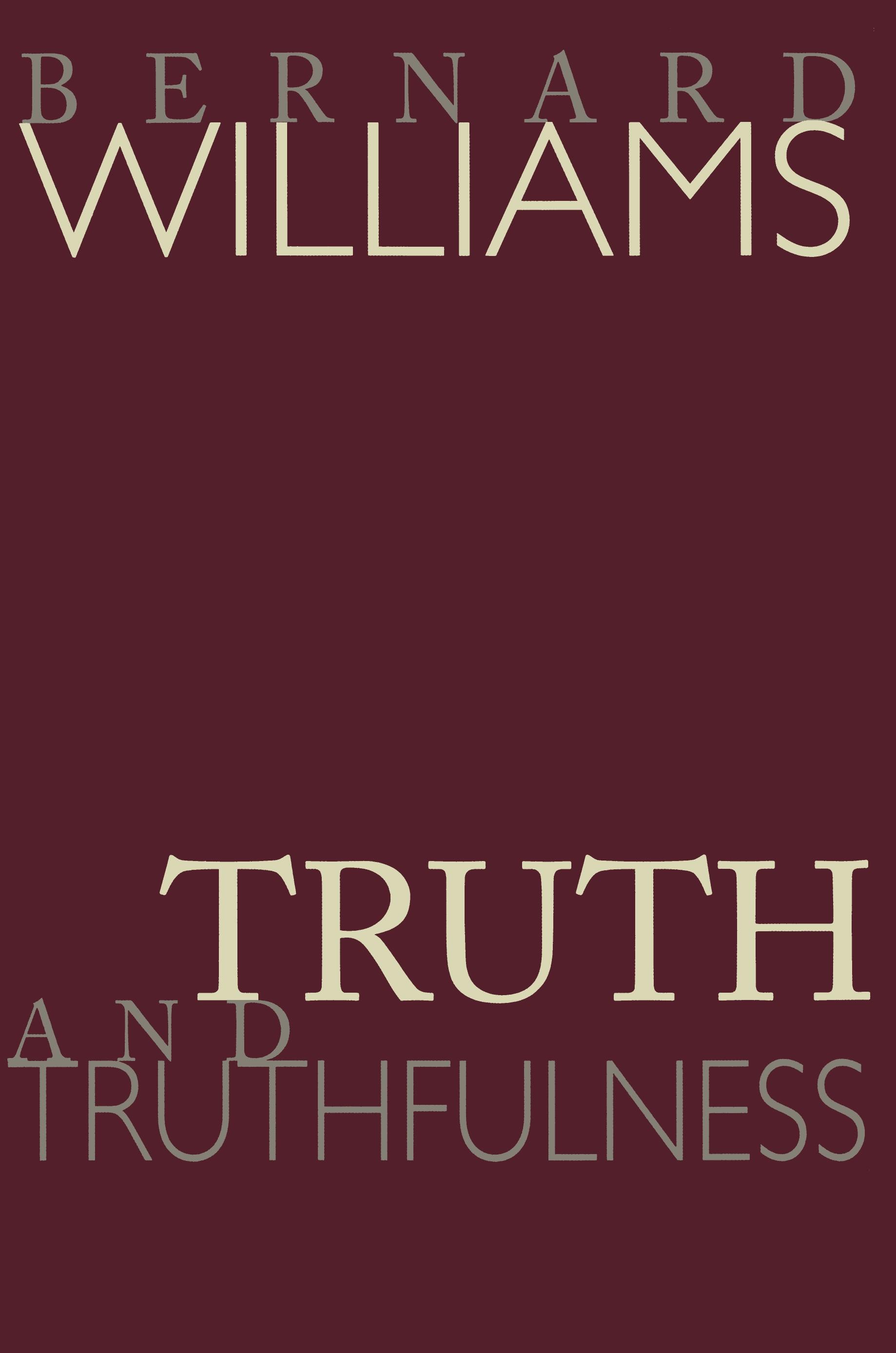
What does it mean to be truthful? What role does truth play in our lives? What do we lose if we reject truthfulness? No philosopher is better suited to answer these questions than Bernard Williams. Writing with his characteristic combination of passion and elegant simplicity, he explores the value of truth and finds it to be both less and more than we might imagine.
Modern culture exhibits two attitudes toward truth: suspicion of being deceived (no one wants to be fooled) and skepticism that objective truth exists at all (no one wants to be naive). This tension between a demand for truthfulness and the doubt that there is any truth to be found is not an abstract paradox. It has political consequences and signals a danger that our intellectual activities, particularly in the humanities, may tear themselves to pieces.
Williams's approach, in the tradition of Nietzsche's genealogy, blends philosophy, history, and a fictional account of how the human concern with truth might have arisen. Without denying that we should worry about the contingency of much that we take for granted, he defends truth as an intellectual objective and a cultural value. He identifies two basic virtues of truth, Accuracy and Sincerity, the first of which aims at finding out the truth and the second at telling it. He describes different psychological and social forms that these virtues have taken and asks what ideas can make best sense of them today.
Truth and Truthfulness presents a powerful challenge to the fashionable belief that truth has no value, but equally to the traditional faith that its value guarantees itself. Bernard Williams shows us that when we lose a sense of the value of truth, we lose a lot both politically and personally, and may well lose everything.
Before Memmo my notes were scattered across PDFs. Now a workspace pulls everything into one place — I see exactly what's still left to study.
Memmo's summaries are gold before exams. I don't have to re-read 800 pages two weeks before — just the important parts.
The AI chat has saved me the night before an exam more than once. I just keep asking until I get it — no waiting on a study group to reply.
The quizzes hit exactly what I need to know. Memmo tracks what I get stuck on — so I only practice what's worth it.
Flashcards with spaced repetition are magic. Memmo knows when I'm about to forget something and brings it back.
The AI podcasts are my favorite. I listen on my way to school and get a recap without sitting at a computer.

Handbok i kvalitativa metoder
281 kr

Hållbar utveckling: en introduktion för ingenjörer och andra problemlösare
334 kr

Brymans Samhällsvetenskapliga metoder
390 kr

Projektledning
491 kr

Den orättvisa hälsan: om socioekonomiska skillnader i hälsa och livslängd
326 kr

Vetenskapsteori för nybörjare
196 kr

Organizational Leadership
429 kr

På väg mot läraryrket
172 kr

Det sociala livet i skolan: Socialpsykologiska perspektiv
253 kr

Betygsättningens didaktik
151 kr

Personality
402 kr

Studying Leadership
404 kr

Managing Innovation
477 kr

Introduktion till samhällsvetenskaplig metod
347 kr

The Psychology of Sex and Gender
698 kr

Evidens och kunskap för socialt arbete
207 kr

Introduction to Leadership
605 kr