
Before Memmo my notes were scattered across PDFs. Now a workspace pulls everything into one place — I see exactly what's still left to study.
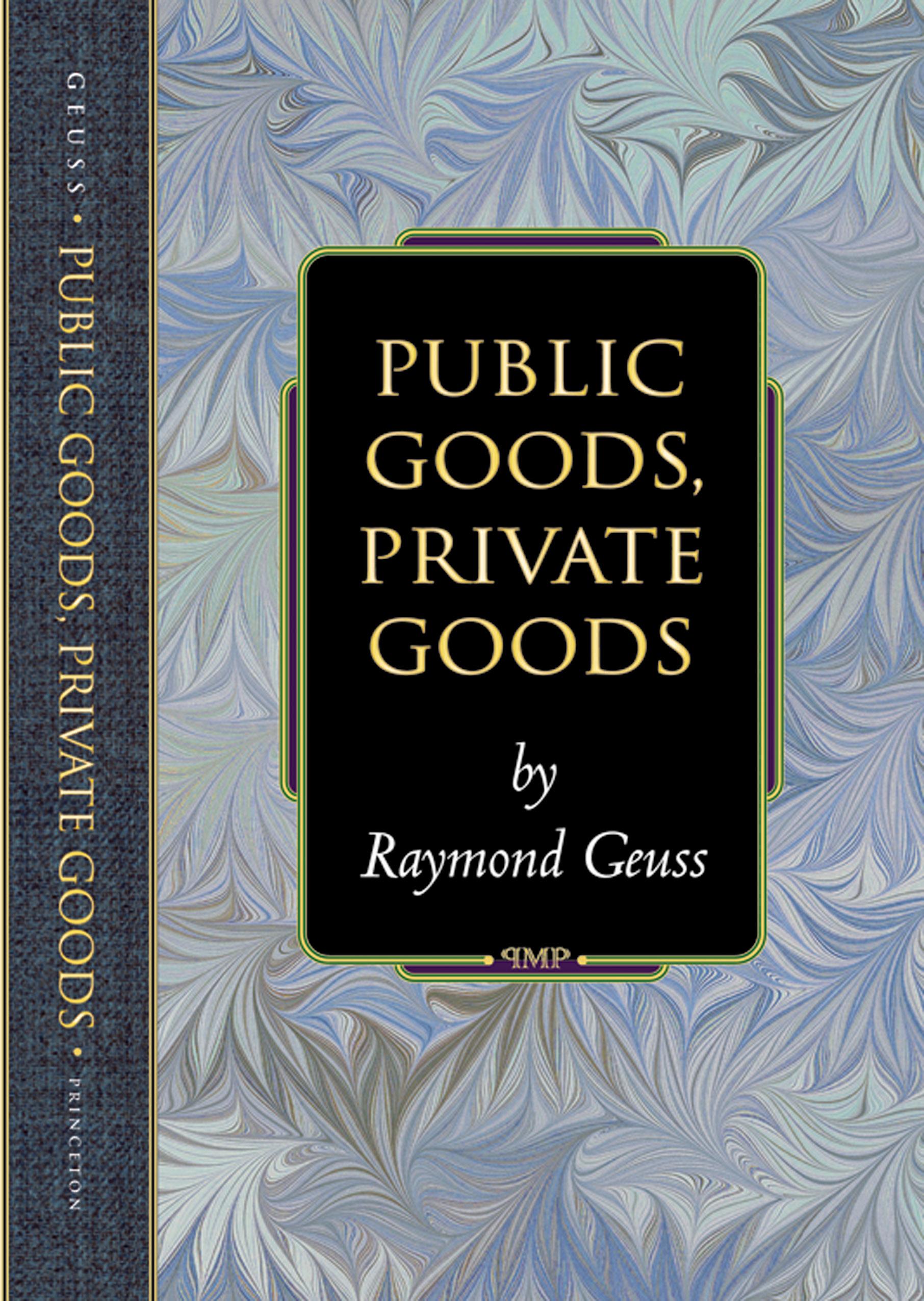
Much political thinking today, particularly that influenced by liberalism, assumes a clear distinction between the public and the private, and holds that the correct understanding of this should weigh heavily in our attitude to human goods. It is, for instance, widely held that the state may address human action in the ''public'' realm but not in the ''private.'' In Public Goods, Private Goods Raymond Geuss exposes the profound flaws of such thinking and calls for a more nuanced approach. Drawing on a series of colorful examples from the ancient world, he illustrates some of the many ways in which actions can in fact be understood as public or private.
The first chapter discusses Diogenes the Cynic, who flouted conventions about what should be public and what should be private by, among other things, masturbating in the Athenian marketplace. Next comes an analysis of Julius Caesar's decision to defy the Senate by crossing the Rubicon with his army; in doing so, Caesar asserted his dignity as a private person while acting in a public capacity. The third chapter considers St. Augustine's retreat from public life to contemplate his own, private spiritual condition. In the fourth, Geuss goes on to examine recent liberal views, questioning, in particular, common assumptions about the importance of public dialogue and the purportedly unlimited possibilities humans have for reaching consensus. He suggests that the liberal concern to maintain and protect, even at a very high cost, an inviolable ''private sphere'' for each individual is confused.
Geuss concludes that a view of politics and morality derived from Hobbes and Nietzsche is a more realistic and enlightening way than modern liberalism to think about human goods. Ultimately, he cautions, a simplistic understanding of privacy leads to simplistic ideas about what the state is and is not justified in doing.
Before Memmo my notes were scattered across PDFs. Now a workspace pulls everything into one place — I see exactly what's still left to study.
Memmo's summaries are gold before exams. I don't have to re-read 800 pages two weeks before — just the important parts.
The AI chat has saved me the night before an exam more than once. I just keep asking until I get it — no waiting on a study group to reply.
The quizzes hit exactly what I need to know. Memmo tracks what I get stuck on — so I only practice what's worth it.
Flashcards with spaced repetition are magic. Memmo knows when I'm about to forget something and brings it back.
The AI podcasts are my favorite. I listen on my way to school and get a recap without sitting at a computer.

Handbok i kvalitativa metoder
281 kr

Hållbar utveckling: en introduktion för ingenjörer och andra problemlösare
334 kr

Brymans Samhällsvetenskapliga metoder
390 kr

Projektledning
491 kr

Den orättvisa hälsan: om socioekonomiska skillnader i hälsa och livslängd
326 kr

Vetenskapsteori för nybörjare
196 kr

Organizational Leadership
429 kr

På väg mot läraryrket
172 kr

Det sociala livet i skolan: Socialpsykologiska perspektiv
253 kr

Betygsättningens didaktik
151 kr

Personality
402 kr

Studying Leadership
404 kr

Managing Innovation
477 kr

Introduktion till samhällsvetenskaplig metod
347 kr

The Psychology of Sex and Gender
698 kr

Evidens och kunskap för socialt arbete
207 kr

Introduction to Leadership
605 kr