
Before Memmo my notes were scattered across PDFs. Now a workspace pulls everything into one place — I see exactly what's still left to study.
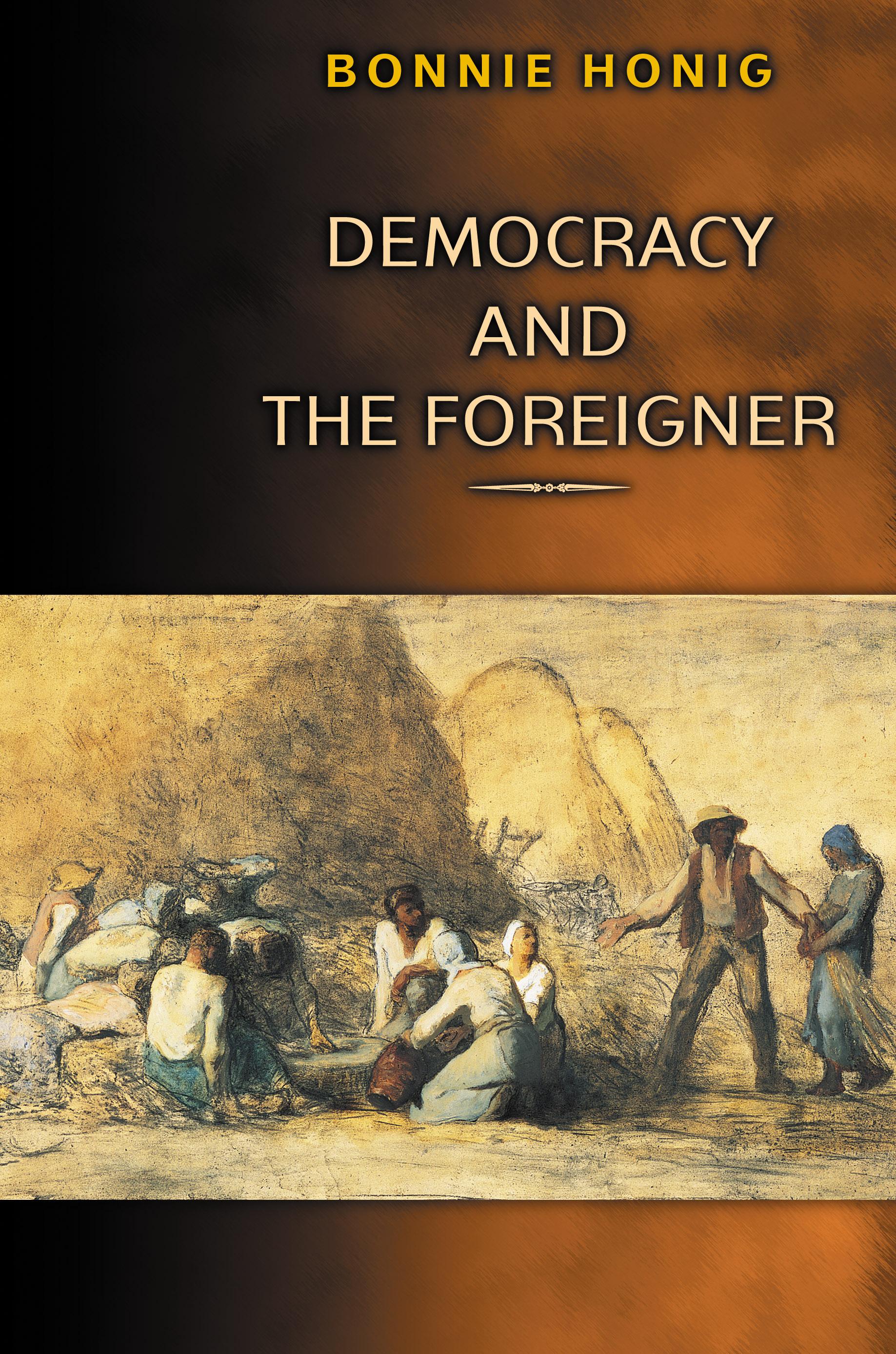
What should we do about foreigners? Should we try to make them more like us or keep them at bay to protect our democracy, our culture, our well-being? This dilemma underlies age-old debates about immigration, citizenship, and national identity that are strikingly relevant today. In Democracy and the Foreigner, Bonnie Honig reverses the question: What problems might foreigners solve for us? Hers is not a conventional approach. Instead of lauding the achievements of individual foreigners, she probes a much larger issue--the symbolic politics of foreignness. In doing so she shows not only how our debates over foreignness help shore up our national or democratic identities, but how anxieties endemic to liberal democracy themselves animate ambivalence toward foreignness.
Central to Honig's arguments are stories featuring ''foreign-founders,'' in which the origins or revitalization of a people depend upon a foreigner's energy, virtue, insight, or law. From such popular movies as The Wizard of Oz, Shane, and Strictly Ballroom to the biblical stories of Moses and Ruth to the myth of an immigrant America, from Rousseau to Freud, foreignness is represented not just as a threat but as a supplement for communities periodically requiring renewal. Why? Why do people tell stories in which their societies are dependent on strangers?
One of Honig's most surprising conclusions is that an appreciation of the role of foreigners in (re)founding peoples works neither solely as a cosmopolitan nor a nationalist resource. For example, in America, nationalists see one archetypal foreign-founder--the naturalized immigrant--as reconfirming the allure of deeply held American values, whereas to cosmopolitans this immigrant represents the deeply transnational character of American democracy. Scholars and students of political theory, and all those concerned with the dilemmas democracy faces in accommodating difference, will find this book rich with valuable and stimulating insights.
Before Memmo my notes were scattered across PDFs. Now a workspace pulls everything into one place — I see exactly what's still left to study.
Memmo's summaries are gold before exams. I don't have to re-read 800 pages two weeks before — just the important parts.
The AI chat has saved me the night before an exam more than once. I just keep asking until I get it — no waiting on a study group to reply.
The quizzes hit exactly what I need to know. Memmo tracks what I get stuck on — so I only practice what's worth it.
Flashcards with spaced repetition are magic. Memmo knows when I'm about to forget something and brings it back.
The AI podcasts are my favorite. I listen on my way to school and get a recap without sitting at a computer.

Handbok i kvalitativa metoder
281 kr

Hållbar utveckling: en introduktion för ingenjörer och andra problemlösare
334 kr

Brymans Samhällsvetenskapliga metoder
390 kr

Projektledning
491 kr

Den orättvisa hälsan: om socioekonomiska skillnader i hälsa och livslängd
326 kr

Vetenskapsteori för nybörjare
196 kr

Organizational Leadership
429 kr

På väg mot läraryrket
172 kr

Det sociala livet i skolan: Socialpsykologiska perspektiv
253 kr

Betygsättningens didaktik
151 kr

Personality
402 kr

Studying Leadership
404 kr

Managing Innovation
477 kr

Introduktion till samhällsvetenskaplig metod
347 kr

The Psychology of Sex and Gender
698 kr

Evidens och kunskap för socialt arbete
207 kr

Introduction to Leadership
605 kr