
Before Memmo my notes were scattered across PDFs. Now a workspace pulls everything into one place — I see exactly what's still left to study.
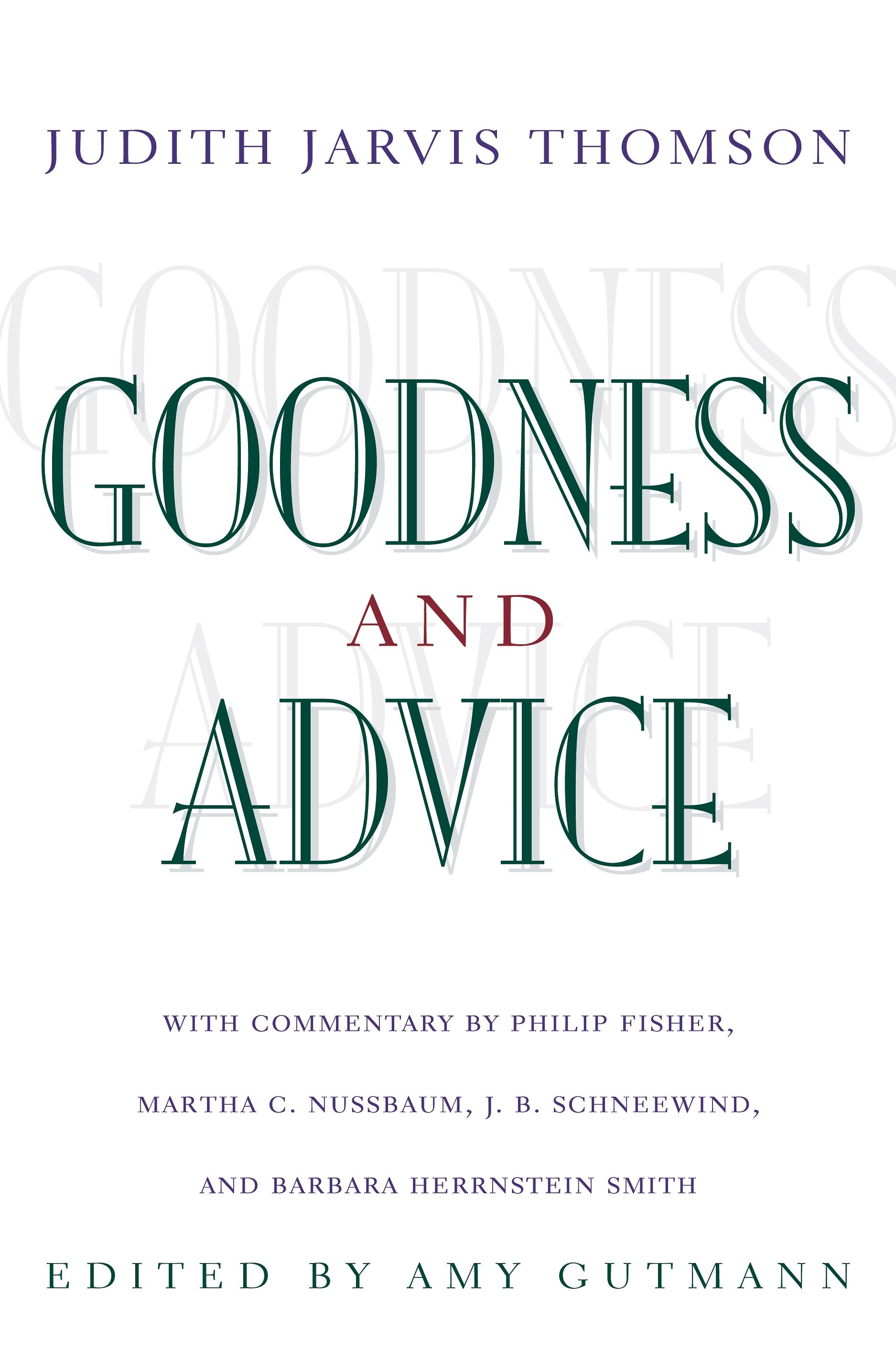
How should we live? What do we owe to other people? In Goodness and Advice, the eminent philosopher Judith Jarvis Thomson explores how we should go about answering such fundamental questions. In doing so, she makes major advances in moral philosophy, pointing to some deep problems for influential moral theories and describing the structure of a new and much more promising theory.
Thomson begins by lamenting the prevalence of the idea that there is an unbridgeable gap between fact and value--that to say something is good, for example, is not to state a fact, but to do something more like expressing an attitude or feeling. She sets out to challenge this view, first by assessing the apparently powerful claims of Consequentialism. Thomson makes the striking argument that this familiar theory must ultimately fail because its basic requirement--that people should act to bring about the "most good"--is meaningless. It rests on an incoherent conception of goodness, and supplies, not mistaken advice, but no advice at all.
Thomson then outlines the theory that she thinks we should opt for instead. This theory says that no acts are, simply, good: an act can at most be good in one or another way--as, for example, good for Smith or for Jones. What we ought to do is, most importantly, to avoid injustice; and whether an act is unjust is a function both of the rights of those affected, including the agent, and of how good or bad the act is for them. The book, which originated in the Tanner lectures that Thomson delivered at Princeton University's Center for Human Values in 1999, includes two chapters by Thomson ("Goodness" and "Advice"), provocative comments by four prominent scholars--Martha Nussbaum, Jerome Schneewind, Philip Fisher, and Barbara Herrnstein Smith--and replies by Thomson to those comments.
Before Memmo my notes were scattered across PDFs. Now a workspace pulls everything into one place — I see exactly what's still left to study.
Memmo's summaries are gold before exams. I don't have to re-read 800 pages two weeks before — just the important parts.
The AI chat has saved me the night before an exam more than once. I just keep asking until I get it — no waiting on a study group to reply.
The quizzes hit exactly what I need to know. Memmo tracks what I get stuck on — so I only practice what's worth it.
Flashcards with spaced repetition are magic. Memmo knows when I'm about to forget something and brings it back.
The AI podcasts are my favorite. I listen on my way to school and get a recap without sitting at a computer.

Handbok i kvalitativa metoder
281 kr

Hållbar utveckling: en introduktion för ingenjörer och andra problemlösare
334 kr

Brymans Samhällsvetenskapliga metoder
390 kr

Projektledning
491 kr

Den orättvisa hälsan: om socioekonomiska skillnader i hälsa och livslängd
326 kr

Organizational Leadership
429 kr

Vetenskapsteori för nybörjare
196 kr

På väg mot läraryrket
172 kr

Det sociala livet i skolan: Socialpsykologiska perspektiv
253 kr

Betygsättningens didaktik
151 kr

Personality
402 kr

Studying Leadership
404 kr

Managing Innovation
477 kr

Introduktion till samhällsvetenskaplig metod
347 kr

The Psychology of Sex and Gender
698 kr

Evidens och kunskap för socialt arbete
207 kr

Introduction to Leadership
605 kr