
Before Memmo my notes were scattered across PDFs. Now a workspace pulls everything into one place — I see exactly what's still left to study.
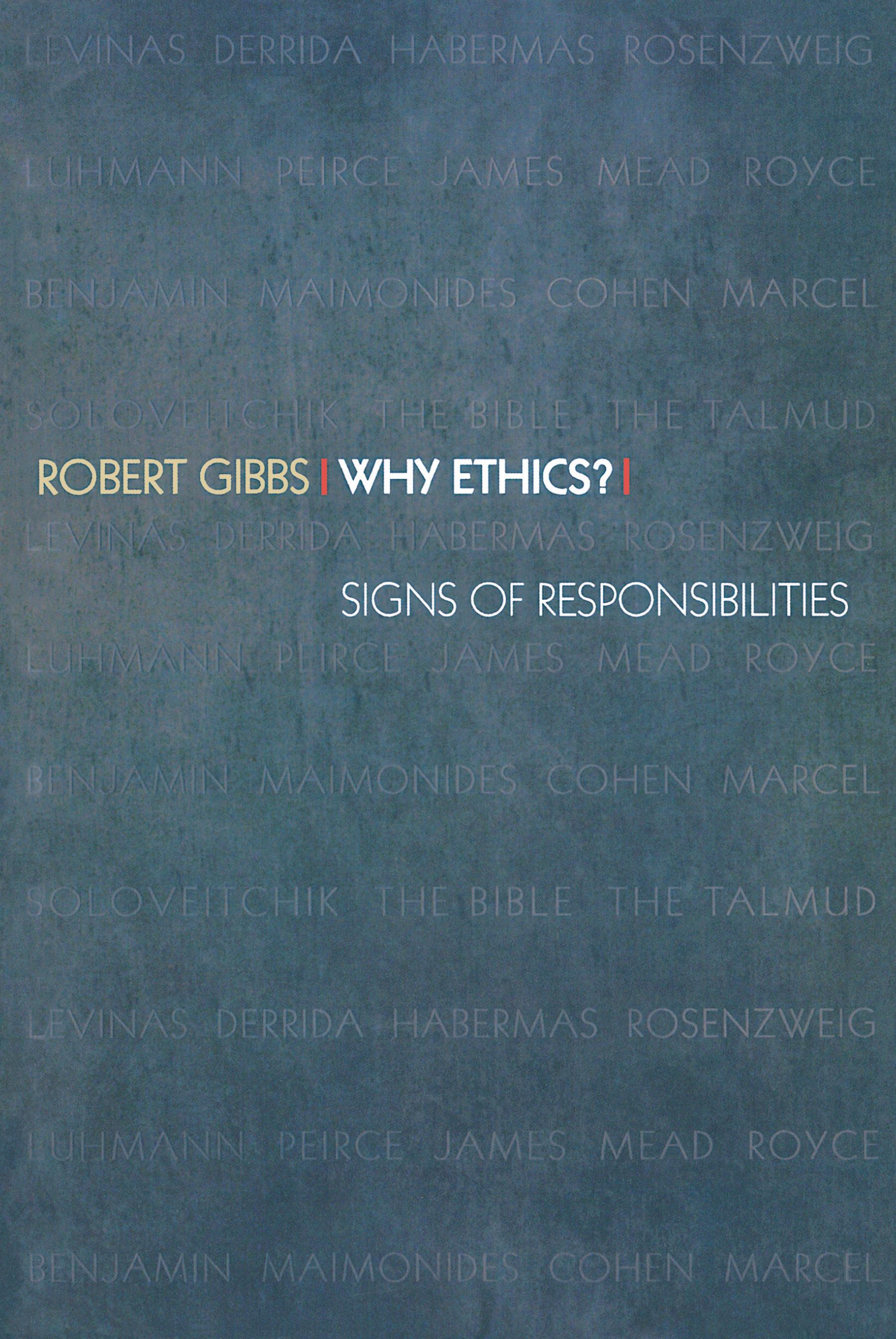
Robert Gibbs presents here an ambitious new theory of ethics. Drawing on a striking combination of intellectual traditions, including Jewish thought, continental philosophy, and American pragmatism, Gibbs argues that ethics is primarily concerned with responsibility and is not--as philosophers have often assumed--principally a matter of thinking about the right thing to do and acting in accordance with the abstract dictates of reason or will. More specifically, ethics is concerned with attending to others' questions and bearing responsibility for what they do.
Gibbs builds this innovative case by exploring the implicit responsibilities in a broad range of human interactions, paying especially close attention to the signs that people give and receive as they relate to each other. Why Ethics? starts by examining the simple actions of listening and speaking, reading and writing, and by focusing on the different responsibilities that each action entails. The author discusses what he describes as the mutual responsibilities implicit in the actions of reasoning, mediating, and judging. He assesses the relationships among ethics, pragmatics, and Jewish philosophy. The book concludes by looking at the relation of memory and the immemorial, emphasizing the need to respond for past actions by confessing, seeking forgiveness, and making reconciliations.
In format, Gibbs adopts a Talmudic approach, interweaving brief citations from primary texts with his commentary. He draws these texts from diverse thinkers and sources, including Levinas, Derrida, Habermas, Rosenzweig, Luhmann, Peirce, James, Royce, Benjamin, Maimonides, the Bible, and the Talmud. Ranging over philosophy, literary theory, social theory, and historiography, this is an ambitious and provocative work that holds profound lessons for how we think about ethics and how we seek to live responsibly.
Before Memmo my notes were scattered across PDFs. Now a workspace pulls everything into one place — I see exactly what's still left to study.
Memmo's summaries are gold before exams. I don't have to re-read 800 pages two weeks before — just the important parts.
The AI chat has saved me the night before an exam more than once. I just keep asking until I get it — no waiting on a study group to reply.
The quizzes hit exactly what I need to know. Memmo tracks what I get stuck on — so I only practice what's worth it.
Flashcards with spaced repetition are magic. Memmo knows when I'm about to forget something and brings it back.
The AI podcasts are my favorite. I listen on my way to school and get a recap without sitting at a computer.

Handbok i kvalitativa metoder
281 kr

Hållbar utveckling: en introduktion för ingenjörer och andra problemlösare
334 kr

Brymans Samhällsvetenskapliga metoder
390 kr

Projektledning
491 kr

Den orättvisa hälsan: om socioekonomiska skillnader i hälsa och livslängd
326 kr

Organizational Leadership
429 kr

Vetenskapsteori för nybörjare
196 kr

På väg mot läraryrket
172 kr

Det sociala livet i skolan: Socialpsykologiska perspektiv
253 kr

Betygsättningens didaktik
151 kr

Personality
402 kr

Studying Leadership
404 kr

Managing Innovation
477 kr

Introduktion till samhällsvetenskaplig metod
347 kr

The Psychology of Sex and Gender
698 kr

Evidens och kunskap för socialt arbete
207 kr

Introduction to Leadership
605 kr