
Before Memmo my notes were scattered across PDFs. Now a workspace pulls everything into one place — I see exactly what's still left to study.
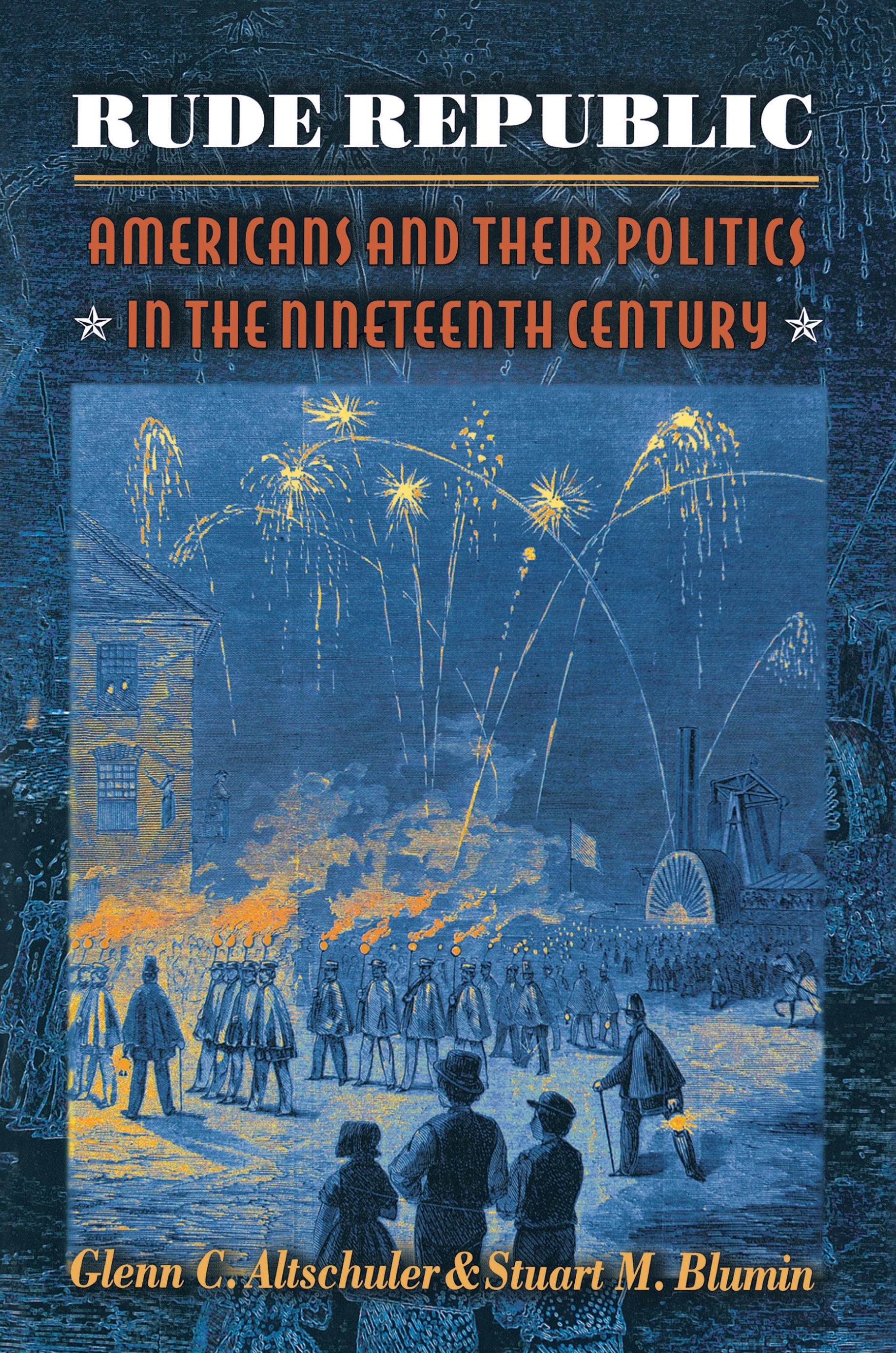
What did politics and public affairs mean to those generations of Americans who first experienced democratic self-rule? Taking their cue from vibrant political campaigns and very high voter turnouts, historians have depicted the nineteenth century as an era of intense and widespread political enthusiasm. But rarely have these historians examined popular political engagement directly, or within the broader contexts of day-to-day life. In this bold and in-depth look at Americans and their politics, Glenn Altschuler and Stuart Blumin argue for a more complex understanding of the "space" occupied by politics in nineteenth-century American society and culture. Mining such sources as diaries, letters, autobiographies, novels, cartoons, contested-election voter testimony to state legislative committees, and the partisan newspapers of representative American communities ranging from Massachusetts and Georgia to Texas and California, the authors explore a wide range of political actions and attitudes. They consider the enthusiastic commitment celebrated by historians together with various forms of skepticism, conflicted engagement, detachment, and hostility that rarely have been recognized as part of the American political landscape. Rude Republic sets the political parties and their noisy and attractive campaign spectacles, as well as the massive turnout of voters on election day, within the communal social structure and calendar, the local human landscape of farms, roads, and county towns, and the organizational capacities of emerging nineteenth-century institutions. Political action and engagement are set, too, within the tide of events: the construction of the mass-based party system, the gathering crisis over slavery and disunion, and the gradual expansion of government (and of cities) in the post-Civil War era. By placing the question of popular engagement within these broader social, cultural, and historical contexts, the authors bring new understanding to the complex trajectory of American democracy.
Before Memmo my notes were scattered across PDFs. Now a workspace pulls everything into one place — I see exactly what's still left to study.
Memmo's summaries are gold before exams. I don't have to re-read 800 pages two weeks before — just the important parts.
The AI chat has saved me the night before an exam more than once. I just keep asking until I get it — no waiting on a study group to reply.
The quizzes hit exactly what I need to know. Memmo tracks what I get stuck on — so I only practice what's worth it.
Flashcards with spaced repetition are magic. Memmo knows when I'm about to forget something and brings it back.
The AI podcasts are my favorite. I listen on my way to school and get a recap without sitting at a computer.

Handbok i kvalitativa metoder
281 kr

Hållbar utveckling: en introduktion för ingenjörer och andra problemlösare
334 kr

Brymans Samhällsvetenskapliga metoder
390 kr

Projektledning
491 kr

Den orättvisa hälsan: om socioekonomiska skillnader i hälsa och livslängd
326 kr

Organizational Leadership
429 kr

Vetenskapsteori för nybörjare
196 kr

På väg mot läraryrket
172 kr

Det sociala livet i skolan: Socialpsykologiska perspektiv
253 kr

Betygsättningens didaktik
151 kr

Personality
402 kr

Studying Leadership
404 kr

Managing Innovation
477 kr

Introduktion till samhällsvetenskaplig metod
347 kr

The Psychology of Sex and Gender
698 kr

Evidens och kunskap för socialt arbete
207 kr

Introduction to Leadership
605 kr