
Before Memmo my notes were scattered across PDFs. Now a workspace pulls everything into one place — I see exactly what's still left to study.
How social and intellectual changes undermine our justifications for the welfare state
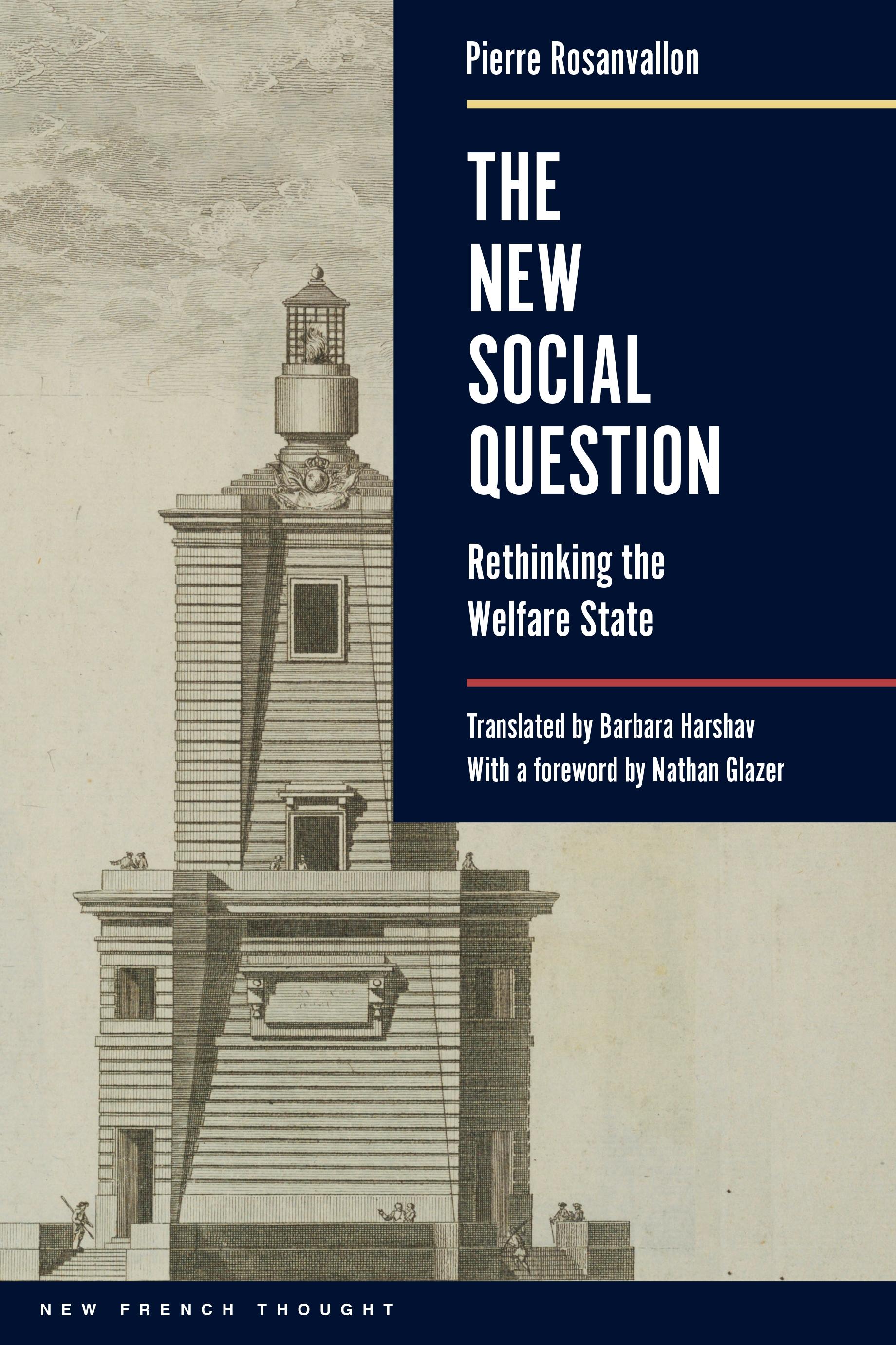
The welfare state has come under severe pressure internationally, partly for the well-known reasons of slowing economic growth and declining confidence in the public sector. According to the influential social theorist Pierre Rosanvallon, however, there is also a deeper and less familiar reason for the crisis of the welfare state. He shows here that a fundamental practical and philosophical justification for traditional welfare policies—that all citizens share equal risks—has been undermined by social and intellectual change. If we wish to achieve the goals of social solidarity and civic equality for which the welfare state was founded, Rosanvallon argues, we must radically rethink social programs.
Rosanvallon begins by tracing the history of the welfare state and its founding premise that risks, especially the risks of illness and unemployment, are equally distributed and unpredictable. He shows that this idea has become untenable because of economic diversification and advances in statistical and risk analysis. It is truer than ever before—and far more susceptible to analysis—that some individuals will face much greater risks than others because of their jobs and lifestyle choices. Rosanvallon argues that social policies must be more narrowly targeted. And he draws on evidence from around the world, in particular France and the United States, to show that such programs as unemployment insurance and workfare could better reflect individual needs by, for example, making more explicit use of contracts between the providers and receivers of benefits. His arguments have broad implications for welfare programs everywhere and for our understanding of citizenship in modern democracies and economies.
Before Memmo my notes were scattered across PDFs. Now a workspace pulls everything into one place — I see exactly what's still left to study.
Memmo's summaries are gold before exams. I don't have to re-read 800 pages two weeks before — just the important parts.
The AI chat has saved me the night before an exam more than once. I just keep asking until I get it — no waiting on a study group to reply.
The quizzes hit exactly what I need to know. Memmo tracks what I get stuck on — so I only practice what's worth it.
Flashcards with spaced repetition are magic. Memmo knows when I'm about to forget something and brings it back.
The AI podcasts are my favorite. I listen on my way to school and get a recap without sitting at a computer.

Handbok i kvalitativa metoder
281 kr

Hållbar utveckling: en introduktion för ingenjörer och andra problemlösare
334 kr

Brymans Samhällsvetenskapliga metoder
390 kr

Projektledning
491 kr

Den orättvisa hälsan: om socioekonomiska skillnader i hälsa och livslängd
326 kr

Vetenskapsteori för nybörjare
196 kr

Organizational Leadership
429 kr

På väg mot läraryrket
172 kr

Det sociala livet i skolan: Socialpsykologiska perspektiv
253 kr

Betygsättningens didaktik
151 kr

Personality
402 kr

Studying Leadership
404 kr

Managing Innovation
477 kr

Introduktion till samhällsvetenskaplig metod
347 kr

The Psychology of Sex and Gender
698 kr

Evidens och kunskap för socialt arbete
207 kr

Introduction to Leadership
605 kr