
Before Memmo my notes were scattered across PDFs. Now a workspace pulls everything into one place — I see exactly what's still left to study.
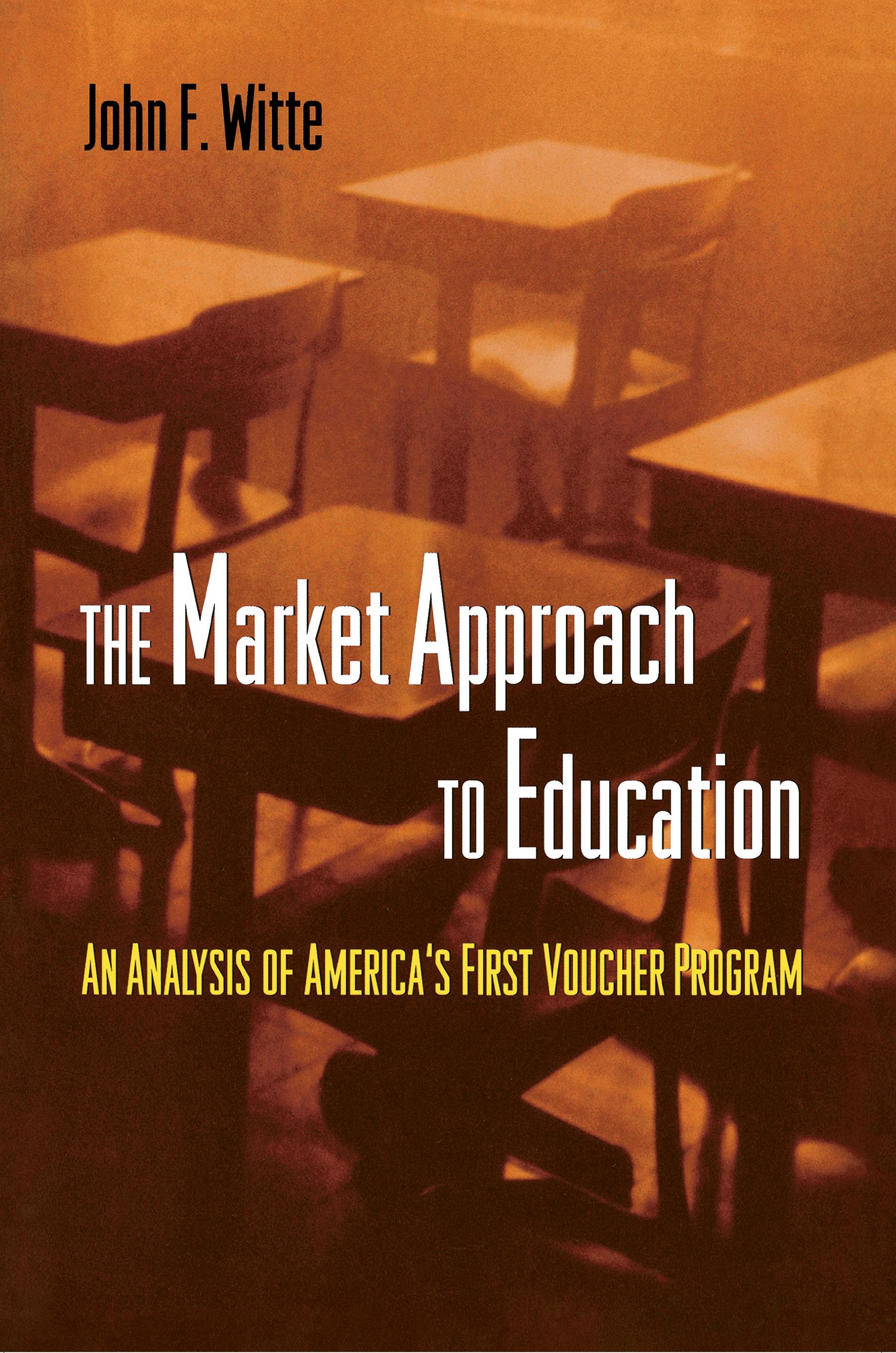
Milwaukee, one of the nation's most segregated metropolitan areas, implemented in 1990 a school choice program aimed at improving the education of inner-city children by enabling them to attend a selection of private schools. The results of this experiment, however, have been overshadowed by the explosion of emotional debate it provoked nationwide. In this book, John Witte provides a broad yet detailed framework for understanding the Milwaukee experiment and its implications for the market approach to American education. In a society supposedly devoted to equality of opportunity, the concept of school choice or voucher programs raises deep issues about liberty versus equality, government versus market, and about our commitment to free and universal education. Witte brings a balanced perspective to the picture by demonstrating why it is wrongheaded to be pro- or anti-school choice in the abstract. He explains why the voucher program seems to be working in the specific case of Milwaukee, but warns that such programs would not necessarily promote equal education--and most likely harm the poor--if applied universally, across the socioeconomic spectrum.
The book begins with a theoretical discussion of the provision of education in America. It goes on to situate the issue of school choice historically and politically, to describe the program and private schools in Milwaukee, and to provide statistical analyses of the outcomes for children and their parents in the experiment. Witte concludes with some persuasive arguments about the importance of specifying the structural details of any choice program and with a call supporting vouchers for poor inner-city children, but not a universal program for all private schools.
Voucher programs continue to be the most controversial approach to educational reform. The Market Approach to Education provides a thorough review of where the choice debate stands through 1998. It not only includes the "Milwaukee story" but also provides an analysis of the role, history, and politics of court decisions in this most important First Amendment area.
Before Memmo my notes were scattered across PDFs. Now a workspace pulls everything into one place — I see exactly what's still left to study.
Memmo's summaries are gold before exams. I don't have to re-read 800 pages two weeks before — just the important parts.
The AI chat has saved me the night before an exam more than once. I just keep asking until I get it — no waiting on a study group to reply.
The quizzes hit exactly what I need to know. Memmo tracks what I get stuck on — so I only practice what's worth it.
Flashcards with spaced repetition are magic. Memmo knows when I'm about to forget something and brings it back.
The AI podcasts are my favorite. I listen on my way to school and get a recap without sitting at a computer.

Handbok i kvalitativa metoder
281 kr

Hållbar utveckling: en introduktion för ingenjörer och andra problemlösare
334 kr

Brymans Samhällsvetenskapliga metoder
390 kr

Projektledning
491 kr

Den orättvisa hälsan: om socioekonomiska skillnader i hälsa och livslängd
326 kr

Vetenskapsteori för nybörjare
196 kr

Organizational Leadership
429 kr

På väg mot läraryrket
172 kr

Det sociala livet i skolan: Socialpsykologiska perspektiv
253 kr

Betygsättningens didaktik
151 kr

Personality
402 kr

Studying Leadership
404 kr

Managing Innovation
477 kr

Introduktion till samhällsvetenskaplig metod
347 kr

The Psychology of Sex and Gender
698 kr

Evidens och kunskap för socialt arbete
207 kr

Introduction to Leadership
605 kr