
Before Memmo my notes were scattered across PDFs. Now a workspace pulls everything into one place — I see exactly what's still left to study.
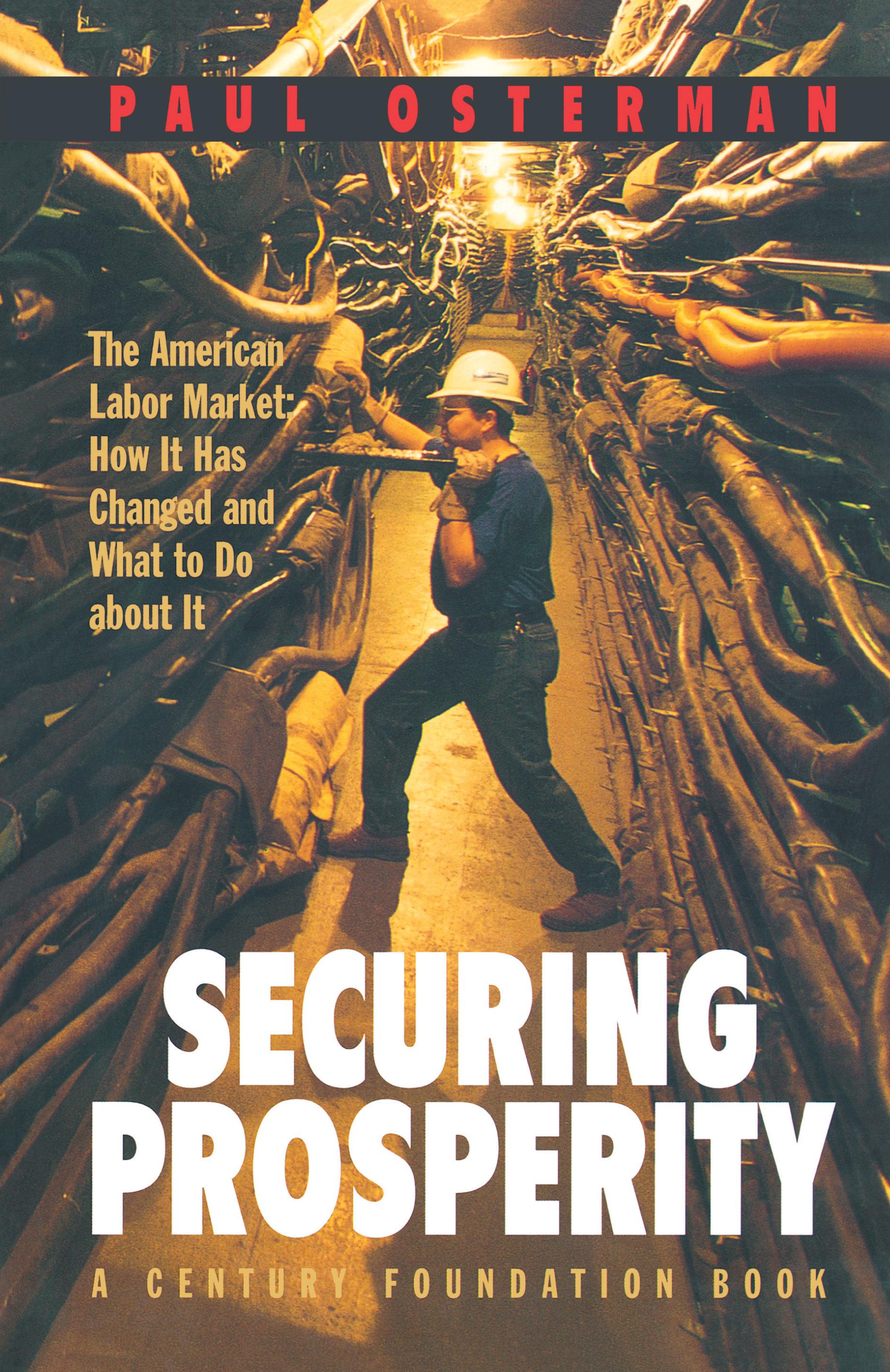
We live in an age of economic paradox. The dynamism of America's economy is astounding--the country's industries are the most productive in the world and spin off new products and ideas at a bewildering pace. Yet Americans feel deeply uneasy about their economic future. The reason, Paul Osterman explains, is that our recent prosperity is built on the ruins of the once reassuring postwar labor market. Workers can no longer expect stable, full-time jobs and steadily rising incomes. Instead, they face stagnant wages, layoffs, rising inequality, and the increased likelihood of merely temporary work. In Securing Prosperity, Osterman explains in clear, accessible terms why these changes have occurred and lays out an innovative plan for new economic institutions that promises a more secure future.
Osterman begins by sketching the rise and fall of the postwar labor market, showing that firms have been the driving force behind recent change. He draws on original surveys of nearly 1,000 corporations to demonstrate that firms have reorganized and downsized not just for the obvious reasons--technological advances and shifts in capital markets--but also to take advantage of new, team-oriented ways of working. We can't turn the clock back, Osterman writes, since that would strip firms of the ability to compete. But he also argues that we should not simply give ourselves up to the mercies of the market.
Osterman argues that new policies must engage on two fronts: addressing both higher rates of mobility in the labor market and a major shift in the balance of power against employees. To deal with greater mobility, Osterman argues for portable benefits, a stronger Unemployment Insurance system, and new labor market intermediaries to help workers navigate the labor market. To redress the imbalance of power, Osterman assesses the possibilities of reforming corporate governance but concludes the best approach is to promote "countervailing power" through innovative unions and creative strategies for organizing employee voice in communities. Osterman gives life to these arguments with numerous examples of promising institutional experiments.
Before Memmo my notes were scattered across PDFs. Now a workspace pulls everything into one place — I see exactly what's still left to study.
Memmo's summaries are gold before exams. I don't have to re-read 800 pages two weeks before — just the important parts.
The AI chat has saved me the night before an exam more than once. I just keep asking until I get it — no waiting on a study group to reply.
The quizzes hit exactly what I need to know. Memmo tracks what I get stuck on — so I only practice what's worth it.
Flashcards with spaced repetition are magic. Memmo knows when I'm about to forget something and brings it back.
The AI podcasts are my favorite. I listen on my way to school and get a recap without sitting at a computer.

Handbok i kvalitativa metoder
281 kr

Hållbar utveckling: en introduktion för ingenjörer och andra problemlösare
334 kr

Brymans Samhällsvetenskapliga metoder
390 kr

Projektledning
491 kr

Den orättvisa hälsan: om socioekonomiska skillnader i hälsa och livslängd
326 kr

Organizational Leadership
429 kr

Vetenskapsteori för nybörjare
196 kr

På väg mot läraryrket
172 kr

Det sociala livet i skolan: Socialpsykologiska perspektiv
253 kr

Betygsättningens didaktik
151 kr

Personality
402 kr

Studying Leadership
404 kr

Managing Innovation
477 kr

Introduktion till samhällsvetenskaplig metod
347 kr

The Psychology of Sex and Gender
698 kr

Evidens och kunskap för socialt arbete
207 kr

Introduction to Leadership
605 kr