
Before Memmo my notes were scattered across PDFs. Now a workspace pulls everything into one place — I see exactly what's still left to study.
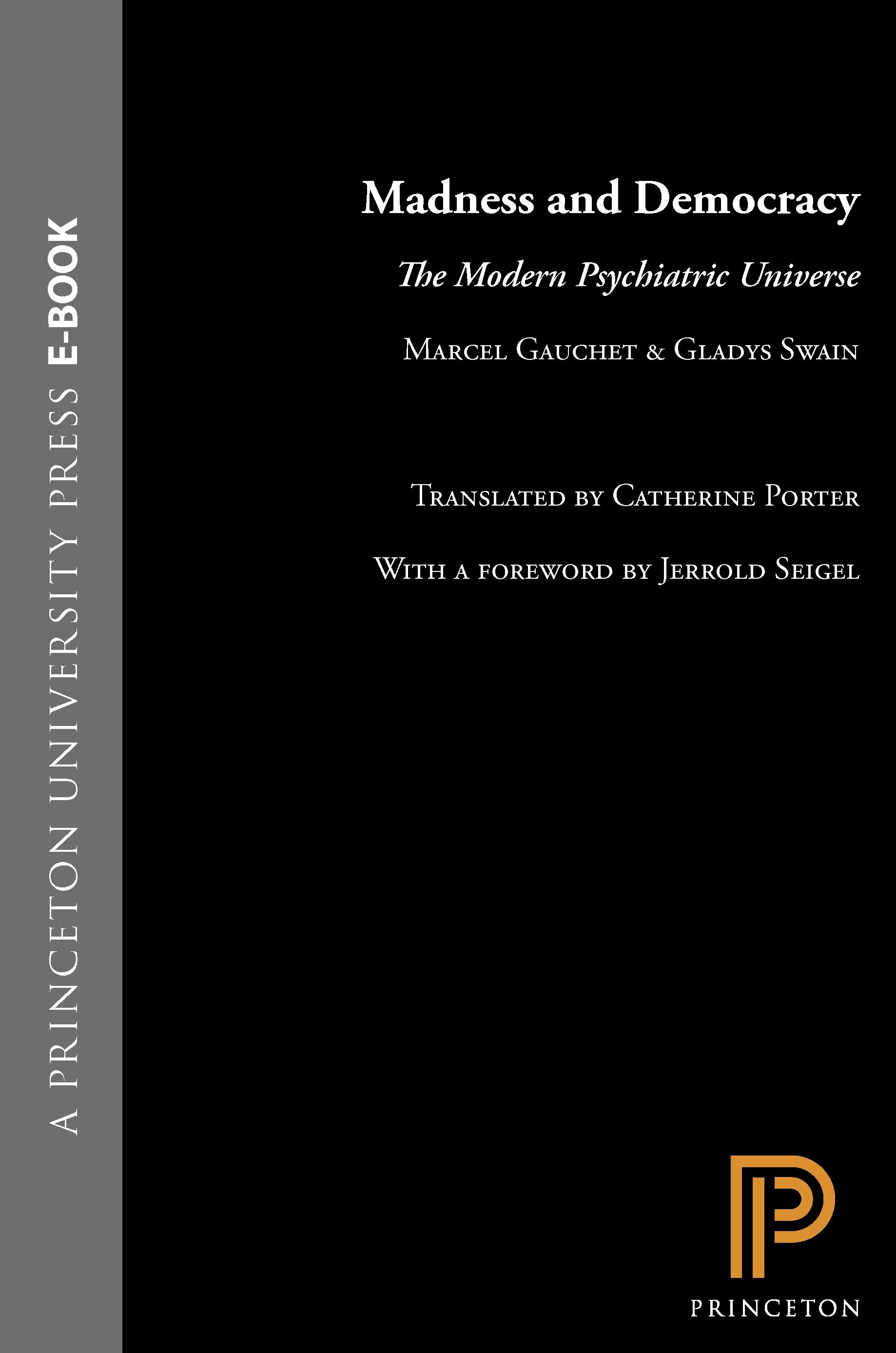
How the insane asylum became a laboratory of democracy is revealed in this provocative look at the treatment of the mentally ill in nineteenth-century France. Political thinkers reasoned that if government was to rest in the hands of individuals, then measures should be taken to understand the deepest reaches of the self, including the state of madness. Marcel Gauchet and Gladys Swain maintain that the asylum originally embodied the revolutionary hope of curing all the insane by saving the glimmer of sanity left in them. Their analysis of why this utopian vision failed ultimately constitutes both a powerful argument for liberalism and a direct challenge to Michel Foucault's indictment of liberal institutions.
The creation of an artificial environment was meant to encourage the mentally ill to live as social beings, in conditions that resembled as much as possible those prevailing in real life. The asylum was therefore the first instance of a modern utopian community in which a scientifically designed environment was supposed to achieve complete control over the minds of a whole category of human beings. Gauchet and Swain argue that the social domination of the inner self, far from being the hidden truth of emancipation, represented the failure of its overly optimistic beginnings.
Madness and Democracy combines rich details of nineteenth-century asylum life with reflections on the crucial role of subjectivity and difference within modernism. Its final achievement is to show that the lessons learned from the failure of the asylum led to the rise of psychoanalysis, an endeavor focused on individual care and on the cooperation between psychiatrist and patient. By linking the rise of liberalism to a chapter in the history of psychiatry, Gauchet and Swain offer a fascinating reassessment of political modernity.
Before Memmo my notes were scattered across PDFs. Now a workspace pulls everything into one place — I see exactly what's still left to study.
Memmo's summaries are gold before exams. I don't have to re-read 800 pages two weeks before — just the important parts.
The AI chat has saved me the night before an exam more than once. I just keep asking until I get it — no waiting on a study group to reply.
The quizzes hit exactly what I need to know. Memmo tracks what I get stuck on — so I only practice what's worth it.
Flashcards with spaced repetition are magic. Memmo knows when I'm about to forget something and brings it back.
The AI podcasts are my favorite. I listen on my way to school and get a recap without sitting at a computer.

Handbok i kvalitativa metoder
281 kr

Hållbar utveckling: en introduktion för ingenjörer och andra problemlösare
334 kr

Brymans Samhällsvetenskapliga metoder
390 kr

Projektledning
491 kr

Den orättvisa hälsan: om socioekonomiska skillnader i hälsa och livslängd
326 kr

Organizational Leadership
429 kr

Vetenskapsteori för nybörjare
196 kr

På väg mot läraryrket
172 kr

Det sociala livet i skolan: Socialpsykologiska perspektiv
253 kr

Betygsättningens didaktik
151 kr

Personality
402 kr

Studying Leadership
404 kr

Managing Innovation
477 kr

Introduktion till samhällsvetenskaplig metod
347 kr

The Psychology of Sex and Gender
698 kr

Evidens och kunskap för socialt arbete
207 kr

Introduction to Leadership
605 kr