
Before Memmo my notes were scattered across PDFs. Now a workspace pulls everything into one place — I see exactly what's still left to study.
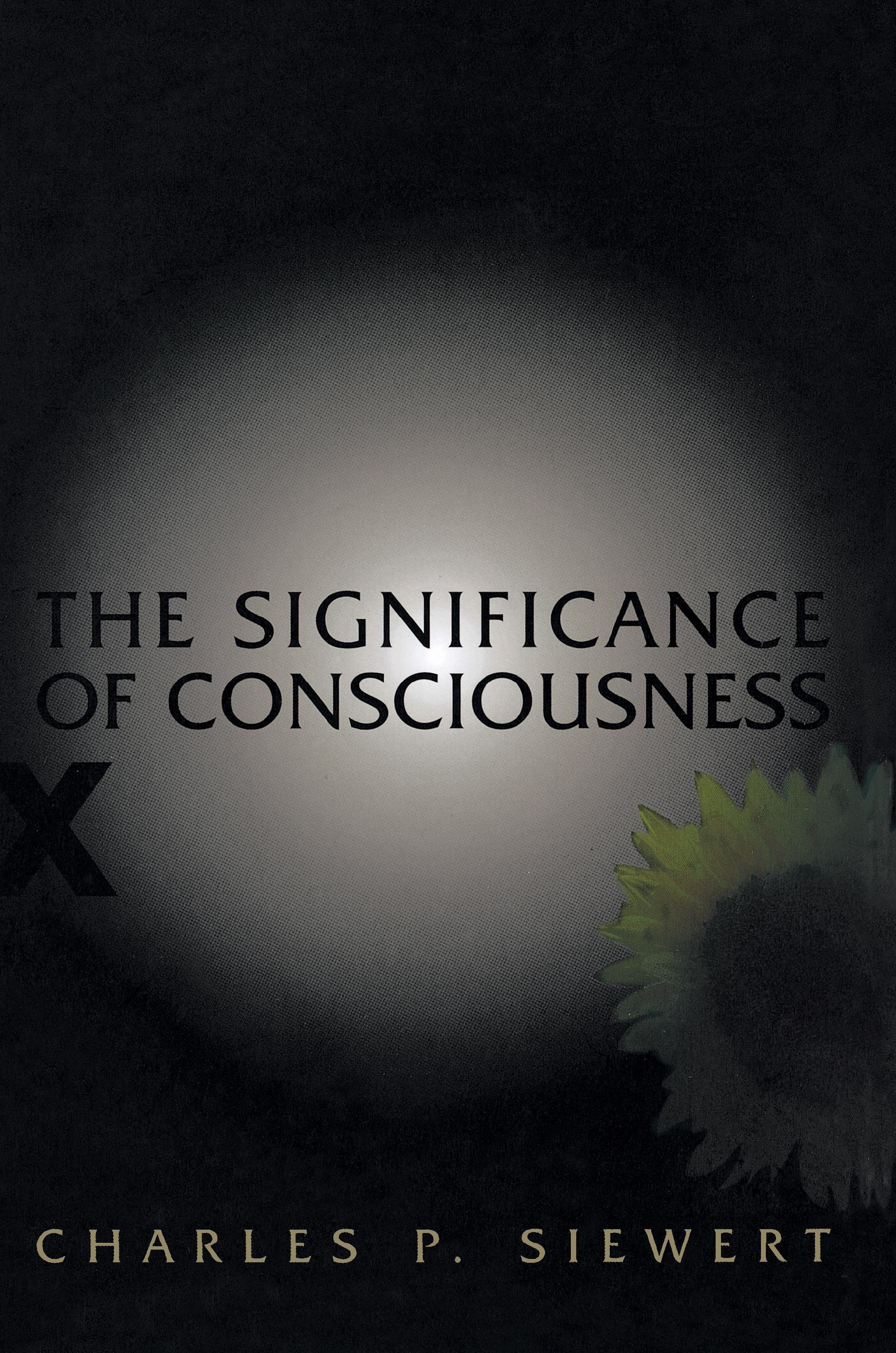
Charles Siewert presents a distinctive approach to consciousness that emphasizes our first-person knowledge of experience and argues that we should grant consciousness, understood in this way, a central place in our conception of mind and intentionality. Written in an engaging manner that makes its recently controversial topic accessible to the thoughtful general reader, this book challenges theories that equate consciousness with a functional role or with the mere availability of sensory information to cognitive capacities. Siewert argues that the notion of phenomenal consciousness, slighted in some recent theories, can be made evident by noting our reliance on first-person knowledge and by considering, from the subject's point of view, the difference between having and lacking certain kinds of experience. This contrast is clarified by careful attention to cases, both actual and hypothetical, indicated by research on brain-damaged patients' ability to discriminate visually without conscious visual experience--what has become known as "blindsight." In addition, Siewert convincingly defends such approaches against objections that they make an illegitimate appeal to "introspection."
Experiences that are conscious in Siewert's sense differ from each other in ways that only what is conscious can--in phenomenal character--and having this character gives them intentionality. In Siewert's view, consciousness is involved not only in the intentionality of sense experience and imagery, but in that of nonimagistic ways of thinking as well. Consciousness is pervasively bound up with intelligent perception and conceptual thought: it is not mere sensation or "raw feel." Having thus understood consciousness, we can better recognize how, for many of us, it possesses such deep intrinsic value that life without it would be little or no better than death.
Before Memmo my notes were scattered across PDFs. Now a workspace pulls everything into one place — I see exactly what's still left to study.
Memmo's summaries are gold before exams. I don't have to re-read 800 pages two weeks before — just the important parts.
The AI chat has saved me the night before an exam more than once. I just keep asking until I get it — no waiting on a study group to reply.
The quizzes hit exactly what I need to know. Memmo tracks what I get stuck on — so I only practice what's worth it.
Flashcards with spaced repetition are magic. Memmo knows when I'm about to forget something and brings it back.
The AI podcasts are my favorite. I listen on my way to school and get a recap without sitting at a computer.

Handbok i kvalitativa metoder
281 kr

Hållbar utveckling: en introduktion för ingenjörer och andra problemlösare
334 kr

Brymans Samhällsvetenskapliga metoder
390 kr

Projektledning
491 kr

Den orättvisa hälsan: om socioekonomiska skillnader i hälsa och livslängd
326 kr

Vetenskapsteori för nybörjare
196 kr

Organizational Leadership
429 kr

På väg mot läraryrket
172 kr

Det sociala livet i skolan: Socialpsykologiska perspektiv
253 kr

Betygsättningens didaktik
151 kr

Personality
402 kr

Studying Leadership
404 kr

Managing Innovation
477 kr

Introduktion till samhällsvetenskaplig metod
347 kr

The Psychology of Sex and Gender
698 kr

Evidens och kunskap för socialt arbete
207 kr

Introduction to Leadership
605 kr