
Before Memmo my notes were scattered across PDFs. Now a workspace pulls everything into one place — I see exactly what's still left to study.
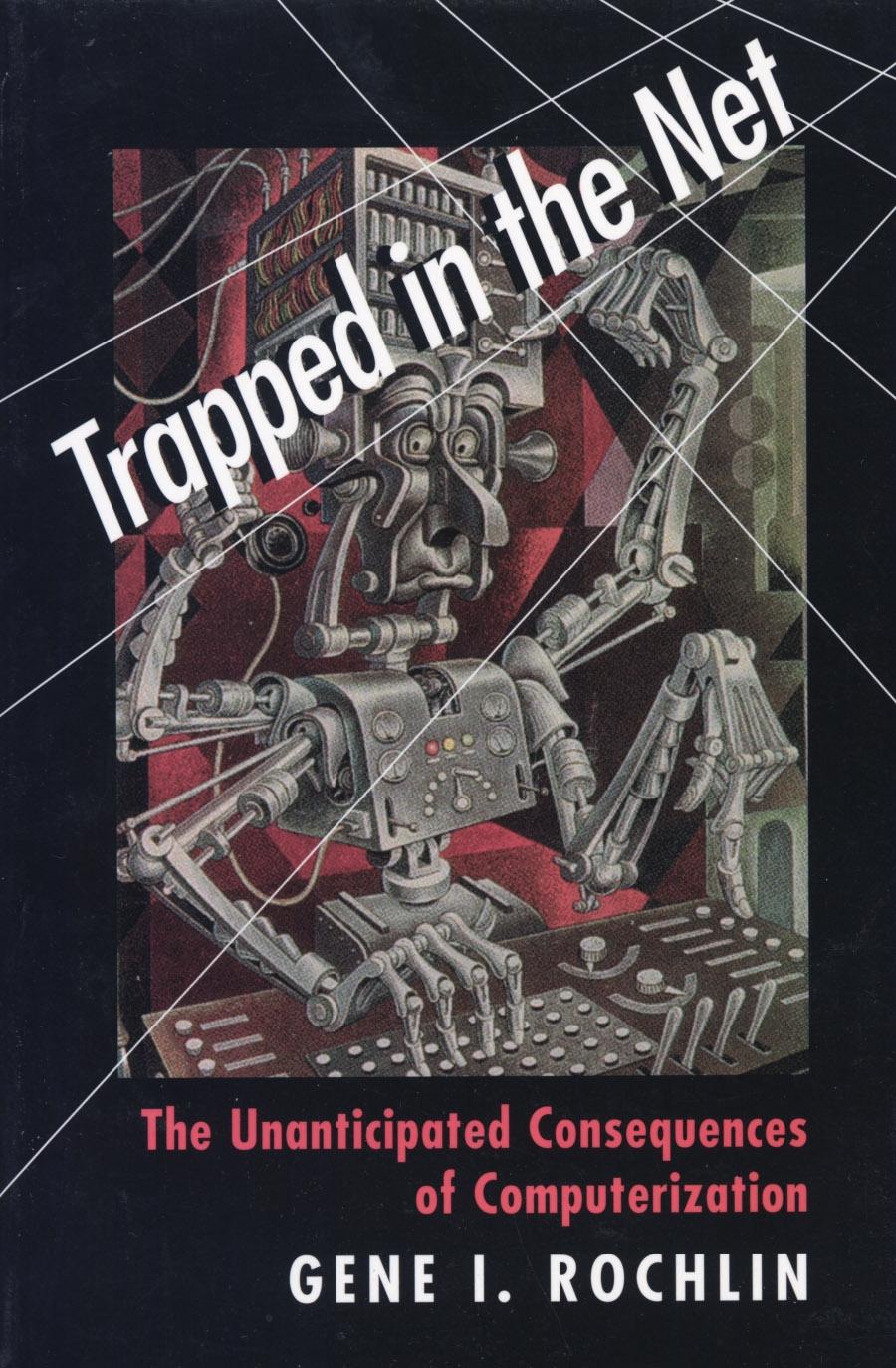
Voice mail. E-mail. Bar codes. Desktops. Laptops. Networks. The Web. In this exciting book, Gene Rochlin takes a closer look at how these familiar and pervasive productions of computerization have become embedded in all our lives, forcing us to narrow the scope of our choices, our modes of control, and our experiences with the real world. Drawing on fascinating narratives from fields that range from military command, air traffic control, and international fund transfers to library cataloging and supermarket checkouts, Rochlin shows that we are rapidly making irreversible and at times harmful changes in our business, social, and personal lives to comply with the formalities and restrictions of information systems.
The threat is not the direct one once framed by the idea of insane robots or runaway mainframes usurping human functions for their own purposes, but the gradual loss of control over hardware, software, and function through networks of interconnection and dependence. What Rochlin calls the computer trap has four parts: the lure, the snare, the costs, and the long-term consequences. The lure is obvious: the promise of ever more powerful and adaptable tools with simpler and more human-centered interfaces. The snare is what usually ensues. Once heavily invested in the use of computers to perform central tasks, organizations and individuals alike are committed to new capacities and potentials, whether they eventually find them rewarding or not. The varied costs include a dependency on the manufacturers of hardware and software--and a seemingly pathological scramble to keep up with an incredible rate of sometimes unnecessary technological change. Finally, a lack of redundancy and an incredible speed of response make human intervention or control difficult at best when (and not if) something goes wrong. As Rochlin points out, this is particularly true for those systems whose interconnections and mechanisms are so deeply concealed in the computers that no human being fully understands them.
Before Memmo my notes were scattered across PDFs. Now a workspace pulls everything into one place — I see exactly what's still left to study.
Memmo's summaries are gold before exams. I don't have to re-read 800 pages two weeks before — just the important parts.
The AI chat has saved me the night before an exam more than once. I just keep asking until I get it — no waiting on a study group to reply.
The quizzes hit exactly what I need to know. Memmo tracks what I get stuck on — so I only practice what's worth it.
Flashcards with spaced repetition are magic. Memmo knows when I'm about to forget something and brings it back.
The AI podcasts are my favorite. I listen on my way to school and get a recap without sitting at a computer.

Handbok i kvalitativa metoder
281 kr

Hållbar utveckling: en introduktion för ingenjörer och andra problemlösare
334 kr

Brymans Samhällsvetenskapliga metoder
390 kr

Projektledning
491 kr

Den orättvisa hälsan: om socioekonomiska skillnader i hälsa och livslängd
326 kr

Organizational Leadership
429 kr

Vetenskapsteori för nybörjare
196 kr

På väg mot läraryrket
172 kr

Det sociala livet i skolan: Socialpsykologiska perspektiv
253 kr

Betygsättningens didaktik
151 kr

Personality
402 kr

Studying Leadership
404 kr

Managing Innovation
477 kr

Introduktion till samhällsvetenskaplig metod
347 kr

The Psychology of Sex and Gender
698 kr

Evidens och kunskap för socialt arbete
207 kr

Introduction to Leadership
605 kr