
Before Memmo my notes were scattered across PDFs. Now a workspace pulls everything into one place — I see exactly what's still left to study.
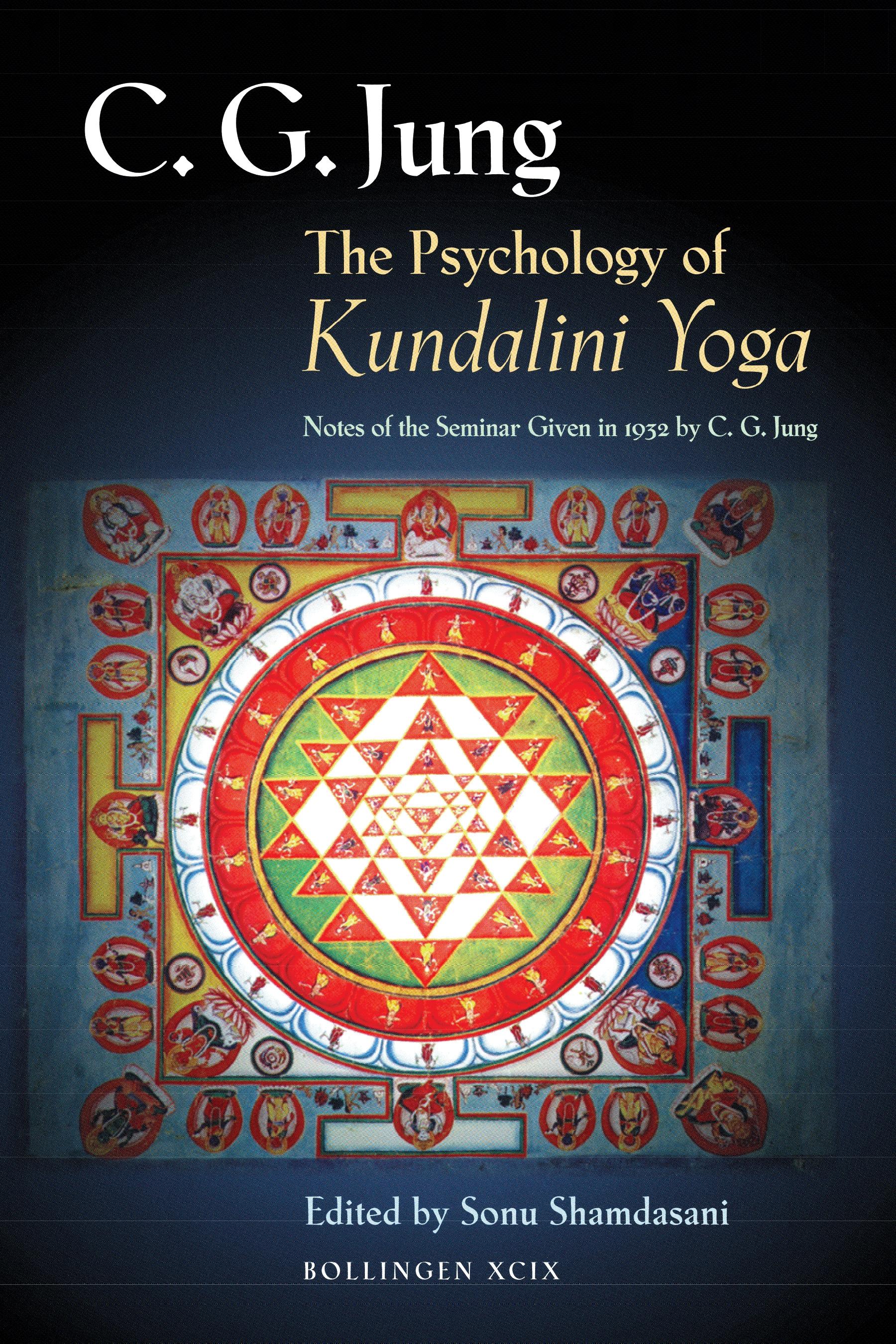
"Kundalini yoga presented Jung with a model of something that was almost completely lacking in Western psychology--an account of the development phases of higher consciousness.... Jung's insistence on the psychogenic and symbolic significance of such states is even more timely now than then. As R. D. Laing stated... 'It was Jung who broke the ground here, but few followed him.'"--From the introduction by Sonu Shamdasani
Jung's seminar on Kundalini yoga, presented to the Psychological Club in Zurich in 1932, has been widely regarded as a milestone in the psychological understanding of Eastern thought and of the symbolic transformations of inner experience. Kundalini yoga presented Jung with a model for the developmental phases of higher consciousness, and he interpreted its symbols in terms of the process of individuation. With sensitivity toward a new generation's interest in alternative religions and psychological exploration, Sonu Shamdasani has brought together the lectures and discussions from this seminar. In this volume, he re-creates for today's reader the fascination with which many intellectuals of prewar Europe regarded Eastern spirituality as they discovered more and more of its resources, from yoga to tantric texts. Reconstructing this seminar through new documentation, Shamdasani explains, in his introduction, why Jung thought that the comprehension of Eastern thought was essential if Western psychology was to develop. He goes on to orient today's audience toward an appreciation of some of the questions that stirred the minds of Jung and his seminar group: What is the relation between Eastern schools of liberation and Western psychotherapy? What connection is there between esoteric religious traditions and spontaneous individual experience? What light do the symbols of Kundalini yoga shed on conditions diagnosed as psychotic? Not only were these questions important to analysts in the 1930s but, as Shamdasani stresses, they continue to have psychological relevance for readers on the threshold of the twenty-first century. This volume also offers newly translated material from Jung's German language seminars, a seminar by the indologist Wilhelm Hauer presented in conjunction with that of Jung, illustrations of the cakras, and Sir John Woodroffe's classic translation of the tantric text, the Sat-cakra Nirupana.
?
Before Memmo my notes were scattered across PDFs. Now a workspace pulls everything into one place — I see exactly what's still left to study.
Memmo's summaries are gold before exams. I don't have to re-read 800 pages two weeks before — just the important parts.
The AI chat has saved me the night before an exam more than once. I just keep asking until I get it — no waiting on a study group to reply.
The quizzes hit exactly what I need to know. Memmo tracks what I get stuck on — so I only practice what's worth it.
Flashcards with spaced repetition are magic. Memmo knows when I'm about to forget something and brings it back.
The AI podcasts are my favorite. I listen on my way to school and get a recap without sitting at a computer.

Handbok i kvalitativa metoder
281 kr

Hållbar utveckling: en introduktion för ingenjörer och andra problemlösare
334 kr

Brymans Samhällsvetenskapliga metoder
390 kr

Projektledning
491 kr

Den orättvisa hälsan: om socioekonomiska skillnader i hälsa och livslängd
326 kr

Vetenskapsteori för nybörjare
196 kr

Organizational Leadership
429 kr

På väg mot läraryrket
172 kr

Det sociala livet i skolan: Socialpsykologiska perspektiv
253 kr

Betygsättningens didaktik
151 kr

Personality
402 kr

Studying Leadership
404 kr

Managing Innovation
477 kr

Introduktion till samhällsvetenskaplig metod
347 kr

The Psychology of Sex and Gender
698 kr

Evidens och kunskap för socialt arbete
207 kr

Introduction to Leadership
605 kr