
Before Memmo my notes were scattered across PDFs. Now a workspace pulls everything into one place — I see exactly what's still left to study.
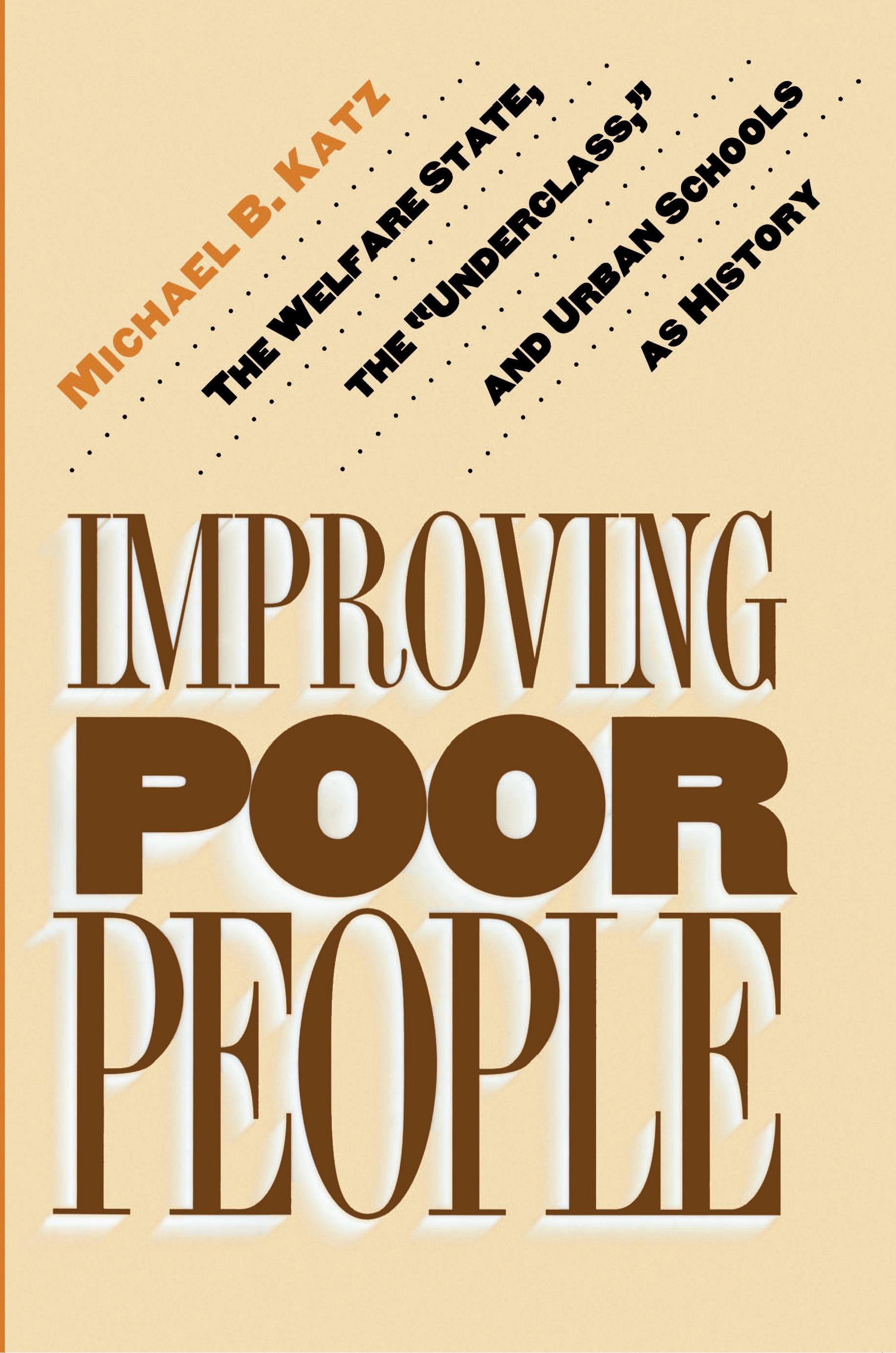
"There are places where history feels irrelevant, and America's inner cities are among them," acknowledges Michael Katz, in expressing the tensions between activism and scholarship. But this major historian of urban poverty realizes that the pain in these cities has its origins in the American past. To understand contemporary poverty, he looks particularly at an old attitude: because many nineteenth-century reformers traced extreme poverty to drink, laziness, and other forms of bad behavior, they tried to use public policy and philanthropy to improve the character of poor people, rather than to attack the structural causes of their misery. Showing how this misdiagnosis has afflicted today's welfare and educational systems, Katz draws on his own experiences to introduce each of four topics--the welfare state, the "underclass" debate, urban school reform, and the strategies of survival used by the urban poor. Uniquely informed by his personal involvement, each chapter also illustrates the interpretive power of history by focusing on a strand of social policy in the nineteenth and twentieth centuries: social welfare from the poorhouse era through the New Deal, ideas about urban poverty from the undeserving poor to the "underclass," and the emergence of public education through the radical school reform movement now at work in Chicago.
Why have American governments proved unable to redesign a welfare system that will satisfy anyone? Why has public policy proved unable to eradicate poverty and prevent the deterioration of major cities? What strategies have helped poor people survive the poverty endemic to urban history? How did urban schools become unresponsive bureaucracies that fail to educate most of their students? Are there fresh, constructive ways to think about welfare, poverty, and public education? Throughout the book Katz shows how interpretations of the past, grounded in analytic history, can free us of comforting myths and help us to reframe discussions of these great public issues.
Before Memmo my notes were scattered across PDFs. Now a workspace pulls everything into one place — I see exactly what's still left to study.
Memmo's summaries are gold before exams. I don't have to re-read 800 pages two weeks before — just the important parts.
The AI chat has saved me the night before an exam more than once. I just keep asking until I get it — no waiting on a study group to reply.
The quizzes hit exactly what I need to know. Memmo tracks what I get stuck on — so I only practice what's worth it.
Flashcards with spaced repetition are magic. Memmo knows when I'm about to forget something and brings it back.
The AI podcasts are my favorite. I listen on my way to school and get a recap without sitting at a computer.

Handbok i kvalitativa metoder
281 kr

Hållbar utveckling: en introduktion för ingenjörer och andra problemlösare
334 kr

Brymans Samhällsvetenskapliga metoder
390 kr

Projektledning
491 kr

Den orättvisa hälsan: om socioekonomiska skillnader i hälsa och livslängd
326 kr

Vetenskapsteori för nybörjare
196 kr

Organizational Leadership
429 kr

På väg mot läraryrket
172 kr

Det sociala livet i skolan: Socialpsykologiska perspektiv
253 kr

Betygsättningens didaktik
151 kr

Personality
402 kr

Studying Leadership
404 kr

Managing Innovation
477 kr

Introduktion till samhällsvetenskaplig metod
347 kr

The Psychology of Sex and Gender
698 kr

Evidens och kunskap för socialt arbete
207 kr

Introduction to Leadership
605 kr