
Before Memmo my notes were scattered across PDFs. Now a workspace pulls everything into one place — I see exactly what's still left to study.
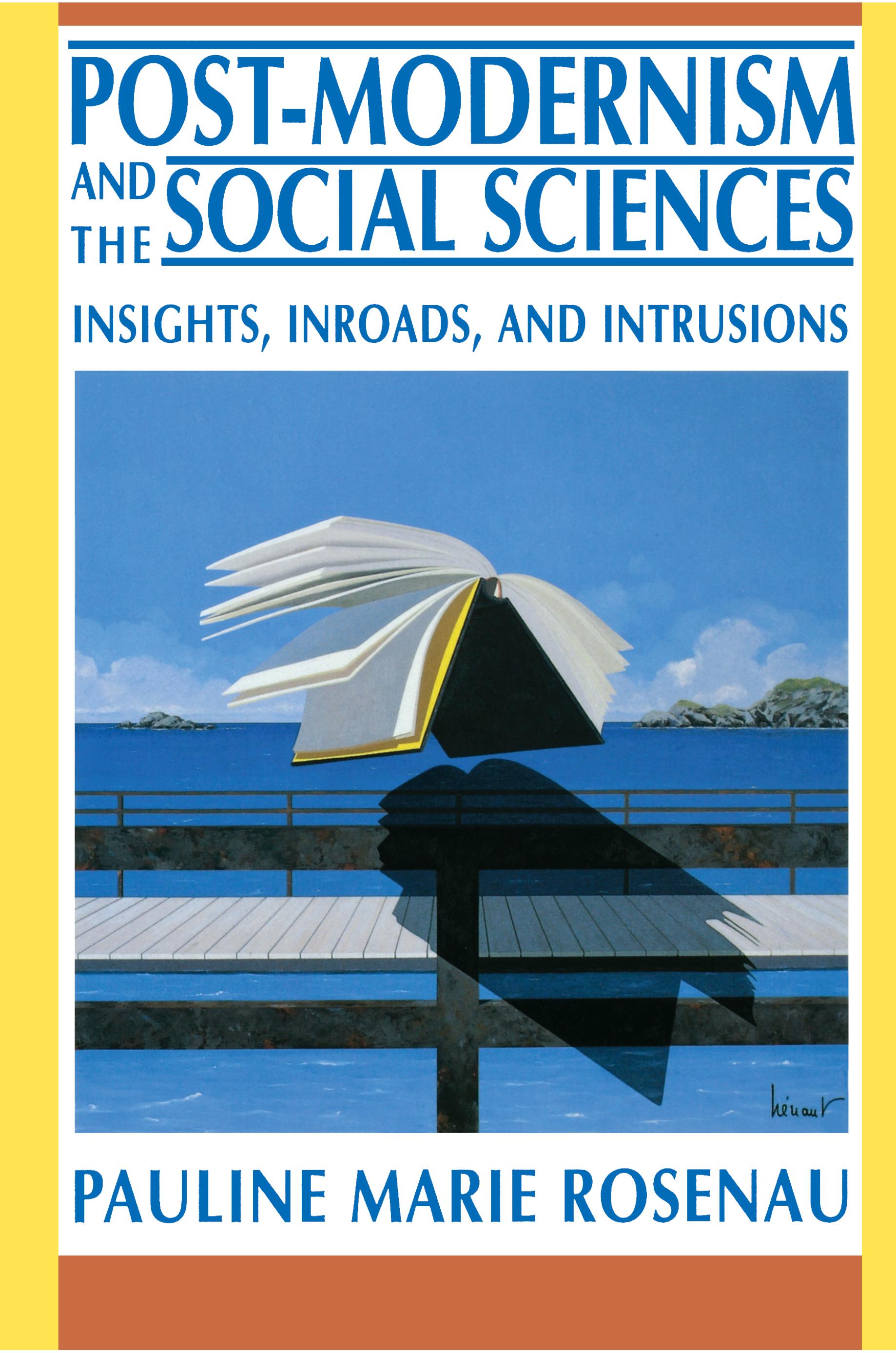
Post-modernism offers a revolutionary approach to the study of society: in questioning the validity of modern science and the notion of objective knowledge, this movement discards history, rejects humanism, and resists any truth claims. In this comprehensive assessment of post-modernism, Pauline Rosenau traces its origins in the humanities and describes how its key concepts are today being applied to, and are restructuring, the social sciences. Serving as neither an opponent nor an apologist for the movement, she cuts through post-modernism's often incomprehensible jargon in order to offer all readers a lucid exposition of its propositions. Rosenau shows how the post-modern challenge to reason and rational organization radiates across academic fields. For example, in psychology it questions the conscious, logical, coherent subject; in public administration it encourages a retreat from central planning and from reliance on specialists; in political science it calls into question the authority of hierarchical, bureaucratic decision-making structures that function in carefully defined spheres; in anthropology it inspires the protection of local, primitive cultures from First World attempts to reorganize them. In all of the social sciences, she argues, post-modernism repudiates representative democracy and plays havoc with the very meaning of "left-wing" and "right-wing." Rosenau also highlights how post-modernism has inspired a new generation of social movements, ranging from New Age sensitivities to Third World fundamentalism. In weighing its strengths and weaknesses, the author examines two major tendencies within post-modernism, the largely European, skeptical form and the predominantly Anglo-North-American form, which suggests alternative political, social, and cultural projects. She draws examples from anthropology, economics, geography, history, international relations, law, planning, political science, psychology, sociology, urban studies, and women's studies, and provides a glossary of post-modern terms to assist the uninitiated reader with special meanings not found in standard dictionaries.
Before Memmo my notes were scattered across PDFs. Now a workspace pulls everything into one place — I see exactly what's still left to study.
Memmo's summaries are gold before exams. I don't have to re-read 800 pages two weeks before — just the important parts.
The AI chat has saved me the night before an exam more than once. I just keep asking until I get it — no waiting on a study group to reply.
The quizzes hit exactly what I need to know. Memmo tracks what I get stuck on — so I only practice what's worth it.
Flashcards with spaced repetition are magic. Memmo knows when I'm about to forget something and brings it back.
The AI podcasts are my favorite. I listen on my way to school and get a recap without sitting at a computer.

Handbok i kvalitativa metoder
281 kr

Hållbar utveckling: en introduktion för ingenjörer och andra problemlösare
334 kr

Brymans Samhällsvetenskapliga metoder
390 kr

Projektledning
491 kr

Den orättvisa hälsan: om socioekonomiska skillnader i hälsa och livslängd
326 kr

Vetenskapsteori för nybörjare
196 kr

Organizational Leadership
429 kr

På väg mot läraryrket
172 kr

Det sociala livet i skolan: Socialpsykologiska perspektiv
253 kr

Betygsättningens didaktik
151 kr

Personality
402 kr

Studying Leadership
404 kr

Managing Innovation
477 kr

Introduktion till samhällsvetenskaplig metod
347 kr

The Psychology of Sex and Gender
698 kr

Evidens och kunskap för socialt arbete
207 kr

Introduction to Leadership
605 kr