
Before Memmo my notes were scattered across PDFs. Now a workspace pulls everything into one place — I see exactly what's still left to study.
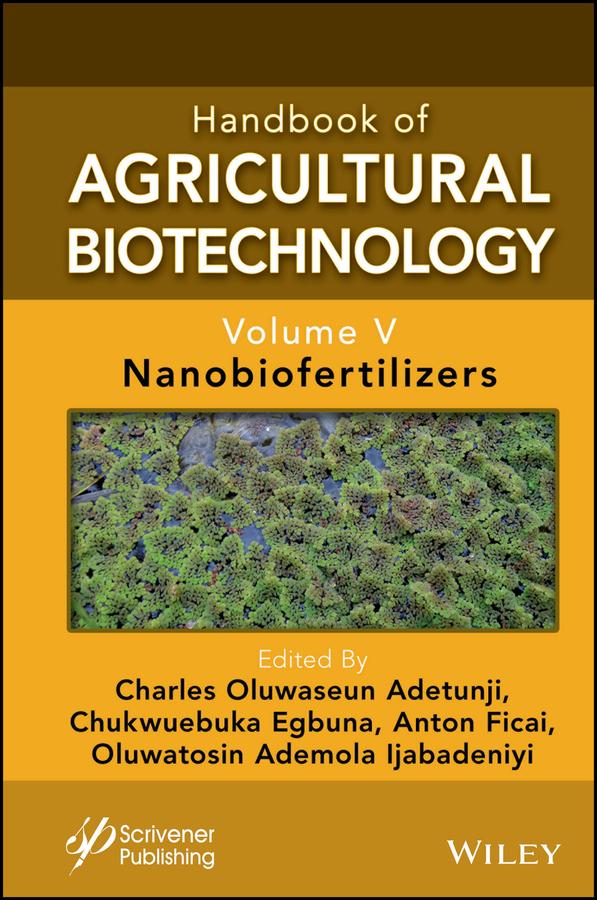
This book details recent advances in the applications of nanobiofertilizers as a substitute for synthetic fertilizers in boosting food production.
With the steady rise of the world’s population, there is a need to increase the production of safe and nutritious food. The constant loss of arable land, as a result of various anthropogenic activities from human action, has become a threat to global biodiversity and ecosystems. Additionally, the issue of climate change has imposed many obstacles to increasing agricultural productivity, especially from biotic and abiotic stressors and temperature-limited environments, such as in high altitudes or seasonally hot regions. Because of these factors, there is a need to adopt sustainable and modern technologies that can boost and improve the rate of food production.
One of the cheapest means of enhancing sustainable food production is to explore natural and unlimited beneficial microorganisms, particularly those that can increase the level of soil fertility, improve crop production and health, improve tolerance to stress, support nutrient uptake and availability, and boost natural biodiversity. The synergetic effect of nanotechnology and beneficial microorganisms for the effective bio-fabrication of nanobiofertilizers, is a sustainable solution for producing pesticide-free food. This book provides a deep insight into microbial diversity, recent techniques used for the isolation, screening, and characterization of beneficial microorganisms with eco-friendly attributes, used for bioengineering of nanobiofertilizers, as well as the application of proteomics, metabolomics, genomics, and bioinformatics. The book also covers commercialization, patents, and the business and socio-economic aspects of nanobiofertilizers, as well as the role of policymakers, stakeholders, and government agencies in the translation of nanobioferilizer research into policy.
Audience
The book is a useful resource for a diverse audience, including industrialists, food industry professionals, agriculturists, agricultural microbiologists, plant pathologists, botanists, microbiologists, biotechnologists, nanotechnologists, microbial biotechnologists, farmers, policymakers, and extension workers.
Before Memmo my notes were scattered across PDFs. Now a workspace pulls everything into one place — I see exactly what's still left to study.
Memmo's summaries are gold before exams. I don't have to re-read 800 pages two weeks before — just the important parts.
The AI chat has saved me the night before an exam more than once. I just keep asking until I get it — no waiting on a study group to reply.
The quizzes hit exactly what I need to know. Memmo tracks what I get stuck on — so I only practice what's worth it.
Flashcards with spaced repetition are magic. Memmo knows when I'm about to forget something and brings it back.
The AI podcasts are my favorite. I listen on my way to school and get a recap without sitting at a computer.

Handbok i kvalitativa metoder
281 kr

Hållbar utveckling: en introduktion för ingenjörer och andra problemlösare
334 kr

Brymans Samhällsvetenskapliga metoder
390 kr

Projektledning
491 kr

Den orättvisa hälsan: om socioekonomiska skillnader i hälsa och livslängd
326 kr

Vetenskapsteori för nybörjare
196 kr

Organizational Leadership
429 kr

På väg mot läraryrket
172 kr

Det sociala livet i skolan: Socialpsykologiska perspektiv
253 kr

Betygsättningens didaktik
151 kr

Personality
402 kr

Studying Leadership
404 kr

Managing Innovation
449 kr

Introduktion till samhällsvetenskaplig metod
347 kr

The Psychology of Sex and Gender
698 kr

Evidens och kunskap för socialt arbete
207 kr

Introduction to Leadership
605 kr