
Before Memmo my notes were scattered across PDFs. Now a workspace pulls everything into one place — I see exactly what's still left to study.
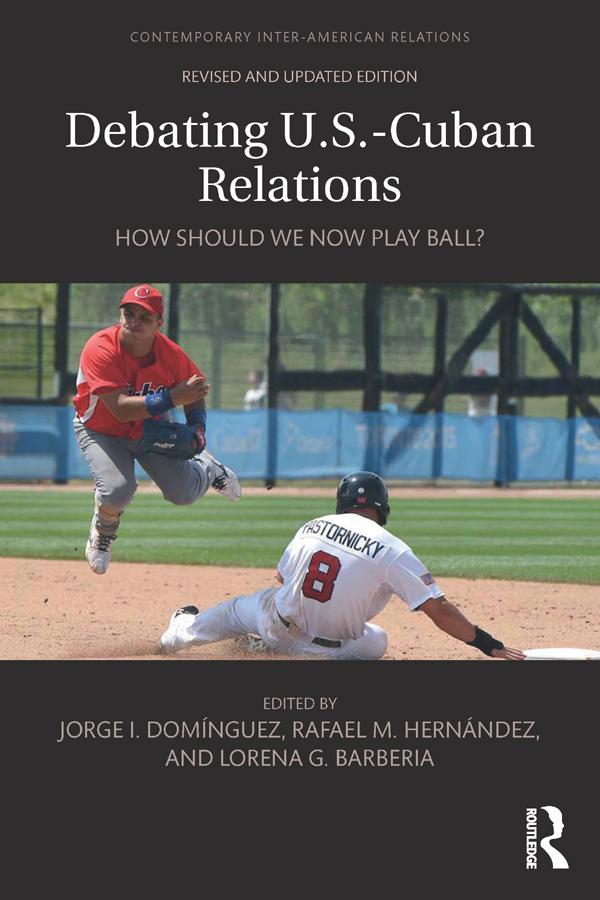
The boundary between Cuba and the United States has become more and more porous, as have those with Latin America and the Caribbean. Never in the past half-century has Cuba’s leadership or its social and political fabric been so exposed to the influence of the outside world. In this book, an all-star cast of experts critically address the recent past and present in U.S.-Cuban relations in their full complexity and subtlety to develop a perspective on the evolution of the conflict and an inventory of forms of cooperation. This much needed approach provides a way to answer the questions "what has been . . .?" and "what is . . .?" while also thinking seriously about "what if . . .?"
To illustrate the most significant areas of U.S.-Cuban relations in the contemporary era, this newly updated edition of Debating U.S.-Cuban Relations adds six more themes to the study of this complex relation: political, security, economic, and cultural/academic issues; the triangular relations of the United States, Cuba, and Europe; and the politics of Cuban migration/emigration. Each topic is represented by perspectives from both Cuban and non-Cuban scholars, leading to a resource rich in insight and a model of transnational dialogue.
The future course of U.S.-Cuban relations will likely be more complex than in the past, not only because of the matrix of factors involved but also because of the number of actors. Such a multiplicity of domestic, regional, and global factors is unique; it includes the rise to power of new administrations in both countries since 2008. Raúl Castro became president of Cuba in February 2008 and Barack Obama was inaugurated president of the United States in January 2009. And it will feature the inauguration of a new president of the United States in January 2017 and a new president of Cuba, likely in February 2018.
Before Memmo my notes were scattered across PDFs. Now a workspace pulls everything into one place — I see exactly what's still left to study.
Memmo's summaries are gold before exams. I don't have to re-read 800 pages two weeks before — just the important parts.
The AI chat has saved me the night before an exam more than once. I just keep asking until I get it — no waiting on a study group to reply.
The quizzes hit exactly what I need to know. Memmo tracks what I get stuck on — so I only practice what's worth it.
Flashcards with spaced repetition are magic. Memmo knows when I'm about to forget something and brings it back.
The AI podcasts are my favorite. I listen on my way to school and get a recap without sitting at a computer.

Handbok i kvalitativa metoder
281 kr

Hållbar utveckling: en introduktion för ingenjörer och andra problemlösare
334 kr

Brymans Samhällsvetenskapliga metoder
390 kr

Projektledning
491 kr

Den orättvisa hälsan: om socioekonomiska skillnader i hälsa och livslängd
326 kr

Organizational Leadership
429 kr

Vetenskapsteori för nybörjare
196 kr

På väg mot läraryrket
172 kr

Det sociala livet i skolan: Socialpsykologiska perspektiv
253 kr

Betygsättningens didaktik
151 kr

Personality
402 kr

Studying Leadership
404 kr

Managing Innovation
477 kr

Introduktion till samhällsvetenskaplig metod
347 kr

The Psychology of Sex and Gender
698 kr

Evidens och kunskap för socialt arbete
207 kr

Introduction to Leadership
605 kr