
Before Memmo my notes were scattered across PDFs. Now a workspace pulls everything into one place — I see exactly what's still left to study.
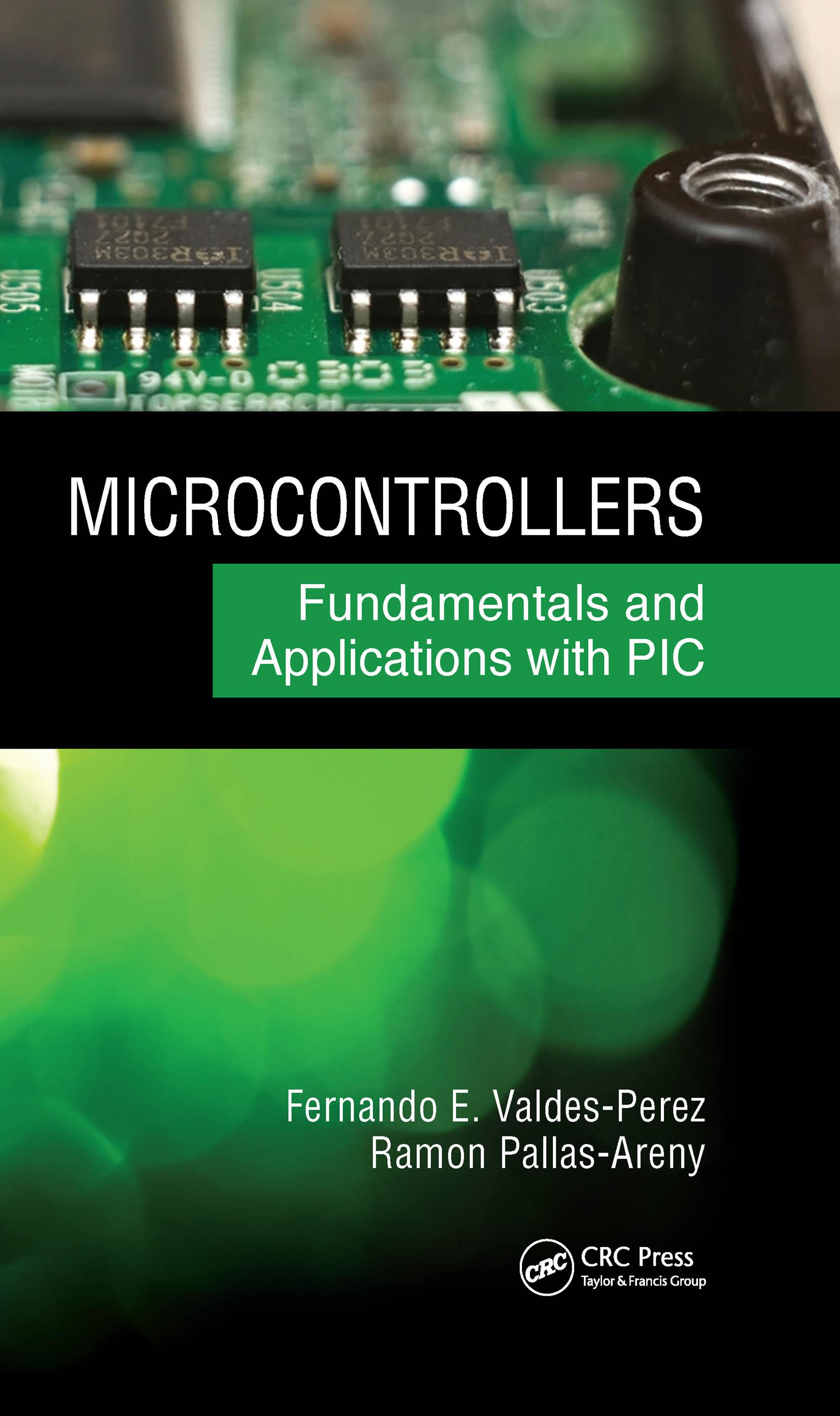
Microcontrollers exist in a wide variety of models with varying structures and numerous application opportunities. Despite this diversity, it is possible to find consistencies in the architecture of most microcontrollers. Microcontrollers: Fundamentals and Applications with PIC focuses on these common elements to describe the fundamentals of microcontroller design and programming. Using clear, concise language and a top-bottom approach, the book describes the parts that make up a microcontroller, how they work, and how they interact with each other. It also explains how to program medium-end PICs using assembler language.
Examines analog as well as digital signals
This volume describes the structure and resources of general microcontrollers as well as PIC microcontrollers, with a special focus on medium-end devices. The authors discuss memory organization and structure, and the assembler language used for programming medium-end PIC microcontrollers. They also explore how microcontrollers can acquire, process, and generate digital signals, explaining available techniques to deal with parallel input or output, peripherals, resources for real-time use, interrupts, and the specific characteristics of serial data interfaces in PIC microcontrollers. Finally, the book describes the acquisition and generation of analog signals either using resources inside the chip or by connecting peripheral circuits.
Provides hands-on clarification
Using practical examples and applications to supplement each topic, this volume provides the tools to thoroughly grasp the architecture and programming of microcontrollers. It avoids overly specific details so readers are quickly led toward design implementation. After mastering the material in this text, they will understand how to efficiently use PIC microcontrollers in a design process.
Before Memmo my notes were scattered across PDFs. Now a workspace pulls everything into one place — I see exactly what's still left to study.
Memmo's summaries are gold before exams. I don't have to re-read 800 pages two weeks before — just the important parts.
The AI chat has saved me the night before an exam more than once. I just keep asking until I get it — no waiting on a study group to reply.
The quizzes hit exactly what I need to know. Memmo tracks what I get stuck on — so I only practice what's worth it.
Flashcards with spaced repetition are magic. Memmo knows when I'm about to forget something and brings it back.
The AI podcasts are my favorite. I listen on my way to school and get a recap without sitting at a computer.

Handbok i kvalitativa metoder
281 kr

Hållbar utveckling: en introduktion för ingenjörer och andra problemlösare
334 kr

Brymans Samhällsvetenskapliga metoder
390 kr

Projektledning
491 kr

Den orättvisa hälsan: om socioekonomiska skillnader i hälsa och livslängd
326 kr

Vetenskapsteori för nybörjare
196 kr

Organizational Leadership
429 kr

På väg mot läraryrket
172 kr

Det sociala livet i skolan: Socialpsykologiska perspektiv
253 kr

Betygsättningens didaktik
151 kr

Personality
402 kr

Studying Leadership
404 kr

Managing Innovation
477 kr

Introduktion till samhällsvetenskaplig metod
347 kr

The Psychology of Sex and Gender
698 kr

Evidens och kunskap för socialt arbete
207 kr

Introduction to Leadership
605 kr