
Before Memmo my notes were scattered across PDFs. Now a workspace pulls everything into one place — I see exactly what's still left to study.
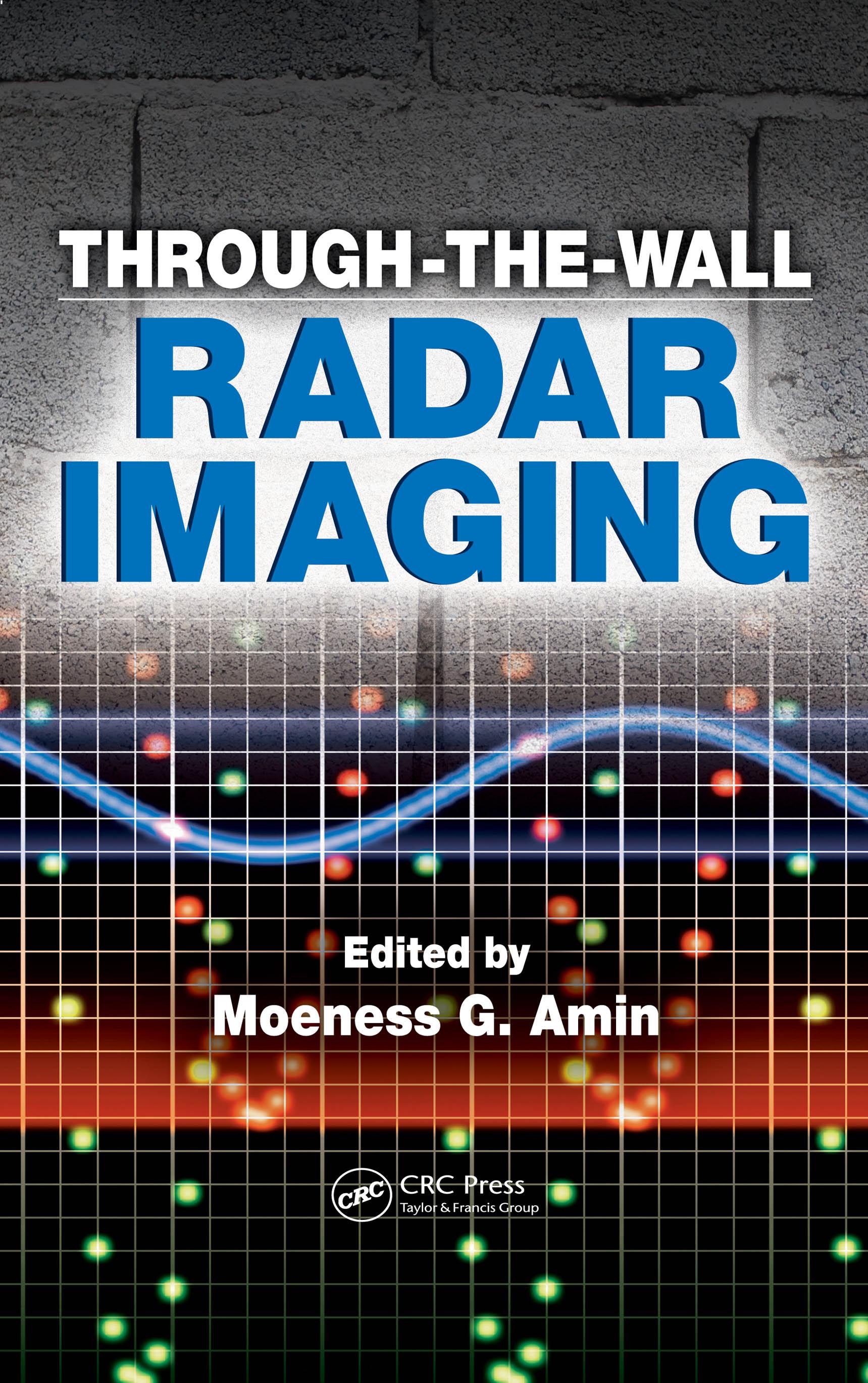
Through-the-wall radar imaging (TWRI) allows police, fire and rescue personnel, first responders, and defense forces to detect, identify, classify, and track the whereabouts of humans and moving objects. Electromagnetic waves are considered the most effective at achieving this objective, yet advances in this multi-faceted and multi-disciplinary technology require taking phenomenological issues into consideration and must be based on a solid understanding of the intricacies of EM wave interactions with interior and exterior objects and structures.
Providing a broad overview of the myriad factors involved, namely size, weight, mobility, acquisition time, aperture distribution, power, bandwidth, standoff distance, and, most importantly, reliable performance and delivery of accurate information, Through-the-Wall Radar Imaging examines this technology from the algorithmic, modeling, experimentation, and system design perspectives. It begins with coverage of the electromagnetic properties of walls and building materials, and discusses techniques in the design of antenna elements and array configurations, beamforming concepts and issues, and the use of antenna array with collocated and distributed apertures.
Detailed chapters discuss several suitable waveforms inverse scattering approaches and revolve around the relevance of physical-based model approaches in TWRI along with theoretical and experimental research in 3D building tomography using microwave remote sensing, high-frequency asymptotic modeling methods, synthetic aperture radar (SAR) techniques, impulse radars, airborne radar imaging of multi-floor buildings strategies for target detection, and detection of concealed targets. The book concludes with a discussion of how the Doppler principle can be used to measure motion at a very fine level of detail.
The book provides a deep understanding of the challenges of TWRI, stressing its multidisciplinary and phenomenological nature. The breadth and depth of topics covered presents a highly detailed treatment of this potentially life-saving technology.
Before Memmo my notes were scattered across PDFs. Now a workspace pulls everything into one place — I see exactly what's still left to study.
Memmo's summaries are gold before exams. I don't have to re-read 800 pages two weeks before — just the important parts.
The AI chat has saved me the night before an exam more than once. I just keep asking until I get it — no waiting on a study group to reply.
The quizzes hit exactly what I need to know. Memmo tracks what I get stuck on — so I only practice what's worth it.
Flashcards with spaced repetition are magic. Memmo knows when I'm about to forget something and brings it back.
The AI podcasts are my favorite. I listen on my way to school and get a recap without sitting at a computer.

Handbok i kvalitativa metoder
281 kr

Hållbar utveckling: en introduktion för ingenjörer och andra problemlösare
334 kr

Brymans Samhällsvetenskapliga metoder
390 kr

Projektledning
491 kr

Den orättvisa hälsan: om socioekonomiska skillnader i hälsa och livslängd
326 kr

Vetenskapsteori för nybörjare
196 kr

Organizational Leadership
429 kr

På väg mot läraryrket
172 kr

Det sociala livet i skolan: Socialpsykologiska perspektiv
253 kr

Betygsättningens didaktik
151 kr

Personality
402 kr

Studying Leadership
404 kr

Managing Innovation
477 kr

Introduktion till samhällsvetenskaplig metod
347 kr

The Psychology of Sex and Gender
698 kr

Evidens och kunskap för socialt arbete
207 kr

Introduction to Leadership
605 kr