
Before Memmo my notes were scattered across PDFs. Now a workspace pulls everything into one place — I see exactly what's still left to study.
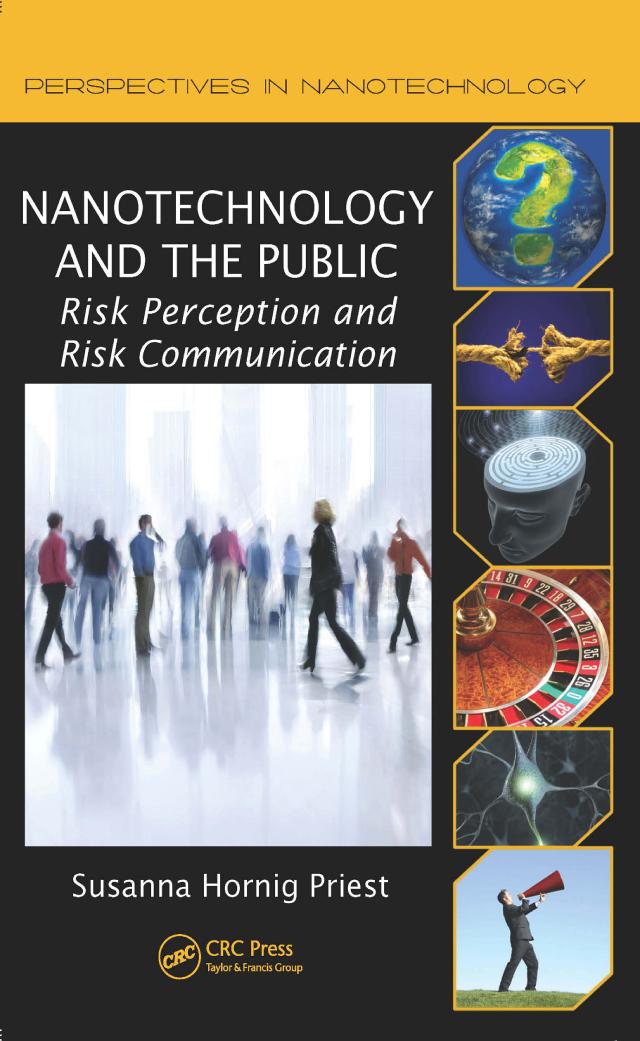
From nuclear power to gene therapy to the automobile, history shows that it is useful to encourage and facilitate public discussion about new technologies and their potential dangers. Part of the series Perspectives in Nanotechnology, Nanotechnology and the Public: Risk Perception and Risk Communication assesses results from focus groups, interviews, and other resources to provide a more nuanced understanding of how non-experts perceive nanotechnology and what they expect from it.
Includes a series of special essays by social scientists and humanities scholars who have studied nanotechnology and society from different perspectives
Assessing how "ordinary" people form opinions about new technologies and their adoption, this book addresses the role of media messages and pre-existing values in this process, as well as how risks can become either amplified or weakened along the way as a result of social mechanisms. Using solid theory and research to back presented concepts on risk perception and communication, the author discusses the potential for using informed consent, labels, and other types of consumer warnings that have proved to be effective in areas other than nano.
An in-depth investigation into the concept of mass communication practices, this book explores the paradox of why, despite its appeal and promise, public engagement has had only limited success in the dialogue on nanotechnology. Aimed at finding solutions, the book’s resulting conclusions are considered in the context of broader issues. These include how society makes up its collective mind about technology adoption and all the profound questions this raises, in terms of democratic theory.
Before Memmo my notes were scattered across PDFs. Now a workspace pulls everything into one place — I see exactly what's still left to study.
Memmo's summaries are gold before exams. I don't have to re-read 800 pages two weeks before — just the important parts.
The AI chat has saved me the night before an exam more than once. I just keep asking until I get it — no waiting on a study group to reply.
The quizzes hit exactly what I need to know. Memmo tracks what I get stuck on — so I only practice what's worth it.
Flashcards with spaced repetition are magic. Memmo knows when I'm about to forget something and brings it back.
The AI podcasts are my favorite. I listen on my way to school and get a recap without sitting at a computer.

Handbok i kvalitativa metoder
281 kr

Hållbar utveckling: en introduktion för ingenjörer och andra problemlösare
334 kr

Brymans Samhällsvetenskapliga metoder
390 kr

Projektledning
491 kr

Den orättvisa hälsan: om socioekonomiska skillnader i hälsa och livslängd
326 kr

Organizational Leadership
429 kr

Vetenskapsteori för nybörjare
196 kr

På väg mot läraryrket
172 kr

Det sociala livet i skolan: Socialpsykologiska perspektiv
253 kr

Betygsättningens didaktik
151 kr

Personality
402 kr

Studying Leadership
404 kr

Managing Innovation
477 kr

Introduktion till samhällsvetenskaplig metod
347 kr

The Psychology of Sex and Gender
698 kr

Evidens och kunskap för socialt arbete
207 kr

Introduction to Leadership
605 kr