
Before Memmo my notes were scattered across PDFs. Now a workspace pulls everything into one place — I see exactly what's still left to study.
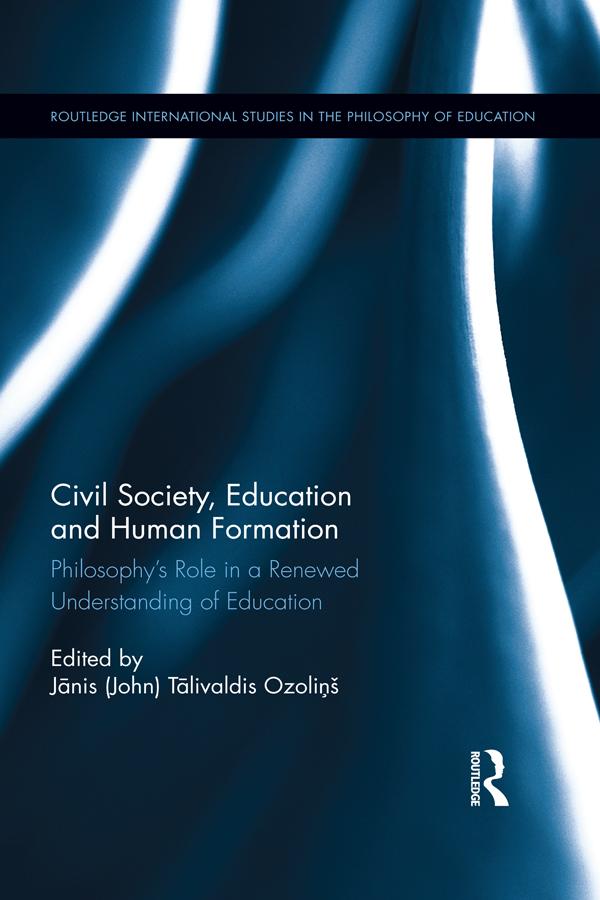
Education has been widely criticised as being too narrowly focused on skills, capacities and the transference of knowledge that can be used in the workplace. As a result of the dominance of economic rationalism and neo-liberalism, it has become commodified and marketed to potential customers. As a consequence, students have become consumers of an educational product and education has become an industry. There is deep dissatisfaction with these neo-liberal developments. What is missing is any conception of education as a key factor in the ‘human formation’ that will lead students to develop the virtues and values that they will need to not only lead successful lives, but also be responsible members of their communities — working for the common good and acting to transform them into just societies.
This volume draws together a number of different perspectives on what is meant by ‘human formation’, argues that for a much richer conception of education, and addresses the lack of attention to human fulfilment. It also highlights the importance of philosophy in the articulation of novel ways of conceptualising education — providing alternatives to the dominant neo-liberal and economic rationalist models. The central question with which the book is concerned is a renewed understanding of education as the formation of persons, of civil society and the role of philosophy in fostering that renewal.
In this volume there are a variety of voices from diverse traditions and cultures. Both East and West are represented and it might be expected that this would result in a divergence of opinion about the purpose of education. However, in spite of the diversity, there is some significant convergence in thinking about the ways in which education ought to serve the needs of both the individual and their communities. What is also particularly useful, and what is fresh about the essays presented here, is that there is also diversity in the philosophical approaches to the problem. This means that the convergence on the importance of ‘human formation’ as the cornerstone of education does not rely on a privileged philosophical method.
Before Memmo my notes were scattered across PDFs. Now a workspace pulls everything into one place — I see exactly what's still left to study.
Memmo's summaries are gold before exams. I don't have to re-read 800 pages two weeks before — just the important parts.
The AI chat has saved me the night before an exam more than once. I just keep asking until I get it — no waiting on a study group to reply.
The quizzes hit exactly what I need to know. Memmo tracks what I get stuck on — so I only practice what's worth it.
Flashcards with spaced repetition are magic. Memmo knows when I'm about to forget something and brings it back.
The AI podcasts are my favorite. I listen on my way to school and get a recap without sitting at a computer.

Handbok i kvalitativa metoder
281 kr

Hållbar utveckling: en introduktion för ingenjörer och andra problemlösare
334 kr

Brymans Samhällsvetenskapliga metoder
390 kr

Projektledning
491 kr

Den orättvisa hälsan: om socioekonomiska skillnader i hälsa och livslängd
326 kr

Vetenskapsteori för nybörjare
196 kr

Organizational Leadership
429 kr

På väg mot läraryrket
172 kr

Det sociala livet i skolan: Socialpsykologiska perspektiv
253 kr

Betygsättningens didaktik
151 kr

Personality
402 kr

Studying Leadership
404 kr

Managing Innovation
477 kr

Introduktion till samhällsvetenskaplig metod
347 kr

The Psychology of Sex and Gender
698 kr

Evidens och kunskap för socialt arbete
207 kr

Introduction to Leadership
605 kr