
Before Memmo my notes were scattered across PDFs. Now a workspace pulls everything into one place — I see exactly what's still left to study.
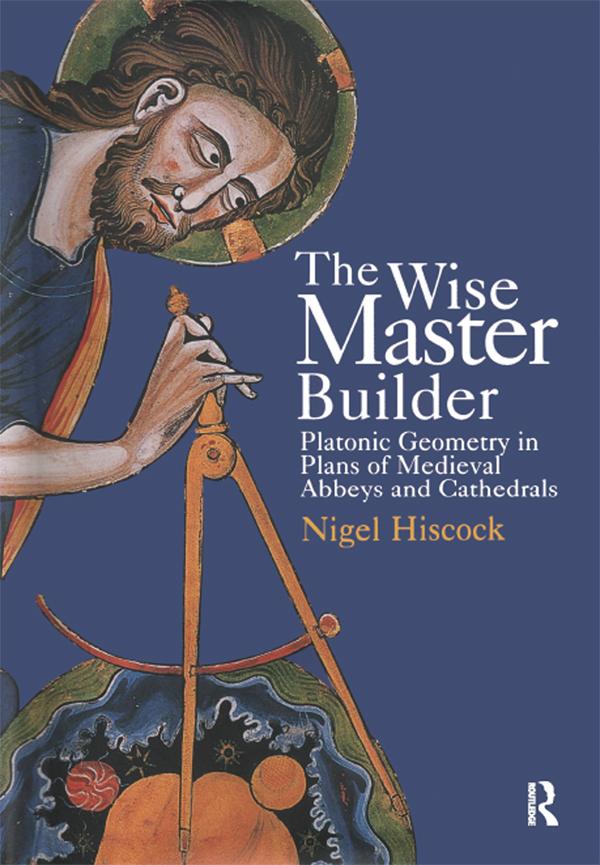
This title was first published in 2000: Did the plan of medieval churches have any underlying symbolic meaning? This work re-opens the debate about the importance of geometry and symbolism in medieval architectural design and argues the case for attributing an intellectual meaning to the planning of abbeys and cathedrals. In challenging prevailing claims for the use of arithmetical rations in architectural design, notably those based on the square root of two, Dr Hiscock advances a perspective consisting of proportions derived from the figures of Platonic geometry - the square, the equilateral triangle and the pentagon - and provides evidence for the symbolic interpretation of these figures. The investigation further reveals whole series of geometric relationships between some of England's most celebrated Norman cathedrals, such as Norwich or Durham, together with a wide sample from the Continent, from Old St Peter's in Rome to Chartres Cathedral, and sets out a comprehensive design method in each case. Hiscock first demonstrates the proposition that the ideas of Christian Platonism, including number and geometry, remained current and were employed in the thought of the early Middle Ages. In particular, he argues that they can be associated with the leading persons in the 10th-century revival of monasticism and that they found expression in the "white mantle of churches" that spread across Western Europe at the end of the first millennium AD. The book then provides a detailed analysis of the geometric proportions of church plans between the 9th and 12th centuries in Germany, France and in England. This research seeks to demonstrate that a coherent sequence of geometric forms can be seen in thse plans, forms which correspond to the key figures of Platonic geometry as understood in the context of Christian Platonist thought. In conclusion, the author shows how the system of design proposed could be set out on site using the known working methods of medieval masons.
Before Memmo my notes were scattered across PDFs. Now a workspace pulls everything into one place — I see exactly what's still left to study.
Memmo's summaries are gold before exams. I don't have to re-read 800 pages two weeks before — just the important parts.
The AI chat has saved me the night before an exam more than once. I just keep asking until I get it — no waiting on a study group to reply.
The quizzes hit exactly what I need to know. Memmo tracks what I get stuck on — so I only practice what's worth it.
Flashcards with spaced repetition are magic. Memmo knows when I'm about to forget something and brings it back.
The AI podcasts are my favorite. I listen on my way to school and get a recap without sitting at a computer.

Handbok i kvalitativa metoder
281 kr

Hållbar utveckling: en introduktion för ingenjörer och andra problemlösare
334 kr

Brymans Samhällsvetenskapliga metoder
390 kr

Projektledning
491 kr

Den orättvisa hälsan: om socioekonomiska skillnader i hälsa och livslängd
326 kr

Vetenskapsteori för nybörjare
196 kr

Organizational Leadership
429 kr

På väg mot läraryrket
172 kr

Det sociala livet i skolan: Socialpsykologiska perspektiv
253 kr

Betygsättningens didaktik
151 kr

Personality
402 kr

Studying Leadership
404 kr

Managing Innovation
477 kr

Introduktion till samhällsvetenskaplig metod
347 kr

The Psychology of Sex and Gender
698 kr

Evidens och kunskap för socialt arbete
207 kr

Introduction to Leadership
605 kr