
Before Memmo my notes were scattered across PDFs. Now a workspace pulls everything into one place — I see exactly what's still left to study.
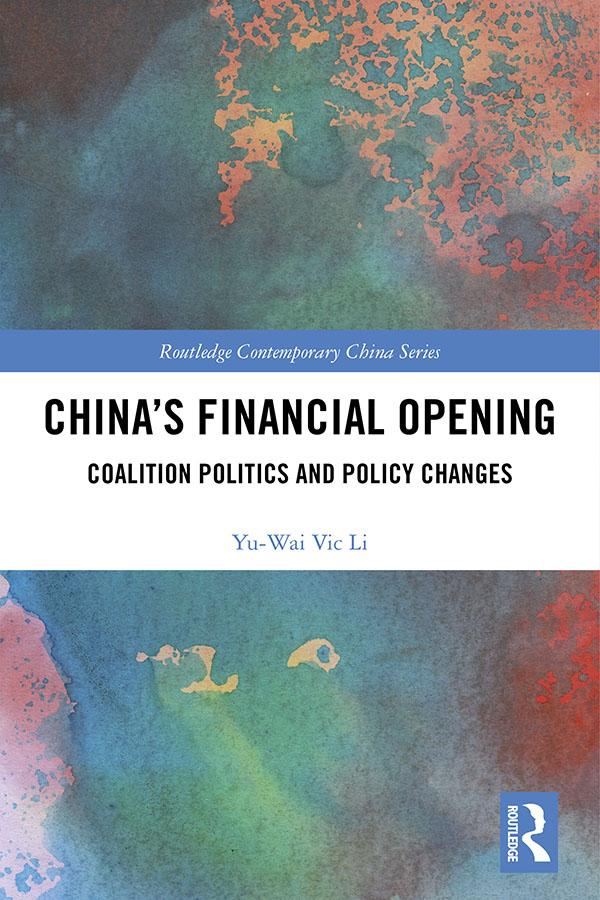
The twenty-first century has not only seen China become one of the world’s largest trading nations, but also its gradual integration into the global financial system. Chinese-sponsored project financing schemes, such as the Belt-and-Road Initiative and the Asian Infrastructure Investment Bank, and the expanding international footprint of the renminbi, have raised the specter of Beijing shaping established market rules and practices with its financial firepower. These dramatic developments beyond the "Great Wall of Money" have overshadowed the equally remarkable opening of China’s domestic capital markets. These include initiatives that make cross-border equity trade and investment easier; attempts to internationalize exclusively domestic-oriented equity markets; and creation of the first offshore renminbi hub in Hong Kong, paving the way for the "big bang" of renminbi use worldwide.
Li interrogates the domestic political dynamics underlying the dizzying switches between liberalization and restriction. This book argues that the interplay between the pro-opening coalitions and dissenting parties has been central to the policymaking process. Financial opening has not only been driven by central bureaucratic actors, but also by financial industry interests and the local authorities of financial centers acting in concert as coalitions. The local and financial constituents have shaped policy agendas and priorities, and defined and framed liberalizing initiatives in ways that appealed to bureaucratic entities. They also sought wider political support by capitalizing on connections with top decision-making elites. To allay opposition and maintain political and technical consensus, the coalition constituents have offered concessions to dissenting parties over implementation specifics. This, however, has not always succeeded. Dissenting parties who recognized adverse distributional and policy risk implications inherent in the opening initiatives might decline concessionary offers, leading to policy tendencies other than opening.
As one of the very first political economy contributions to studies of China’s financial opening from the 2000s, this book will appeal to researchers of international political economy, East Asia and China specialists, and financial practitioners and policymakers wanting to make sense of the country’s liberalizing logic.
Before Memmo my notes were scattered across PDFs. Now a workspace pulls everything into one place — I see exactly what's still left to study.
Memmo's summaries are gold before exams. I don't have to re-read 800 pages two weeks before — just the important parts.
The AI chat has saved me the night before an exam more than once. I just keep asking until I get it — no waiting on a study group to reply.
The quizzes hit exactly what I need to know. Memmo tracks what I get stuck on — so I only practice what's worth it.
Flashcards with spaced repetition are magic. Memmo knows when I'm about to forget something and brings it back.
The AI podcasts are my favorite. I listen on my way to school and get a recap without sitting at a computer.

Handbok i kvalitativa metoder
281 kr

Hållbar utveckling: en introduktion för ingenjörer och andra problemlösare
334 kr

Brymans Samhällsvetenskapliga metoder
390 kr

Projektledning
491 kr

Den orättvisa hälsan: om socioekonomiska skillnader i hälsa och livslängd
326 kr

Organizational Leadership
429 kr

Vetenskapsteori för nybörjare
196 kr

På väg mot läraryrket
172 kr

Det sociala livet i skolan: Socialpsykologiska perspektiv
253 kr

Betygsättningens didaktik
151 kr

Personality
402 kr

Studying Leadership
404 kr

Managing Innovation
477 kr

Introduktion till samhällsvetenskaplig metod
347 kr

The Psychology of Sex and Gender
698 kr

Evidens och kunskap för socialt arbete
207 kr

Introduction to Leadership
605 kr