
Before Memmo my notes were scattered across PDFs. Now a workspace pulls everything into one place — I see exactly what's still left to study.
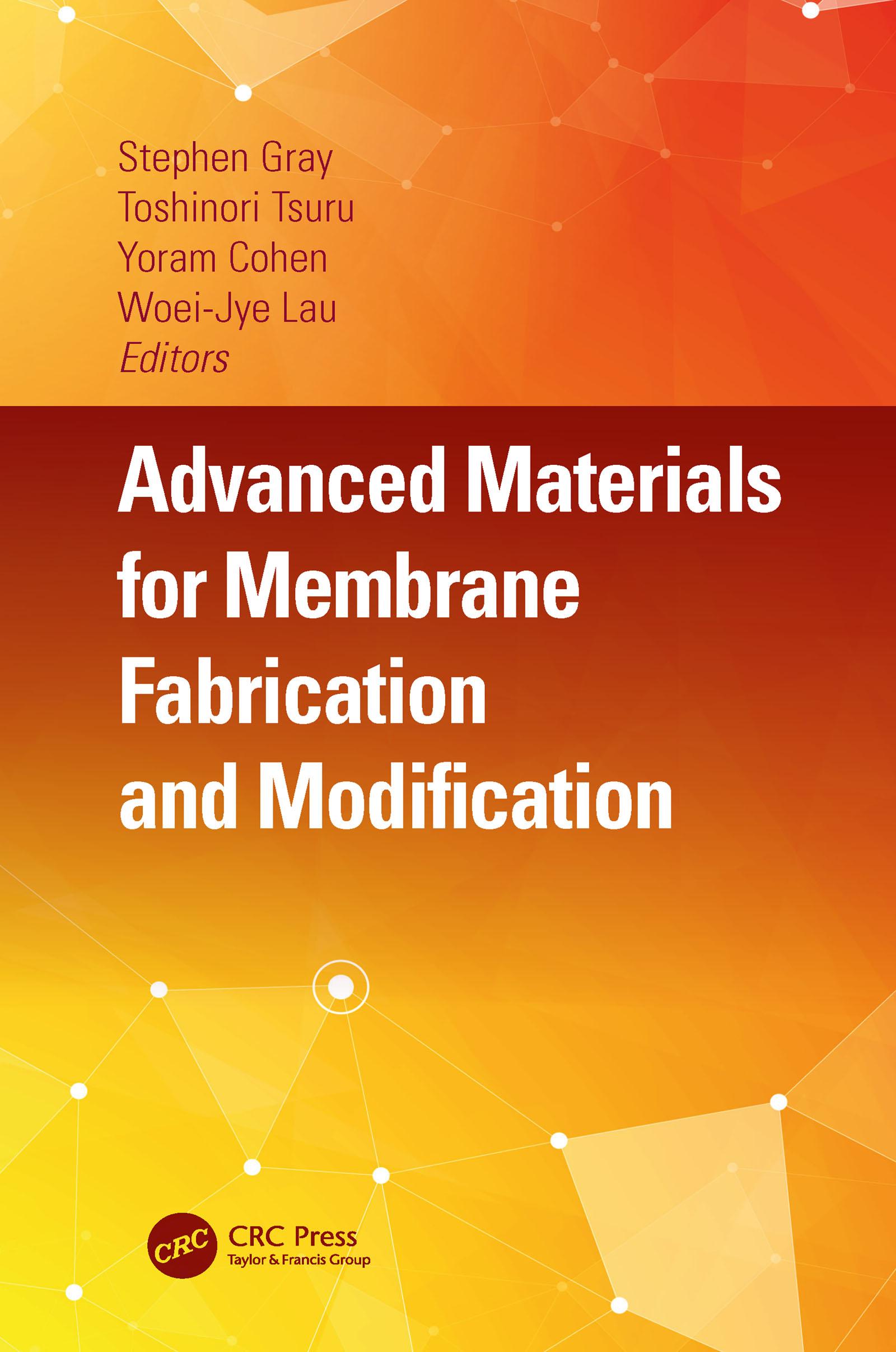
Membranes are an energy efficient separation technology that are now the basis for many water treatment and food processing applications. However, there is the potential to improve the operating performance of these separations and to extend the application of membranes to energy production, gas separations, organic solvent-based separations, and biomedical applications through novel membrane materials. This book contains 20 chapters written by leading academic researchers on membrane fabrication and modification techniques and provides a comprehensive overview on the recent developments of membrane technology.
Membranes can be manufactured from a range of materials including polymeric compounds, and ceramic materials, and both these materials are considered in the book. There are 5 chapters on water and wastewater membranes that cover the fabrication of thin film (TFC) composite membranes for nanofiltration(NF)/reverse osmosis (RO)/forward osmosis (FO) applications, stimuli responsive membranes, electrospun membranes, porous ceramic membranes, and polymeric ultrafiltration (UF) manufacture and modification.
There are another 6 chapters on gas separation that consider carbon membranes, zeolite membranes, silica template and metal oxide silica membranes, TFC membranes, silica membranes, and metal organic framework (MOF) membranes. Zeolite membranes are also considered for organic solvent applications, as are solvent-resistant membranes manufactured by phase inversion, ceramic-supported composite membranes, and ceramic NF membranes. The emerging areas of membranes for energy and biomedical applications have 3 and 2 chapters, respectively. Energy applications consider ion exchange membranes for use in fuel cells, membranes for electrodialysis, and membranes for use in microbial fuel cells. For biomedical applications the chapters focus on hemodialysis membranes and redox responsive membranes.
Before Memmo my notes were scattered across PDFs. Now a workspace pulls everything into one place — I see exactly what's still left to study.
Memmo's summaries are gold before exams. I don't have to re-read 800 pages two weeks before — just the important parts.
The AI chat has saved me the night before an exam more than once. I just keep asking until I get it — no waiting on a study group to reply.
The quizzes hit exactly what I need to know. Memmo tracks what I get stuck on — so I only practice what's worth it.
Flashcards with spaced repetition are magic. Memmo knows when I'm about to forget something and brings it back.
The AI podcasts are my favorite. I listen on my way to school and get a recap without sitting at a computer.

Handbok i kvalitativa metoder
281 kr

Hållbar utveckling: en introduktion för ingenjörer och andra problemlösare
334 kr

Brymans Samhällsvetenskapliga metoder
390 kr

Projektledning
491 kr

Den orättvisa hälsan: om socioekonomiska skillnader i hälsa och livslängd
326 kr

Vetenskapsteori för nybörjare
196 kr

Organizational Leadership
429 kr

På väg mot läraryrket
172 kr

Det sociala livet i skolan: Socialpsykologiska perspektiv
253 kr

Betygsättningens didaktik
151 kr

Personality
402 kr

Studying Leadership
404 kr

Managing Innovation
477 kr

Introduktion till samhällsvetenskaplig metod
347 kr

The Psychology of Sex and Gender
698 kr

Evidens och kunskap för socialt arbete
207 kr

Introduction to Leadership
605 kr