
Before Memmo my notes were scattered across PDFs. Now a workspace pulls everything into one place — I see exactly what's still left to study.
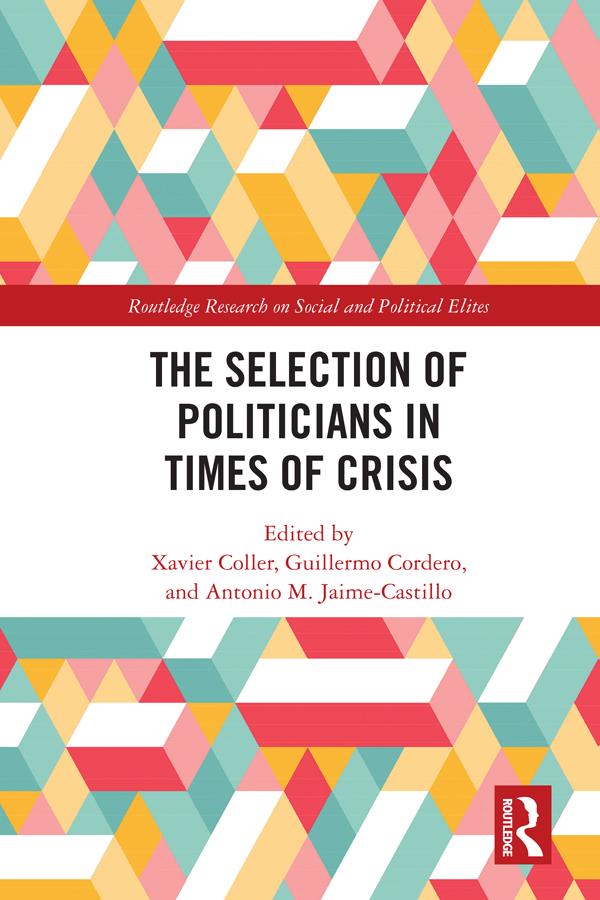
Selecting candidates for elections is a major goal of political parties and a major function of political regimes in democratic systems. With the negative effects of the economic crisis being seen to translate into changes in voting patterns, and citizens using elections to punish parties in government for their roles in economic mismanagement or lack of response to the global economic crisis, a broad examination is required.
This book is presented as the first comparative study of the effects of the political crisis on candidate selection covering a large number of countries. Using an integrated framework and unified strategy, it examines how new relevant political actors are really implementing participative ways of candidate selection, whether they are being innovative in their political environments and the extent to which traditionally mainstream parties are changing selection procedures to have more open and inclusive mechanisms as part of internal, or intra-party, democracy. The book illuminates these issues through empirically driven chapters explaining changes in the way candidates for parliaments are selected in countries where new parties have emerged and consolidated, or where traditional mainstream parties have adopted new mechanisms of selection affecting (if not challenging) traditional politics. Additionally, therefore, this work will serve as a response to some current debates in the discipline on the consequences of the democratization of party life, relating political participation and representation.
This text will be of key interest to scholars and students of political parties, organizational change, social and political elites and more broadly to comparative politics and sociology.
Before Memmo my notes were scattered across PDFs. Now a workspace pulls everything into one place — I see exactly what's still left to study.
Memmo's summaries are gold before exams. I don't have to re-read 800 pages two weeks before — just the important parts.
The AI chat has saved me the night before an exam more than once. I just keep asking until I get it — no waiting on a study group to reply.
The quizzes hit exactly what I need to know. Memmo tracks what I get stuck on — so I only practice what's worth it.
Flashcards with spaced repetition are magic. Memmo knows when I'm about to forget something and brings it back.
The AI podcasts are my favorite. I listen on my way to school and get a recap without sitting at a computer.

Handbok i kvalitativa metoder
281 kr

Hållbar utveckling: en introduktion för ingenjörer och andra problemlösare
334 kr

Brymans Samhällsvetenskapliga metoder
390 kr

Projektledning
491 kr

Den orättvisa hälsan: om socioekonomiska skillnader i hälsa och livslängd
326 kr

Vetenskapsteori för nybörjare
196 kr

Organizational Leadership
429 kr

På väg mot läraryrket
172 kr

Det sociala livet i skolan: Socialpsykologiska perspektiv
253 kr

Betygsättningens didaktik
151 kr

Personality
402 kr

Studying Leadership
404 kr

Managing Innovation
477 kr

Introduktion till samhällsvetenskaplig metod
347 kr

The Psychology of Sex and Gender
698 kr

Evidens och kunskap för socialt arbete
207 kr

Introduction to Leadership
605 kr