
Before Memmo my notes were scattered across PDFs. Now a workspace pulls everything into one place — I see exactly what's still left to study.
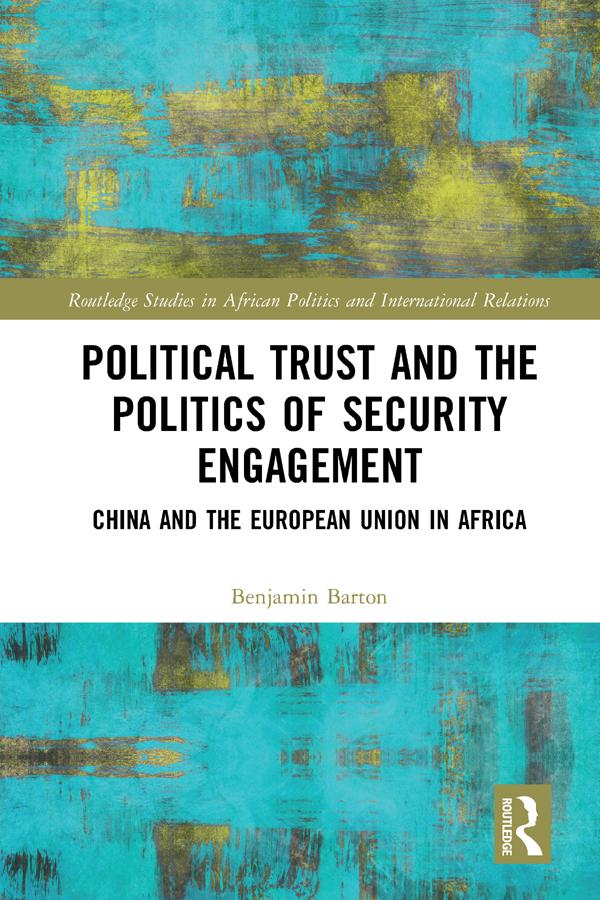
The EU and China are often characterised as parties whose bilateral political differences still remain too large to bridge, so that they have failed to convert rhetorical promises into tangible results of cooperation, particularly with regards to the field of international security. Yet in terms of their bilateral interaction on security risk management in Africa; EU and Chinese naval officers jointly brought down the number of successful Somali pirate attacks in the Gulf of Aden and to a lesser extent were jointly involved in seeking a resolution to the lingering conflict in Darfur.
This book asks how we can make sense as a whole of this relatively sudden shift in regards to the dealings between their respective officials on the topic of security risk management. It argues that the outcomes of Sino-European bilateral dealings on this topic are above all determined by the ability/inability of these officials to build political trust as a complex and cognitive social phenomenon. Consequently, the book applies an innovative conceptual framework on political trust to explain why EU and Chinese officials bridged their ‘endemic’ political differences to practically cooperate on Somali piracy but were unable to do so when it came to their interaction on Darfur. To conclude, it examines the longer term impact of this bilateral trust-building process by covering more recent examples of bilateral engagement in Libya and Mali and aims to show that although this trust-building process may be case specific, ramifications may go beyond the realm of their bilateral dealings on security matters in Africa, to impact wider issues of international security.
This text will be of key interest to scholars and students of African and Chinese politics, EU politics, security and maritime studies, and more broadly of international relations and to governmental actors.
Before Memmo my notes were scattered across PDFs. Now a workspace pulls everything into one place — I see exactly what's still left to study.
Memmo's summaries are gold before exams. I don't have to re-read 800 pages two weeks before — just the important parts.
The AI chat has saved me the night before an exam more than once. I just keep asking until I get it — no waiting on a study group to reply.
The quizzes hit exactly what I need to know. Memmo tracks what I get stuck on — so I only practice what's worth it.
Flashcards with spaced repetition are magic. Memmo knows when I'm about to forget something and brings it back.
The AI podcasts are my favorite. I listen on my way to school and get a recap without sitting at a computer.

Handbok i kvalitativa metoder
281 kr

Hållbar utveckling: en introduktion för ingenjörer och andra problemlösare
334 kr

Brymans Samhällsvetenskapliga metoder
390 kr

Projektledning
491 kr

Den orättvisa hälsan: om socioekonomiska skillnader i hälsa och livslängd
326 kr

Vetenskapsteori för nybörjare
196 kr

Organizational Leadership
429 kr

På väg mot läraryrket
172 kr

Det sociala livet i skolan: Socialpsykologiska perspektiv
253 kr

Betygsättningens didaktik
151 kr

Personality
402 kr

Studying Leadership
404 kr

Managing Innovation
477 kr

Introduktion till samhällsvetenskaplig metod
347 kr

The Psychology of Sex and Gender
698 kr

Evidens och kunskap för socialt arbete
207 kr

Introduction to Leadership
605 kr