
Before Memmo my notes were scattered across PDFs. Now a workspace pulls everything into one place — I see exactly what's still left to study.
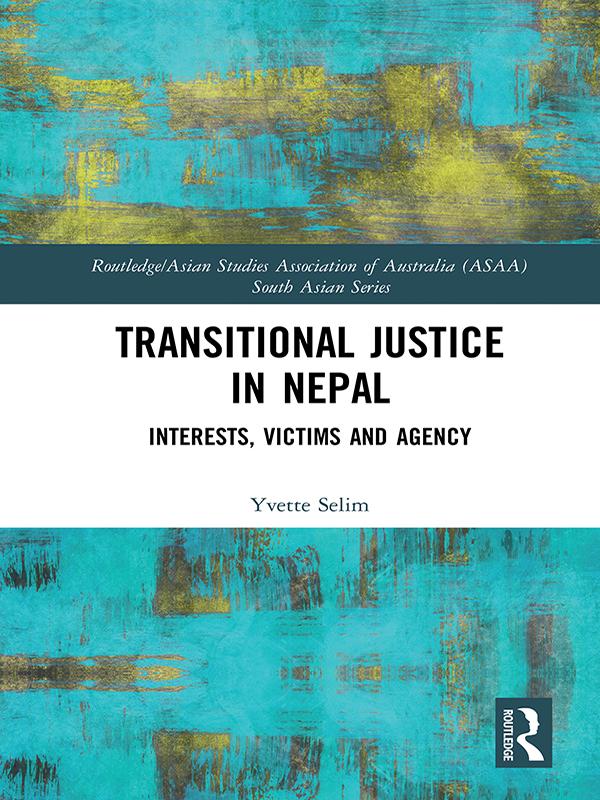
The conflict in Nepal (1996 – 2006) resulted in an estimated 15,000 deaths, 1,300 disappearances, along with other serious human rights and humanitarian law violations. Demands for peace, democracy, accountability and development, have abounded in the post-conflict context. Although the conflict catalysed major changes in the social and political landscape in Nepal, the transitional justice (TJ) process has remained deeply contentious and fragmented.
This book provides an in-depth analysis of transitional justice process in Nepal. Drawing on interviews with a diverse range of stakeholders, including victims, ex-combatants, community members, human rights advocates, journalists and representatives from diplomatic missions, international organisations and the donor community, it reveals the differing viewpoints, knowledge, attitudes and preferences about TJ and other post-conflict issues in Nepal. The author develops an actor typology and an action spectrum, which can be used in Nepal and other post-conflict contexts. The actor typology identifies four main groups of TJ actors—experts, brokers, implementers and victims—and highlights who is making claims and on behalf of whom. The action spectrum, based on contentious politics literature and resistance literature, demonstrates the strategies actors use to shape the TJ process. This book argues that the potential of TJ lies in these dynamics of contention. It is by letting these dynamics play out that different conceptualisations of TJ can arise. While doing so may lead to practical challenges and produce situations that are normatively undesirable for some actors, particularly when certain political parties and national actors seem to ‘hijack’ TJ, remaining steadfast to the dominant TJ paradigm is also undesirable.
As the first book to provide a single case study on TJ in Nepal, it makes theoretical and empirical contributions to: TJ research in Nepal and the Asia-Pacific more broadly, the politics versus justice binary and the concept of victimhood, among others. It will be of interest to a wide range of scholars in the study of transitional justice, peace and conflict studies, human rights, sociology, political science, criminology, law, anthropology and South Asian Studies, as well as policy-makers and NGOs.
Before Memmo my notes were scattered across PDFs. Now a workspace pulls everything into one place — I see exactly what's still left to study.
Memmo's summaries are gold before exams. I don't have to re-read 800 pages two weeks before — just the important parts.
The AI chat has saved me the night before an exam more than once. I just keep asking until I get it — no waiting on a study group to reply.
The quizzes hit exactly what I need to know. Memmo tracks what I get stuck on — so I only practice what's worth it.
Flashcards with spaced repetition are magic. Memmo knows when I'm about to forget something and brings it back.
The AI podcasts are my favorite. I listen on my way to school and get a recap without sitting at a computer.

Handbok i kvalitativa metoder
281 kr

Hållbar utveckling: en introduktion för ingenjörer och andra problemlösare
334 kr

Brymans Samhällsvetenskapliga metoder
390 kr

Projektledning
491 kr

Den orättvisa hälsan: om socioekonomiska skillnader i hälsa och livslängd
326 kr

Organizational Leadership
429 kr

Vetenskapsteori för nybörjare
196 kr

På väg mot läraryrket
172 kr

Det sociala livet i skolan: Socialpsykologiska perspektiv
253 kr

Betygsättningens didaktik
151 kr

Personality
402 kr

Studying Leadership
404 kr

Managing Innovation
477 kr

Introduktion till samhällsvetenskaplig metod
347 kr

The Psychology of Sex and Gender
698 kr

Evidens och kunskap för socialt arbete
207 kr

Introduction to Leadership
605 kr