
Before Memmo my notes were scattered across PDFs. Now a workspace pulls everything into one place — I see exactly what's still left to study.
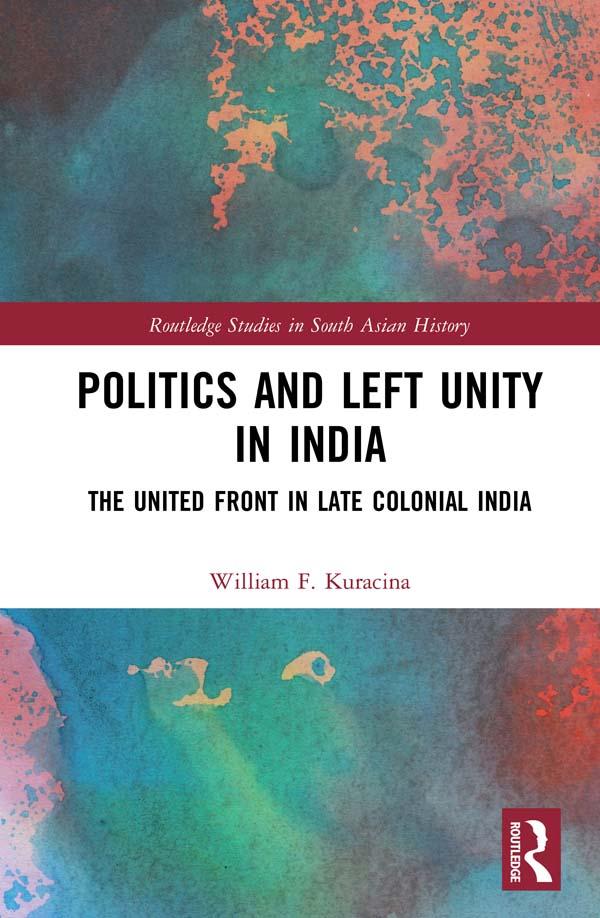
The historical assessments of Left unity in 1930s India misrepresent activities designed to achieve unity. The common treatment of the relationship between Indian socialists and communists emphasizes disunity and the inability to find common ground. Scholarly discussions about unity in fact highlight its impracticality and the inevitability of its failure.
This book proposes that during this moment, for socialists and communists, unity was not just an ideal, but was in fact considered to be a possible and very realizable goal. Rather than focusing exclusively on ideological fissures as the literature does, the book explores the possibilities for unity. The author investigates the United Front as a conceptual framework for collaboration, as a scheme for assessing the extent to which cooperation between socialists and communists was feasible and practicable during the mid-to-late-1930s in India. He employs the notion of United Front as an instrument for identifying and compensating for the prejudices which permeate sources about the cooperation between the Congress Socialist Party (CSP) and the Communist Party of India (CPI).
The author challenges the historicism found in extant scholarly assessments of Left unity by illustrating the ways in which the partners engaged in united front activities and approached the common goal of Left unity despite their fragmented ideological perspectives. The book presents the United Front not as an unsuccessful phase of collaboration, but rather as a concerted attempt to achieve ideological convergence and Left homogeneity which ultimately failed to radicalize Indian nationalism because, in reality, conditions for Left unity did not exist. The book will be of interest to academics studying South Asian history and politics in particular, and socialism, communism, nationalism and imperialism more generally.
Before Memmo my notes were scattered across PDFs. Now a workspace pulls everything into one place — I see exactly what's still left to study.
Memmo's summaries are gold before exams. I don't have to re-read 800 pages two weeks before — just the important parts.
The AI chat has saved me the night before an exam more than once. I just keep asking until I get it — no waiting on a study group to reply.
The quizzes hit exactly what I need to know. Memmo tracks what I get stuck on — so I only practice what's worth it.
Flashcards with spaced repetition are magic. Memmo knows when I'm about to forget something and brings it back.
The AI podcasts are my favorite. I listen on my way to school and get a recap without sitting at a computer.

Handbok i kvalitativa metoder
281 kr

Hållbar utveckling: en introduktion för ingenjörer och andra problemlösare
334 kr

Brymans Samhällsvetenskapliga metoder
390 kr

Projektledning
491 kr

Den orättvisa hälsan: om socioekonomiska skillnader i hälsa och livslängd
326 kr

Vetenskapsteori för nybörjare
196 kr

Organizational Leadership
429 kr

På väg mot läraryrket
172 kr

Det sociala livet i skolan: Socialpsykologiska perspektiv
253 kr

Betygsättningens didaktik
151 kr

Personality
402 kr

Studying Leadership
404 kr

Managing Innovation
477 kr

Introduktion till samhällsvetenskaplig metod
347 kr

The Psychology of Sex and Gender
698 kr

Evidens och kunskap för socialt arbete
207 kr

Introduction to Leadership
605 kr