
Before Memmo my notes were scattered across PDFs. Now a workspace pulls everything into one place — I see exactly what's still left to study.
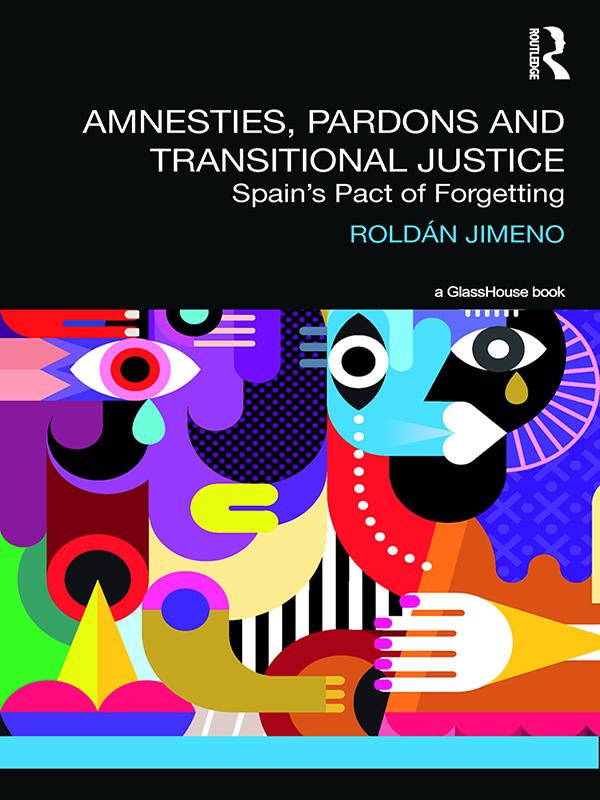
In a consolidated democracy, amnesties and pardons do not sit well with equality and a separation of powers; however, these measures have proved useful in extreme circumstances, such as transitions from dictatorships to democracies, as has occurred in Greece, Portugal and Spain. Focusing on Spain, this book analyses the country's transition, from the antecedents from 1936 up to the present, within a comparative European context. The amnesties granted in Greece, Portugal and Spain saw the release of political prisoners, but in Spain amnesty was also granted to those responsible for the grave violations of human rights which had been committed for 40 years. The first two decades of the democracy saw copious normative measures that sought to equate the rights of all those who had benefitted from the amnesty and who had suffered or had been damaged by the civil war. But, beyond the material benefits that accompanied it, this amnesty led to a sort of wilful amnesia which forbade questioning the legacy of Francoism. In this respect, Spain offers a useful lesson insofar as support for a blanket amnesty – rather than the use of other solutions within a transitional justice framework, such as purges, mechanisms to bring the dictatorship to trial for crimes against humanity, or truth commissions – can be traced to a relative weakness of democracy, and a society characterised by the fear of a return to political violence. This lesson, moreover, is framed here against the background of the evolution of amnesties throughout the twentieth century, and in the context of international law. Crucially, then, this analysis of what is now a global reference point for comparative studies of amnesties, provides new insights into the complex relationship between democracy and the varying mechanisms of transitional justice.
Before Memmo my notes were scattered across PDFs. Now a workspace pulls everything into one place — I see exactly what's still left to study.
Memmo's summaries are gold before exams. I don't have to re-read 800 pages two weeks before — just the important parts.
The AI chat has saved me the night before an exam more than once. I just keep asking until I get it — no waiting on a study group to reply.
The quizzes hit exactly what I need to know. Memmo tracks what I get stuck on — so I only practice what's worth it.
Flashcards with spaced repetition are magic. Memmo knows when I'm about to forget something and brings it back.
The AI podcasts are my favorite. I listen on my way to school and get a recap without sitting at a computer.

Handbok i kvalitativa metoder
281 kr

Hållbar utveckling: en introduktion för ingenjörer och andra problemlösare
334 kr

Brymans Samhällsvetenskapliga metoder
390 kr

Projektledning
491 kr

Den orättvisa hälsan: om socioekonomiska skillnader i hälsa och livslängd
326 kr

Organizational Leadership
429 kr

Vetenskapsteori för nybörjare
196 kr

På väg mot läraryrket
172 kr

Det sociala livet i skolan: Socialpsykologiska perspektiv
253 kr

Betygsättningens didaktik
151 kr

Personality
402 kr

Studying Leadership
404 kr

Managing Innovation
477 kr

Introduktion till samhällsvetenskaplig metod
347 kr

The Psychology of Sex and Gender
698 kr

Evidens och kunskap för socialt arbete
207 kr

Introduction to Leadership
605 kr