
Before Memmo my notes were scattered across PDFs. Now a workspace pulls everything into one place — I see exactly what's still left to study.
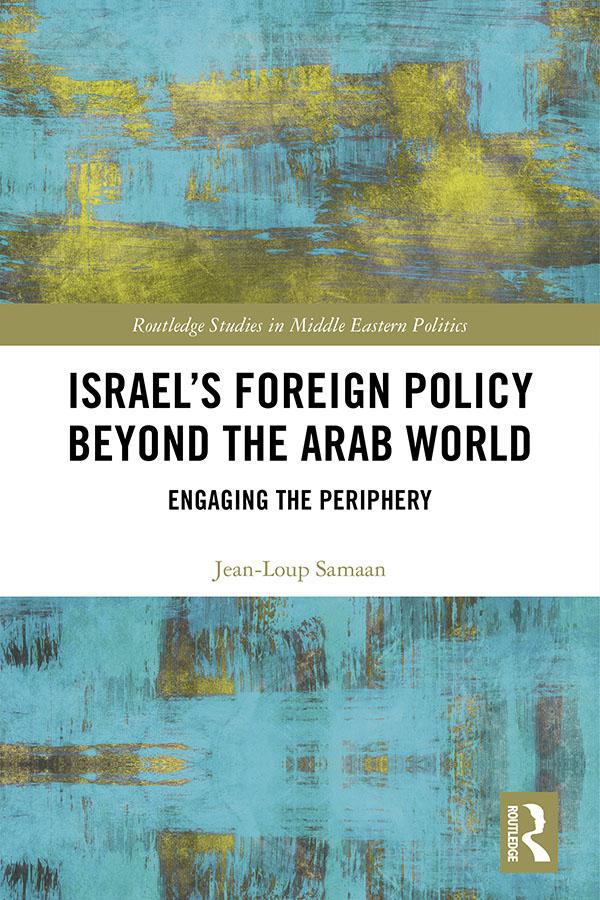
For over 60 years, Israel’s foreign policy establishment has looked at its regional policy through the lens of a geopolitical concept named "the periphery doctrine." The idea posited that due to the fundamental hostility of neighboring Arab countries, Israel ought to counterbalance this threat by engaging with the "periphery" of the Arab world through clandestine diplomacy.
Based on original research in the Israeli diplomatic archives and interviews with key past and present decision-makers, this book shows that this concept of a periphery was, and remains, a core driver of Israel’s foreign policy. The periphery was borne out of the debates among Zionist circles concerning the geopolitics of the nascent Israeli State. The evidence from Israel’s contemporary policies shows that these principles survived the historical relationships with some countries (Iran, Turkey, Ethiopia) and were emulated in other cases: Azerbaijan, Greece, South Sudan, and even to a certain extent in the attempted exchanges by Israel with Gulf Arab kingdoms. The book enables readers to understand Israel’s pessimistic – or realist, in the traditional sense – philosophy when it comes to the conduct of foreign policy. The history of the periphery doctrine sheds light on fundamental issues, such as Israel’s role in the regional security system, its overreliance on military and intelligence cooperation as tools of diplomacy, and finally its enduring perception of inextricable isolation.
Through a detailed appraisal of Israel’s periphery doctrine from its birth in the fifties until its contemporary renaissance, this book offers a new perspective on Israel’s foreign policy, and will appeal to students and scholars of Middle East Politics and History, and International Relations.
Before Memmo my notes were scattered across PDFs. Now a workspace pulls everything into one place — I see exactly what's still left to study.
Memmo's summaries are gold before exams. I don't have to re-read 800 pages two weeks before — just the important parts.
The AI chat has saved me the night before an exam more than once. I just keep asking until I get it — no waiting on a study group to reply.
The quizzes hit exactly what I need to know. Memmo tracks what I get stuck on — so I only practice what's worth it.
Flashcards with spaced repetition are magic. Memmo knows when I'm about to forget something and brings it back.
The AI podcasts are my favorite. I listen on my way to school and get a recap without sitting at a computer.

Handbok i kvalitativa metoder
281 kr

Hållbar utveckling: en introduktion för ingenjörer och andra problemlösare
334 kr

Brymans Samhällsvetenskapliga metoder
390 kr

Projektledning
491 kr

Den orättvisa hälsan: om socioekonomiska skillnader i hälsa och livslängd
326 kr

Organizational Leadership
429 kr

Vetenskapsteori för nybörjare
196 kr

På väg mot läraryrket
172 kr

Det sociala livet i skolan: Socialpsykologiska perspektiv
253 kr

Betygsättningens didaktik
151 kr

Personality
402 kr

Studying Leadership
404 kr

Managing Innovation
477 kr

Introduktion till samhällsvetenskaplig metod
347 kr

The Psychology of Sex and Gender
698 kr

Evidens och kunskap för socialt arbete
207 kr

Introduction to Leadership
605 kr