
Before Memmo my notes were scattered across PDFs. Now a workspace pulls everything into one place — I see exactly what's still left to study.
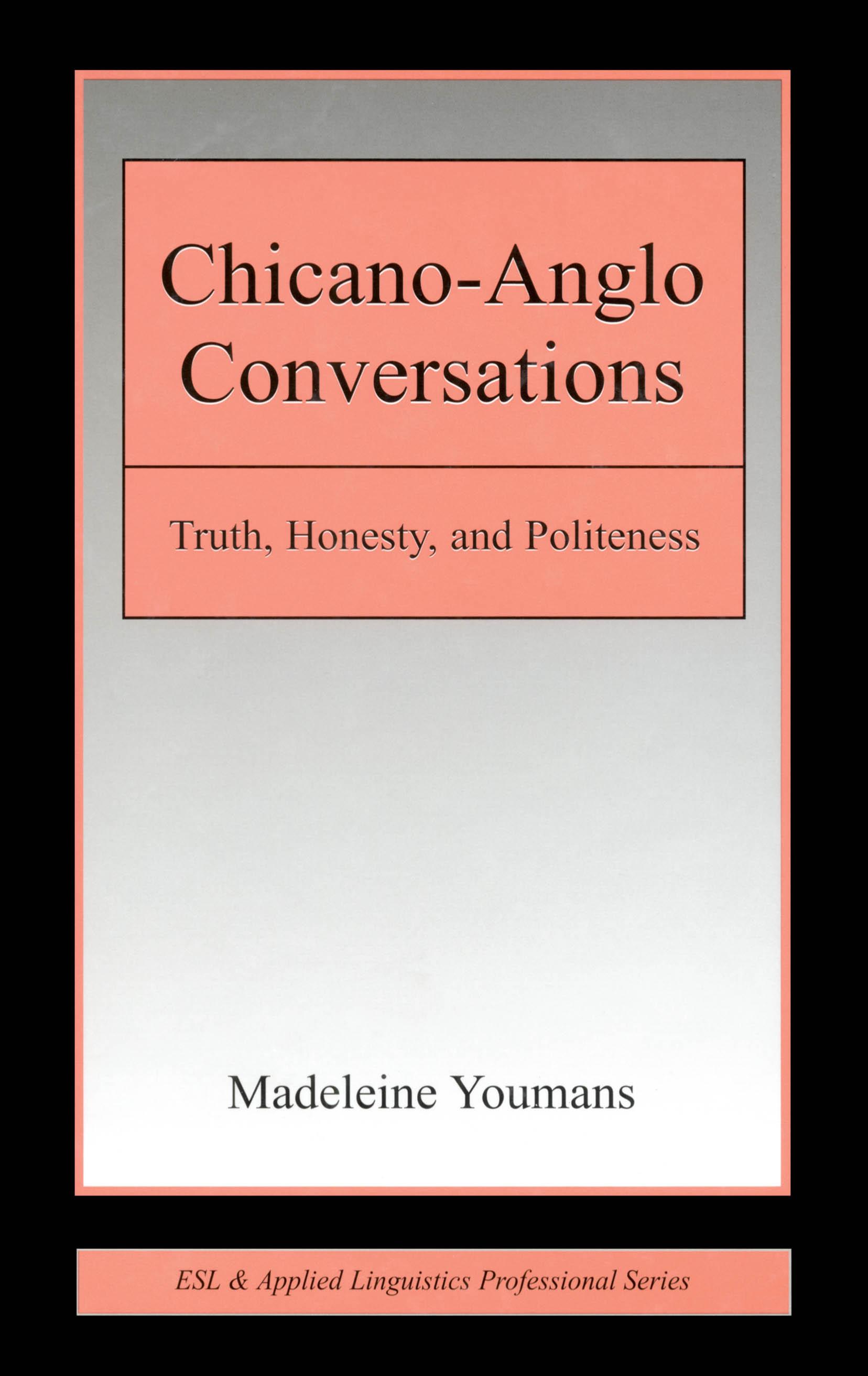
This groundbreaking book--about differences in communication practices between Mexican-American underclass residents in an East Los Angeles housing project and white, middle-class literacy tutors who worked with them--makes an important contribution to research on the sociolinguistics of the Chicano gang culture.
More specifically, this work adds substantially to research on understanding linguistic politeness theories, the use of epistemic modals for negative politeness, and evidentiality. It refines, and in a number of cases, defines, function categories for epistemic modals through a rigorous grammatical analysis. This book is also distinctive in that the author subjects the language of middle-class Anglos to the same type of scrutiny that is often reserved for non-mainstream groups.
Youmans contends that the differences between the Chicano and Anglo speakers are the result of the two groups’ different sociocultural circumstances, including historical and current living and working patterns and the relative value placed on familialism and communalism versus individualism and independence. (The terms Chicano and Anglo are used as a kind of shorthand in this book--not to raise larger sociocultural issues implied by these terms.) Although the number of participants in the study limits the applicability of the findings as they might be extrapolated to all Chicanos/as, or all Anglos when reporting sociolinguistic observations, the main argument advanced is that language use may provide insights into beliefs, attitudes, and practices in the larger society.
This volume is directed to researchers and graduate students in the areas of sociolinguistics, applied linguistics, discourse analysis, and cross-cultural communication, and will also interest language and linguistics educators and grammarians.
Before Memmo my notes were scattered across PDFs. Now a workspace pulls everything into one place — I see exactly what's still left to study.
Memmo's summaries are gold before exams. I don't have to re-read 800 pages two weeks before — just the important parts.
The AI chat has saved me the night before an exam more than once. I just keep asking until I get it — no waiting on a study group to reply.
The quizzes hit exactly what I need to know. Memmo tracks what I get stuck on — so I only practice what's worth it.
Flashcards with spaced repetition are magic. Memmo knows when I'm about to forget something and brings it back.
The AI podcasts are my favorite. I listen on my way to school and get a recap without sitting at a computer.

Handbok i kvalitativa metoder
281 kr

Hållbar utveckling: en introduktion för ingenjörer och andra problemlösare
334 kr

Brymans Samhällsvetenskapliga metoder
390 kr

Projektledning
491 kr

Den orättvisa hälsan: om socioekonomiska skillnader i hälsa och livslängd
326 kr

Organizational Leadership
429 kr

Vetenskapsteori för nybörjare
196 kr

På väg mot läraryrket
172 kr

Det sociala livet i skolan: Socialpsykologiska perspektiv
253 kr

Betygsättningens didaktik
151 kr

Personality
402 kr

Studying Leadership
404 kr

Managing Innovation
477 kr

Introduktion till samhällsvetenskaplig metod
347 kr

The Psychology of Sex and Gender
698 kr

Evidens och kunskap för socialt arbete
207 kr

Introduction to Leadership
605 kr