
Before Memmo my notes were scattered across PDFs. Now a workspace pulls everything into one place — I see exactly what's still left to study.
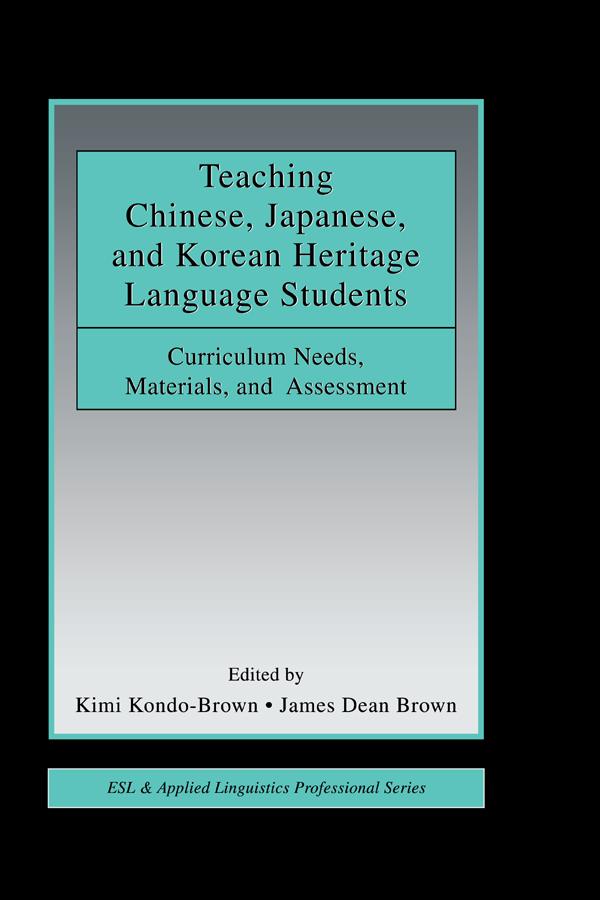
This book contributes to building the research knowledge that language teaching professionals need in developing curriculum for the large population of East Asian heritage students (including Chinese, Japanese, and Korean) in countries like the United States, Canada, and Australia, where speakers of East Asian languages are among the fastest growing populations. Heritage learners are defined as those who initially acquired certain levels of linguistic and cultural competence in a non-dominant language mainly through interaction with foreign-born parents and other family members at home.
Heritage language instruction is currently a “hot topic” and is becoming a sub-discipline within the fields of foreign language education and applied linguistics. Special instruction for heritage language learners is on the rise, particularly in the U.S. and Canada. Providing theoretical and practical information about heritage-language instruction in terms of curriculum design, learner needs, materials development, and assessment procedures, the goal of this book is not only to promote research about heritage students in East Asian languages but also to improve the teaching of these students in various educational settings and all over the world, especially in English speaking countries. The volume is organized in four sections:
*Overview—addressing the timeliness, necessity, and applications of the work and issues and future agendas for teaching Chinese, Japanese, and Korean heritage students;
*Language Needs Analysis;
*Attitude, Motivation, Identity, and Instructional Preference; and
*Curriculum Design, Materials Development, and Assessment Procedures
Teaching Chinese, Japanese, and Korean Heritage Language Students is intended as a primary text or reference for researchers, educators, and students in the areas of curriculum, pedagogy, and assessment studies related to teaching bilingual and heritage students in general and East Asian heritage students in particular.
Before Memmo my notes were scattered across PDFs. Now a workspace pulls everything into one place — I see exactly what's still left to study.
Memmo's summaries are gold before exams. I don't have to re-read 800 pages two weeks before — just the important parts.
The AI chat has saved me the night before an exam more than once. I just keep asking until I get it — no waiting on a study group to reply.
The quizzes hit exactly what I need to know. Memmo tracks what I get stuck on — so I only practice what's worth it.
Flashcards with spaced repetition are magic. Memmo knows when I'm about to forget something and brings it back.
The AI podcasts are my favorite. I listen on my way to school and get a recap without sitting at a computer.

Handbok i kvalitativa metoder
281 kr

Hållbar utveckling: en introduktion för ingenjörer och andra problemlösare
334 kr

Brymans Samhällsvetenskapliga metoder
390 kr

Projektledning
491 kr

Den orättvisa hälsan: om socioekonomiska skillnader i hälsa och livslängd
326 kr

Vetenskapsteori för nybörjare
196 kr

Organizational Leadership
429 kr

På väg mot läraryrket
172 kr

Det sociala livet i skolan: Socialpsykologiska perspektiv
253 kr

Betygsättningens didaktik
151 kr

Personality
402 kr

Studying Leadership
404 kr

Managing Innovation
477 kr

Introduktion till samhällsvetenskaplig metod
347 kr

The Psychology of Sex and Gender
698 kr

Evidens och kunskap för socialt arbete
207 kr

Introduction to Leadership
605 kr