
Before Memmo my notes were scattered across PDFs. Now a workspace pulls everything into one place — I see exactly what's still left to study.
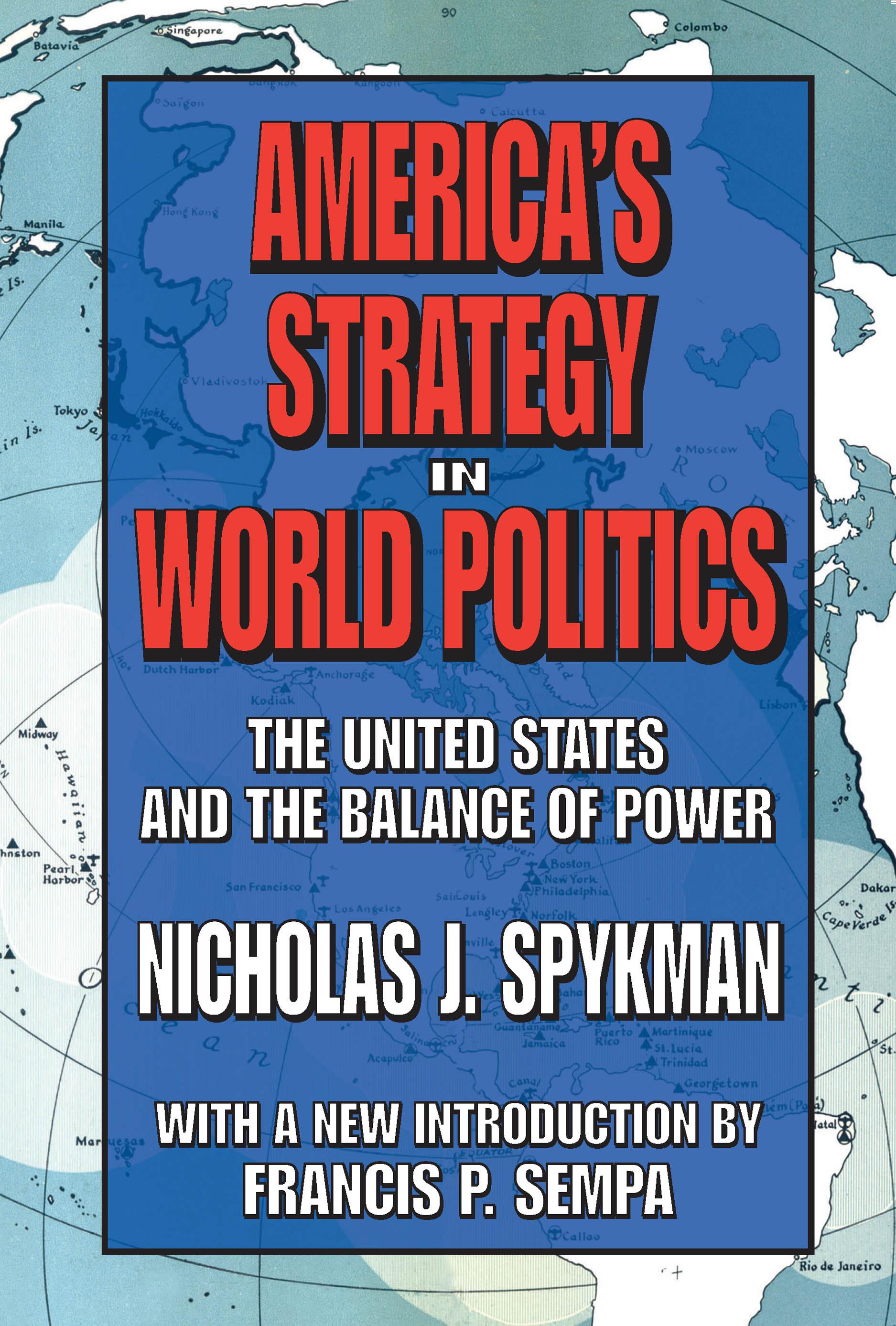
Less than a year after the United States entered the Second World War, Nicholas Spykman wrote a book that placed the war effort in the broader context of the 1940s global balance of power. In America's Strategy in World Politics, Spykman examined world politics from a realist geopolitical perspective. The United States, he explained, was fighting for its very survival as an independent country because the conquests of Germany and Japan raised the specter of our geopolitical encirclement by hostile forces controlling the power centers of Europe, the Middle East, and East Asia. Spykman warned that the United States could not safely retreat to a defensive position in the Western Hemisphere.
Spykman looked beyond the immediate strategic requirements of the Second World War, envisioning a postwar world in which the United States would help shape the global balance of power to meet its security needs. Even though Soviet Russia was our wartime ally, Spykman recognized that a geopolitically unbalanced Soviet Union could threaten to upset the postwar balance of power and thereby endanger U.S. security. Spykman also foresaw the rise of China in postwar Asia, and the likely need for the United States to ally itself with Japan to balance China's power. He also recognized that the Middle East would play a pivotal role in the postwar world.
Spykman influenced American postwar statesmen and strategists. During the Cold War, the U.S. sought to deny the Soviet Union political control of Western Europe, the Middle East, and East Asia. Spykman's geopolitical vision of U.S. security, supported by a balanced Eurasian land mass, coupled with his focus on power as the governing force in international relations, makes America's Strategy in World Politics relevant to the twenty-first century.
Before Memmo my notes were scattered across PDFs. Now a workspace pulls everything into one place — I see exactly what's still left to study.
Memmo's summaries are gold before exams. I don't have to re-read 800 pages two weeks before — just the important parts.
The AI chat has saved me the night before an exam more than once. I just keep asking until I get it — no waiting on a study group to reply.
The quizzes hit exactly what I need to know. Memmo tracks what I get stuck on — so I only practice what's worth it.
Flashcards with spaced repetition are magic. Memmo knows when I'm about to forget something and brings it back.
The AI podcasts are my favorite. I listen on my way to school and get a recap without sitting at a computer.

Handbok i kvalitativa metoder
281 kr

Hållbar utveckling: en introduktion för ingenjörer och andra problemlösare
334 kr

Brymans Samhällsvetenskapliga metoder
390 kr

Projektledning
491 kr

Den orättvisa hälsan: om socioekonomiska skillnader i hälsa och livslängd
326 kr

Organizational Leadership
429 kr

Vetenskapsteori för nybörjare
196 kr

På väg mot läraryrket
172 kr

Det sociala livet i skolan: Socialpsykologiska perspektiv
253 kr

Betygsättningens didaktik
151 kr

Personality
402 kr

Studying Leadership
404 kr

Managing Innovation
477 kr

Introduktion till samhällsvetenskaplig metod
347 kr

The Psychology of Sex and Gender
698 kr

Evidens och kunskap för socialt arbete
207 kr

Introduction to Leadership
605 kr