
Before Memmo my notes were scattered across PDFs. Now a workspace pulls everything into one place — I see exactly what's still left to study.
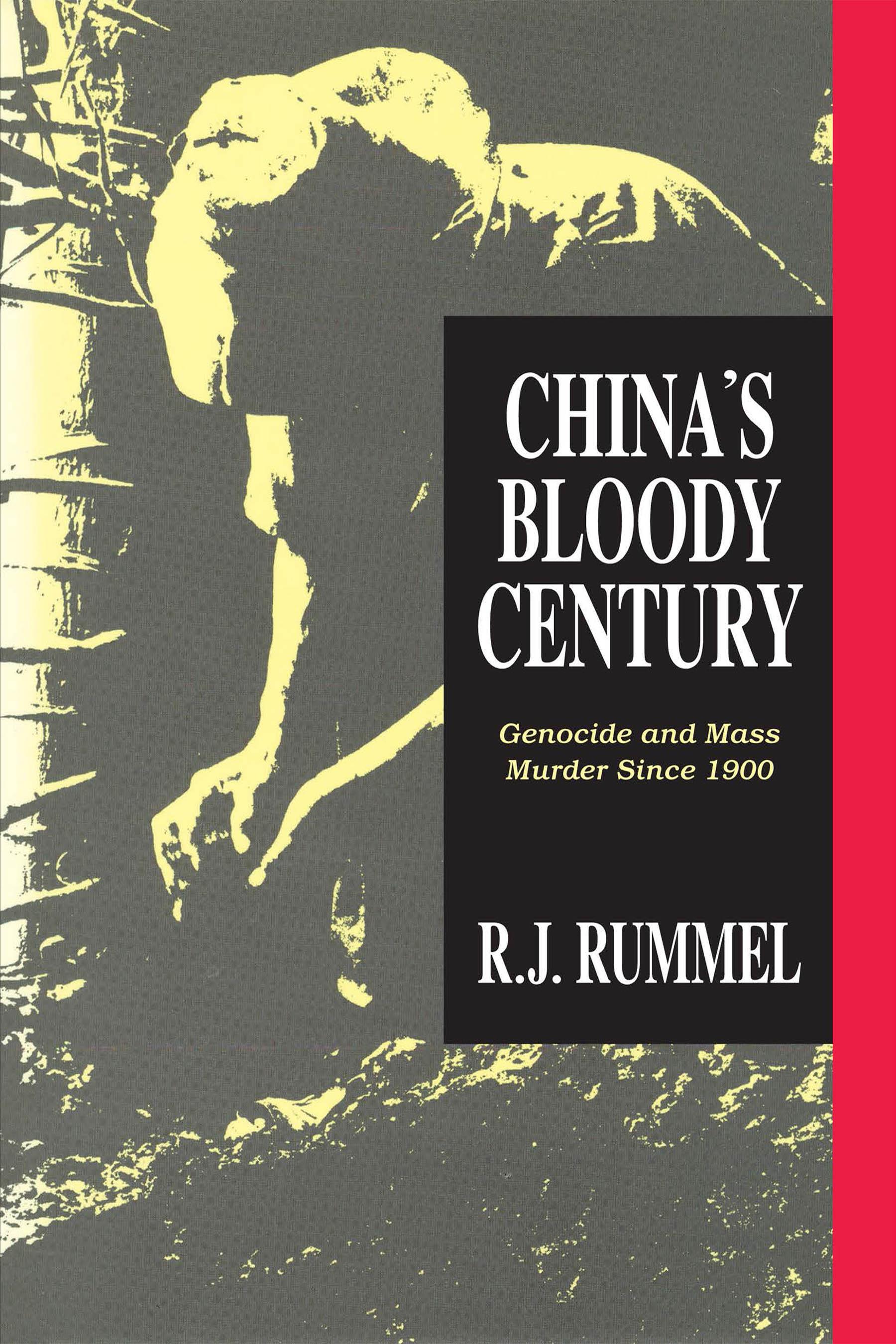
Except for Soviet citizens, no people in this century have endured so much mass killing as have the Chinese. They have been murdered by rebels conniving with their own rulers, and then, after the defeat in war of the imperial dynasty, by soldiers of other lands. They have been killed by warlords who ruled one part of China or another. They have been executed by Nationalists or Communists because they had the wrong beliefs or attitudes or were simply in the wrong place at the wrong time. In China's Bloody Century, R.J. Rummel's careful estimate of the total number of killings exceeds 5 million.
How do we explain such killings, crossing ideological bounds and political conditions? According to Rummel, the one constant factor in all the Chinese mass murder, as it was in the Soviet Union and Nazi Germany, is arbitrary power. It was the factor that united warlords, Nationalists, Communists, and foreign armies. The author argues that whenever such undisciplined power is centralized and unchecked, the possibility exists that it will be used at the whim of dictators to kill for their own ends, whether the aim is ethnic-racial purity, national unity, development, or utopia.
The book presents successive periods in modern Chinese history, with each chapter divided into three parts. Rummel first relates the history of the period within which the nature and the amount of killings are presented. He then provides a detailed statistical table giving the basic estimates with their sources and qualifications. The final part offers an appendix that explains and elaborates the statistical computations and estimates.
While estimates are available in the literature on the number of Chinese killed in Communist land reform, or in Tibet, or by the Nationalists in one military campaign or another, until this book no one has tried to systematically accumulate, organize, add up, and analyze these diverse killings for all of China's governments in this century. For
Before Memmo my notes were scattered across PDFs. Now a workspace pulls everything into one place — I see exactly what's still left to study.
Memmo's summaries are gold before exams. I don't have to re-read 800 pages two weeks before — just the important parts.
The AI chat has saved me the night before an exam more than once. I just keep asking until I get it — no waiting on a study group to reply.
The quizzes hit exactly what I need to know. Memmo tracks what I get stuck on — so I only practice what's worth it.
Flashcards with spaced repetition are magic. Memmo knows when I'm about to forget something and brings it back.
The AI podcasts are my favorite. I listen on my way to school and get a recap without sitting at a computer.

Handbok i kvalitativa metoder
281 kr

Hållbar utveckling: en introduktion för ingenjörer och andra problemlösare
334 kr

Brymans Samhällsvetenskapliga metoder
390 kr

Projektledning
491 kr

Den orättvisa hälsan: om socioekonomiska skillnader i hälsa och livslängd
326 kr

Vetenskapsteori för nybörjare
196 kr

Organizational Leadership
429 kr

På väg mot läraryrket
172 kr

Det sociala livet i skolan: Socialpsykologiska perspektiv
253 kr

Betygsättningens didaktik
151 kr

Personality
402 kr

Studying Leadership
404 kr

Managing Innovation
477 kr

Introduktion till samhällsvetenskaplig metod
347 kr

The Psychology of Sex and Gender
698 kr

Evidens och kunskap för socialt arbete
207 kr

Introduction to Leadership
605 kr