
Before Memmo my notes were scattered across PDFs. Now a workspace pulls everything into one place — I see exactly what's still left to study.
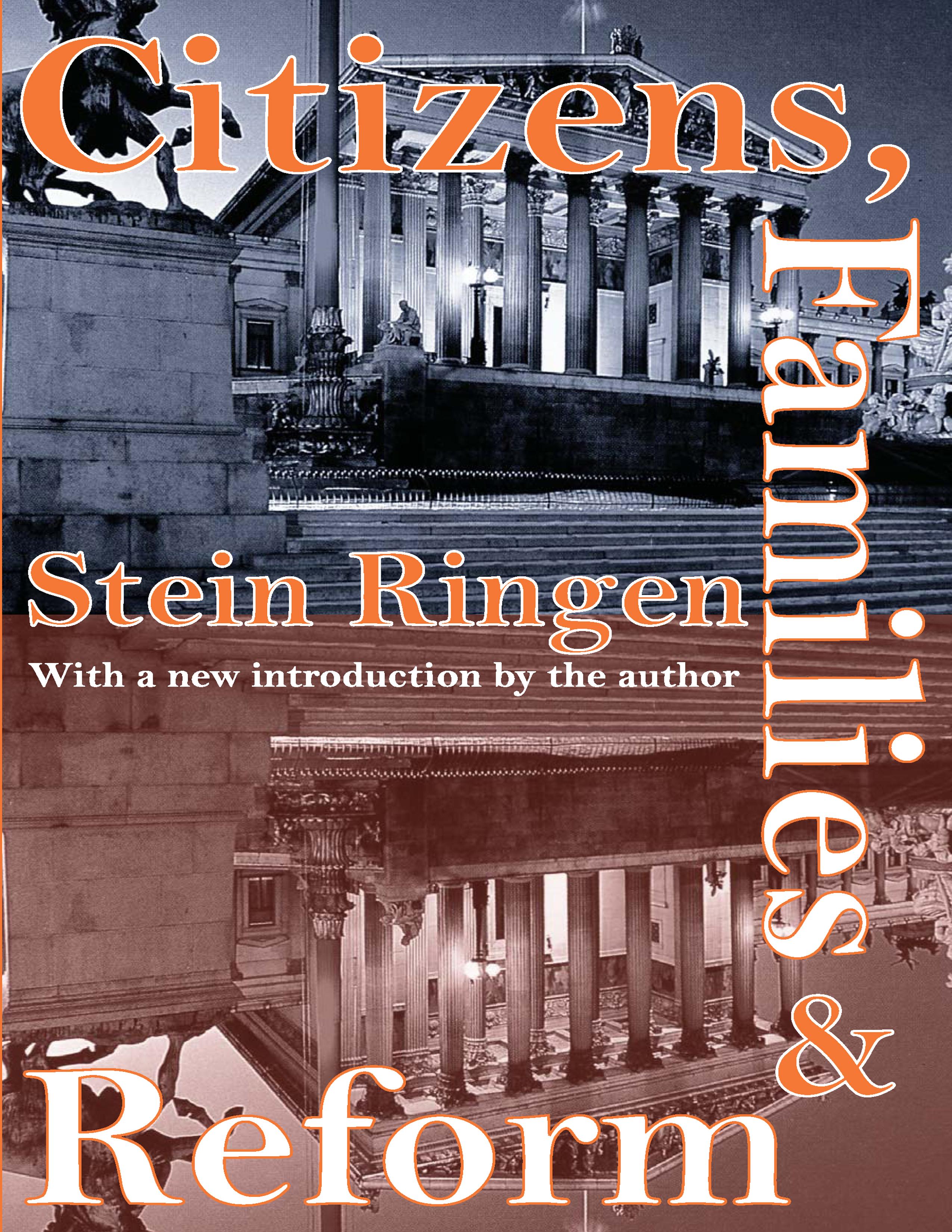
Modern families are economic institutions of great productivity. They contribute as much to a society's economic well-being as does worker productivity in formal markets. In Citizens, Families, and Reform, Stein Ringen shows how long-standing inequalities of income and class are flexible and changing in post-industrial societies. Such inequalities respond to structural changes such as social mobility and to public policies such as those of the welfare state. His book is a study of the process from careful statistical analysis to specific policy recommendations.The book draws on two strands of research, one on children and families and the other on social inequality. Both summarize detailed statistical analysis. Ringen's basic premise is that prudent social policy should start from investment in families. Progress and reform in society, such as extended access to education, tends to modify social divisions and stimulate open opportunity, particularly in the area of higher education. The book addresses the situation of children, who have a surprisingly lower standard of living than adult population groups by most measures of well-being. Ringen attributes this disparity to flaws in the distribution of power, which leads to the disenfranchisement of children as citizens. He addresses this problem by discussing children and voting rights, building a case for realizing the ideal of one person, one vote, by extending the vote to children.Real democracies are necessarily imperfect. Ringen argues for the classical liberal theory of social progress through economic growth and equality of opportunity and warns against the "terrible temptation towards perfection." His new introduction reviews the debates sparked by the book's original publication in 1997 and suggests areas in which his arguments have been vindicated.
Before Memmo my notes were scattered across PDFs. Now a workspace pulls everything into one place — I see exactly what's still left to study.
Memmo's summaries are gold before exams. I don't have to re-read 800 pages two weeks before — just the important parts.
The AI chat has saved me the night before an exam more than once. I just keep asking until I get it — no waiting on a study group to reply.
The quizzes hit exactly what I need to know. Memmo tracks what I get stuck on — so I only practice what's worth it.
Flashcards with spaced repetition are magic. Memmo knows when I'm about to forget something and brings it back.
The AI podcasts are my favorite. I listen on my way to school and get a recap without sitting at a computer.

Handbok i kvalitativa metoder
281 kr

Hållbar utveckling: en introduktion för ingenjörer och andra problemlösare
334 kr

Brymans Samhällsvetenskapliga metoder
390 kr

Projektledning
491 kr

Den orättvisa hälsan: om socioekonomiska skillnader i hälsa och livslängd
326 kr

Vetenskapsteori för nybörjare
196 kr

Organizational Leadership
429 kr

På väg mot läraryrket
172 kr

Det sociala livet i skolan: Socialpsykologiska perspektiv
253 kr

Betygsättningens didaktik
151 kr

Personality
402 kr

Studying Leadership
404 kr

Managing Innovation
477 kr

Introduktion till samhällsvetenskaplig metod
347 kr

The Psychology of Sex and Gender
698 kr

Evidens och kunskap för socialt arbete
207 kr

Introduction to Leadership
605 kr