
Before Memmo my notes were scattered across PDFs. Now a workspace pulls everything into one place — I see exactly what's still left to study.
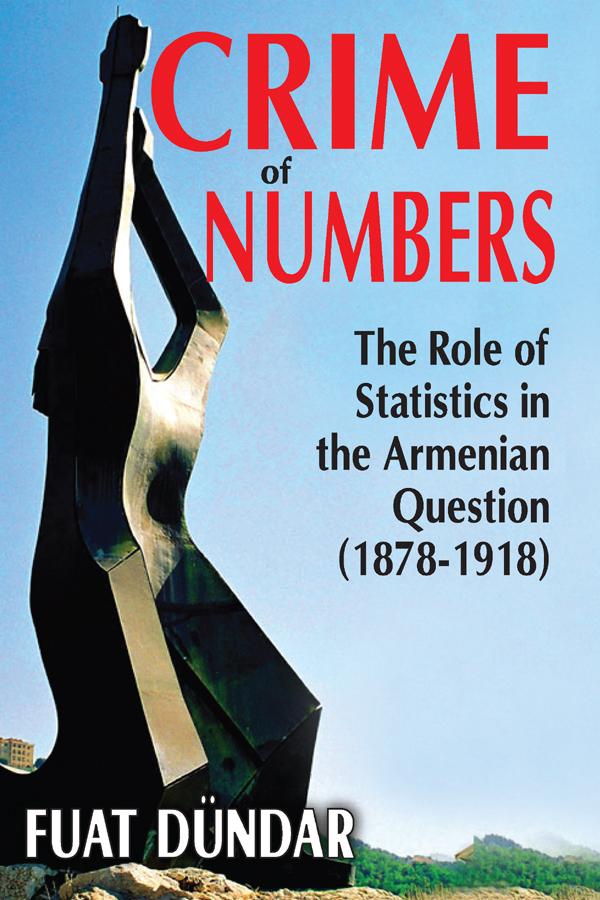
Statistics have played an important role in the recognition of the Armenian question on the international landscape as well as its "definitive solution" resulting in the Armenian genocide. The importance of statistics first surfaced at the Congress of Berlin in 1878, where differences in the approach toward numbers between the Armenian and the Ottoman Empire, and the role of statistics within the Ottoman state apparatus, became an issue. At that international gathering, the Armenian question was considered part of the "Eastern Question" paradigm of Western diplomacy. It would soon become a code word for the question of "civilization" itself.
Those administering the multi-ethnic Ottoman Empire perceived the Armenian issue not only through ethnic and religious perspectives, but also through statistics. As Dundar shows, statistics became the vehicle through which the Ottoman state apparatus was forced to include non-Muslim populations of the Empire in the state apparatuses and local councils. This occurred long before the Armenian question surfaced. The aim of Ottoman reforms was to ensure that all communities participated in the affairs of the state and that such participation was proportionate to their numbers. Through its role in these reforms, statistics emerged as a constant matter of debate in the Armenian question.
As a result of the Armenian genocide, the statistical record has become quite sensitive. Today, accounting for the numbers of Armenians murdered in 1915 usually means calculating the number of Armenians who were massacred or died of other causes such as disease, hunger, exhaustion, and the like during deportations or immediately after. This is a work of brilliant archival history and imaginatively uses social statistics.
Before Memmo my notes were scattered across PDFs. Now a workspace pulls everything into one place — I see exactly what's still left to study.
Memmo's summaries are gold before exams. I don't have to re-read 800 pages two weeks before — just the important parts.
The AI chat has saved me the night before an exam more than once. I just keep asking until I get it — no waiting on a study group to reply.
The quizzes hit exactly what I need to know. Memmo tracks what I get stuck on — so I only practice what's worth it.
Flashcards with spaced repetition are magic. Memmo knows when I'm about to forget something and brings it back.
The AI podcasts are my favorite. I listen on my way to school and get a recap without sitting at a computer.

Handbok i kvalitativa metoder
281 kr

Hållbar utveckling: en introduktion för ingenjörer och andra problemlösare
334 kr

Brymans Samhällsvetenskapliga metoder
390 kr

Projektledning
491 kr

Den orättvisa hälsan: om socioekonomiska skillnader i hälsa och livslängd
326 kr

Organizational Leadership
429 kr

Vetenskapsteori för nybörjare
196 kr

På väg mot läraryrket
172 kr

Det sociala livet i skolan: Socialpsykologiska perspektiv
253 kr

Betygsättningens didaktik
151 kr

Personality
402 kr

Studying Leadership
404 kr

Managing Innovation
477 kr

Introduktion till samhällsvetenskaplig metod
347 kr

The Psychology of Sex and Gender
698 kr

Evidens och kunskap för socialt arbete
207 kr

Introduction to Leadership
605 kr